
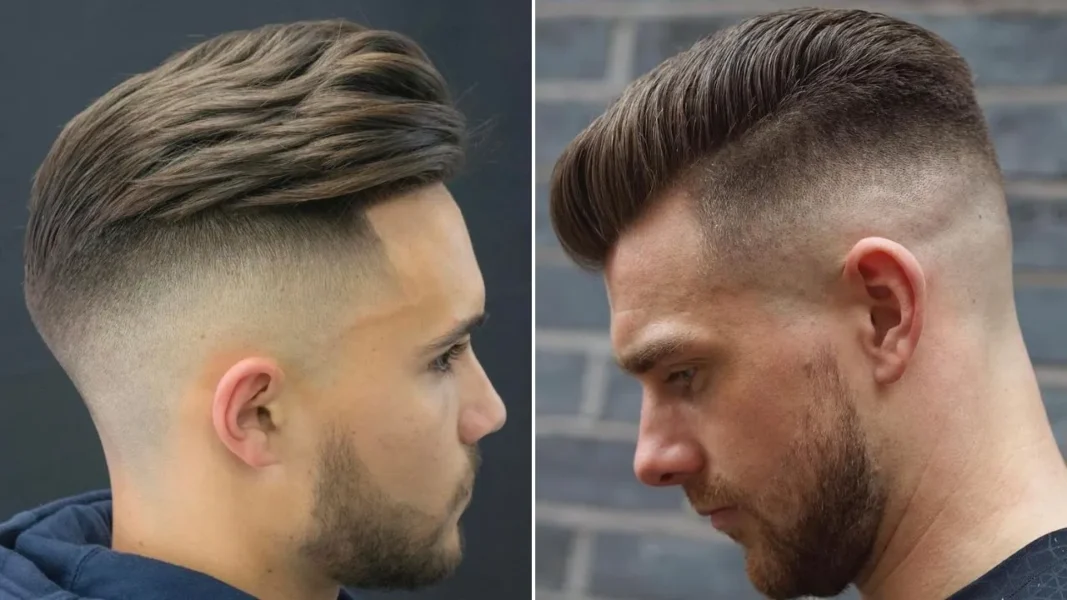
Why do high fades dominate every barbershop chair in 2026? Because no other cut delivers this much contrast, versatility, and sharpness at once. A high fade haircut tapers the sides and back down to the skin, starting well above the ears for a dramatic transition. It pairs with nearly any top style, from textured crops to slicked-back pompadours.
Whether you have straight, curly, thick, or coarse hair, there is a high fade variation built for you. TikTok hairstyle trends and Instagram barber culture keep high fades in the spotlight year after year. This guide covers 40 trending high fade haircuts across eight categories, plus styling tips, barber terminology, product recommendations, and face shape advice to help you find the perfect cut.
What Is a High Fade Haircut?
A high fade gradually shortens the sides and back from the longer hair on top down to bare skin. The transition starts high on the head, typically two to three inches above the ear, creating strong contrast.
Where the Fade Starts on the Head
The high fade begins near the temple area, well above the ears. The shortest point reaches the skin at the sideburns and neckline. The blend happens over a smaller area compared to low or mid fades.
High Fade vs Low Fade vs Mid Fade
The difference comes down to where the taper begins. A low fade starts just above the ears for a subtle gradient. A mid fade starts around the temples for balance. A high fade starts near the top of the head, delivering maximum contrast.
Benefits of High Fade Haircuts
- Cleaner appearance: Skin-tight sides create a fresh, sharp look.
- Sharper contrast: The dramatic transition draws attention to the top.
- Easy maintenance: Short sides need almost no daily styling.
- Emphasizes texture: With faded sides, the top becomes the focal point.
Who Should Get a High Fade?
High fades work well for oval, round, and square face shapes. The vertical lines add structure to round faces. Oval faces can pull off almost any variation. Square faces benefit from sharpness that complements strong jawlines. Thick, straight, curly, and coarse hair types all pair nicely with high fades because the contrast between textured top and clean sides works universally.
Classic High Fade Haircuts
1. Buzz Cut High Fade
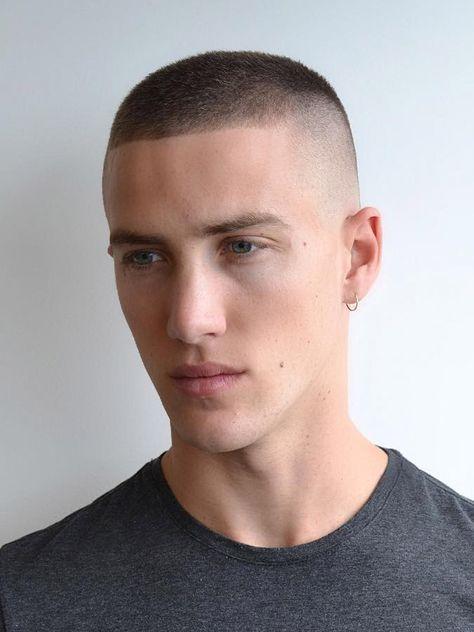
The buzz cut high fade is a military-inspired style that keeps the top short and uniform while the sides fade to the skin. It requires almost no daily styling and still looks sharp.
Ideal for sharp jawlines, oval, and square faces. Any hair type works. Ask for a number two or three guard on top with a high skin fade. Low maintenance, trims every three to four weeks. Pair with a line-up at the temples for extra-clean finish.
2. Crew Cut High Fade
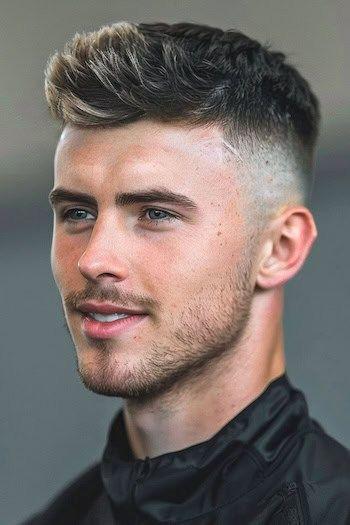
The crew cut high fade offers a business casual haircut easy to style every morning. The top tapers from front to crown, while the high fade keeps the sides tight.
Suits most face shapes. Works with thick, straight, or wavy hair. Matte clay or texture powder is all you need. Ask for a crew cut with a high fade, keeping one to two inches at the front. Trims every two to three weeks.
3. Side Part High Fade
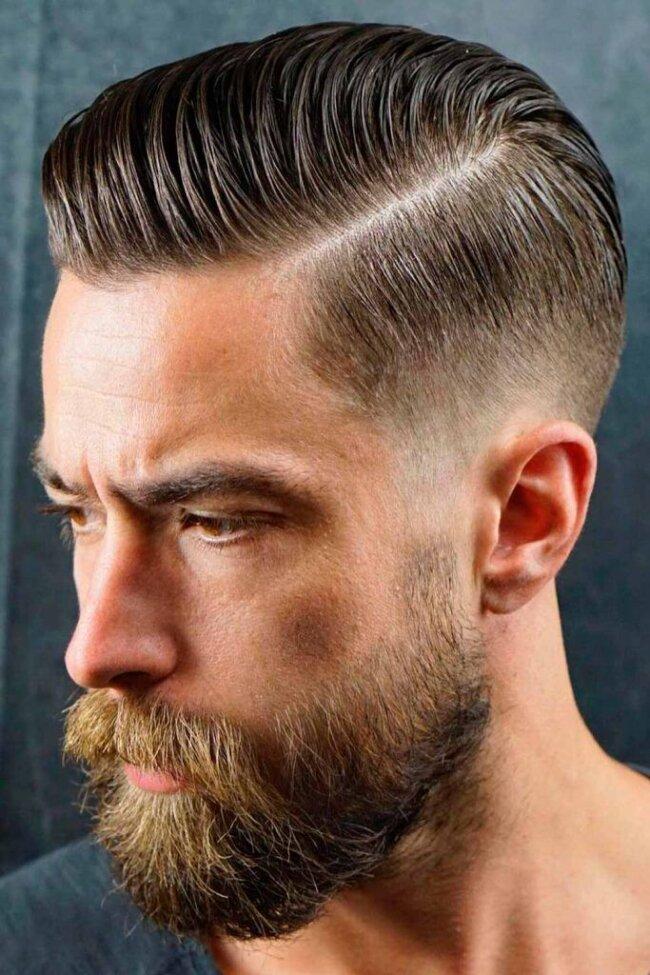
The side part high fade is a classic barber style that remains office-friendly and universally flattering. A clean part separates longer hair on top from the faded sides.
Suits oval, square, and heart-shaped faces. Apply pomade to damp hair, part on one side, and comb through. Ask for a side part with a high fade and a hard part line carved by the barber.
4. Ivy League High Fade
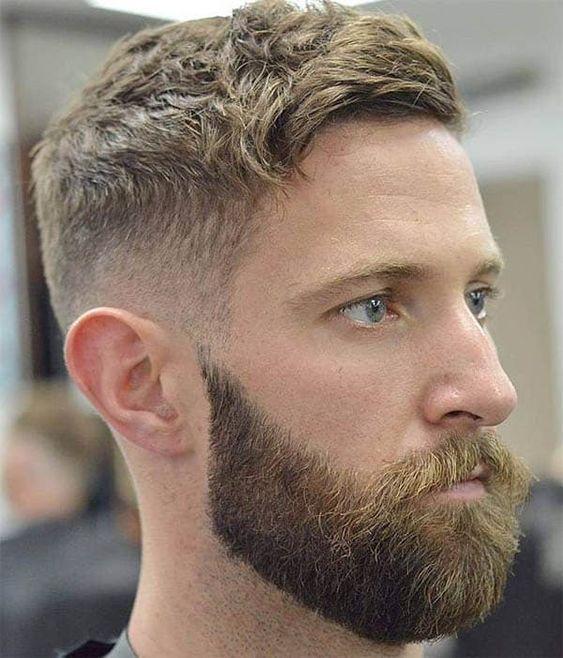
The Ivy League high fade pairs a preppy, longer-on-top style with a clean high fade. This is one of the most professional high fade variations, suitable for conservative workplaces and formal events.
Suits oval, square, and heart-shaped faces. Apply light-hold pomade and comb through for a neat finish. Ask for an Ivy League cut with a high fade, leaving about three inches on top.
5. Comb Over High Fade
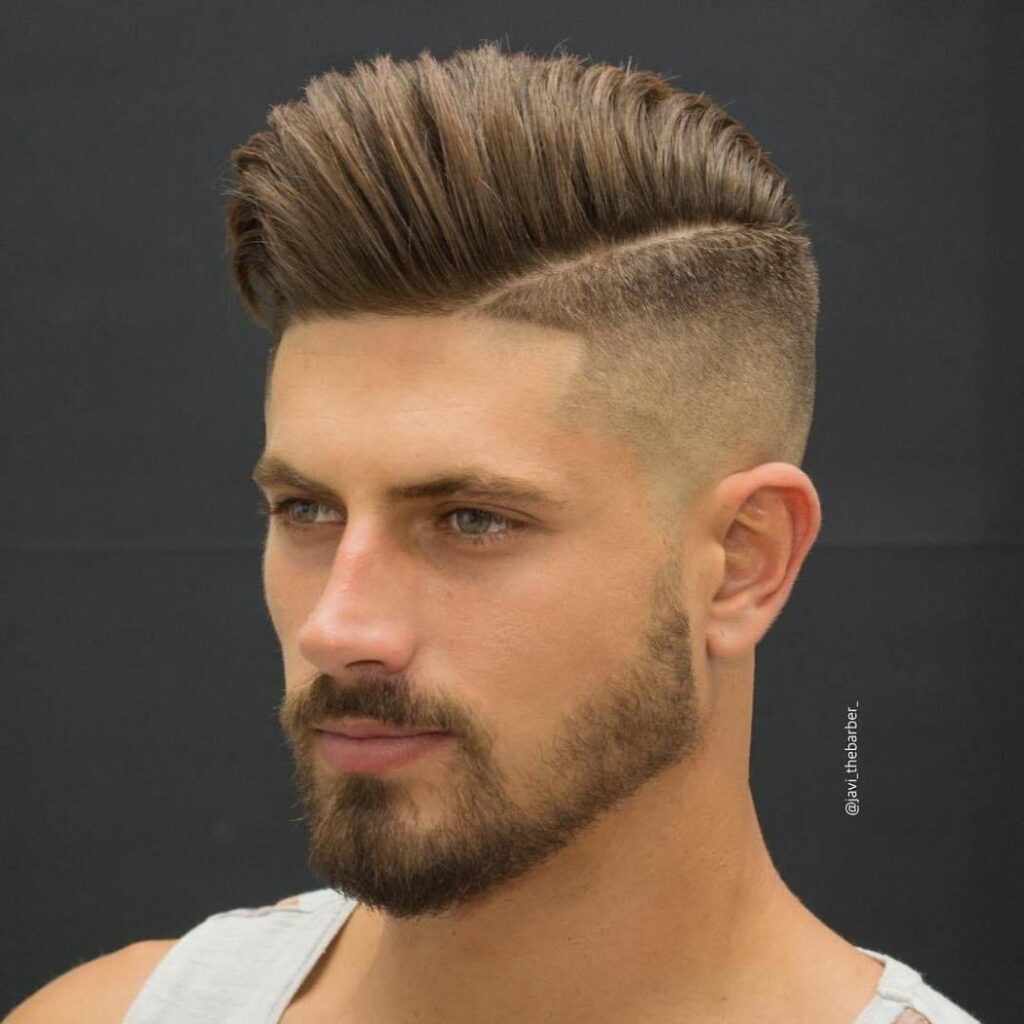
The comb over high fade features longer hair on top swept to one side with a clean part, paired with high faded sides. This modern gentleman aesthetic works across age groups and settings.
Suits oval, square, and diamond faces. Apply pomade or clay to damp hair, part on one side, and comb across. Ask for a comb over with a high fade and a hard part for definition.
Modern Textured High Fades
6. Textured Crop High Fade
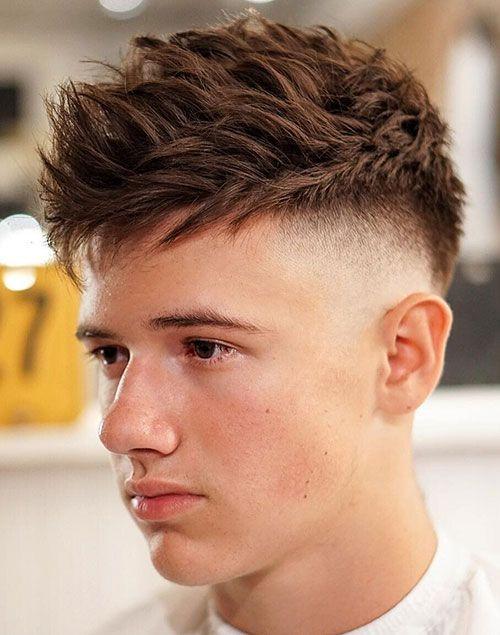
The textured crop high fade pairs a short, choppy French crop on top with a skin-tight fade on the sides. Driven by the messy texture trend on social media, the crop sits forward with a ruffled finish.
Best for thick or straight hair. Apply matte clay or texture powder to damp hair and push forward with your fingers. Ask for a textured crop with a high skin fade, leaving two to three inches on top. Trims every two to three weeks.
7. Messy Fringe High Fade
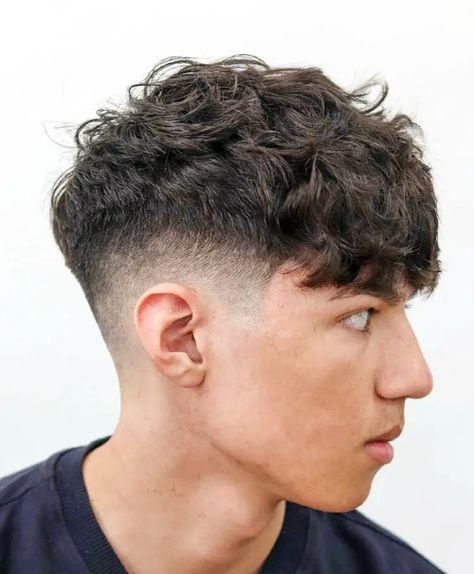
The messy fringe high fade features textured bangs worn forward in a deliberately undone style, paired with a high fade. This is one of the biggest Gen Z haircut trends of 2026.
Suits oval, round, and heart-shaped faces. Apply matte clay or texture powder and push the fringe forward with your fingers, keeping it messy. Ask for a messy fringe with a high fade, leaving three to four inches at the front.
8. Spiky High Fade
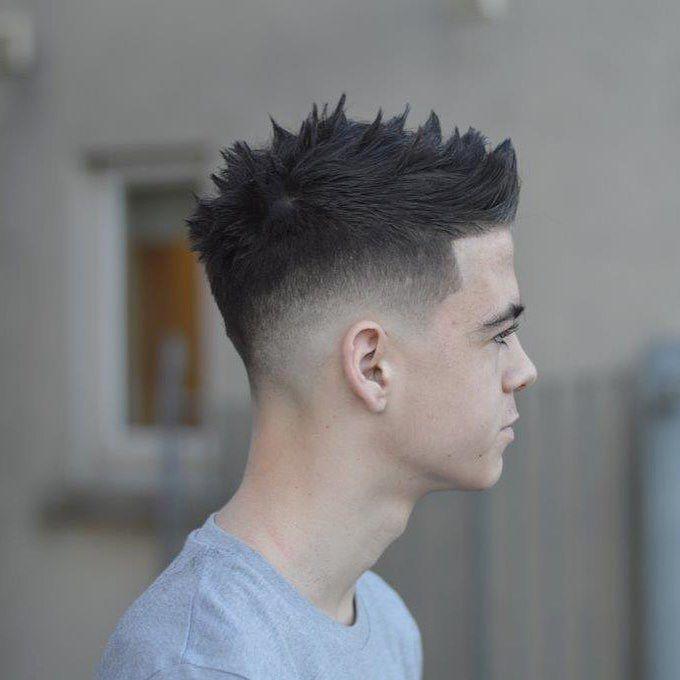
The spiky high fade brings back pointed, textured spikes with a modern update. The high fade makes the spikes on top the clear focal point. This style has resurfaced through TikTok nostalgia trends and the Y2K revival.
Suits oval, square, and diamond faces. Apply matte clay and pinch sections upward into spikes. Ask for a short to medium top with a high fade, leaving two to three inches for spiking.
9. French Crop High Fade
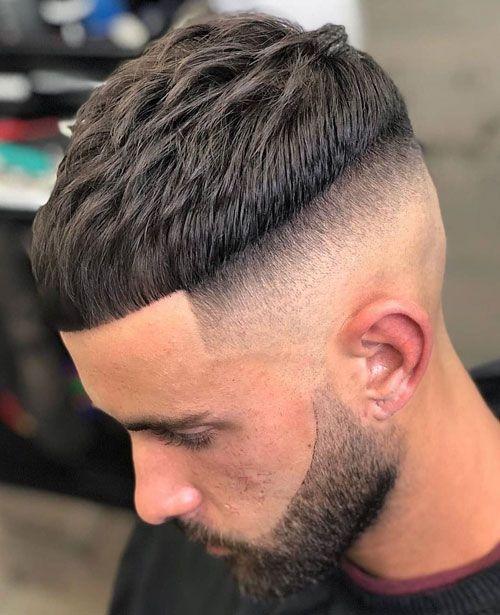
The French crop high fade is the refined cousin of the textured crop. It features a neat, horizontally cut fringe worn forward with a cleaner edge, suitable for both casual and smart-casual occasions.
Suits oval, square, and round faces. Apply matte clay to damp hair and style forward. Ask for a French crop with a high fade, leaving two inches on top with a blunt fringe cut straight across.
10. Tousled High Fade
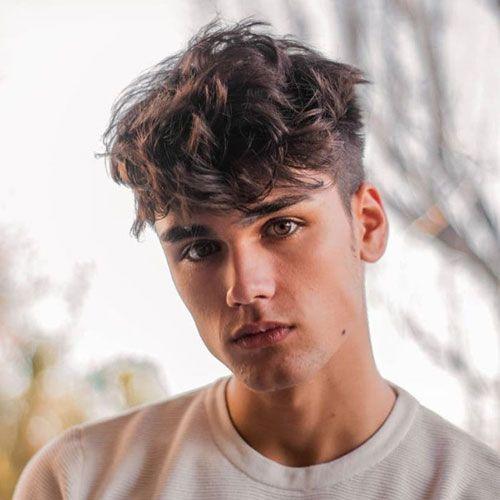
The tousled high fade embraces a bed-head aesthetic on top while keeping the sides razor sharp. The deliberate contrast between messy top and clean fade is what makes this style work.
Suits most face shapes. Apply sea salt spray to damp hair, scrunch, and let air dry. Ask for a tousled top with a high fade, leaving three to four inches on top. Texture powder adds extra volume.
Curly and Wavy High Fades
11. Curly High Fade
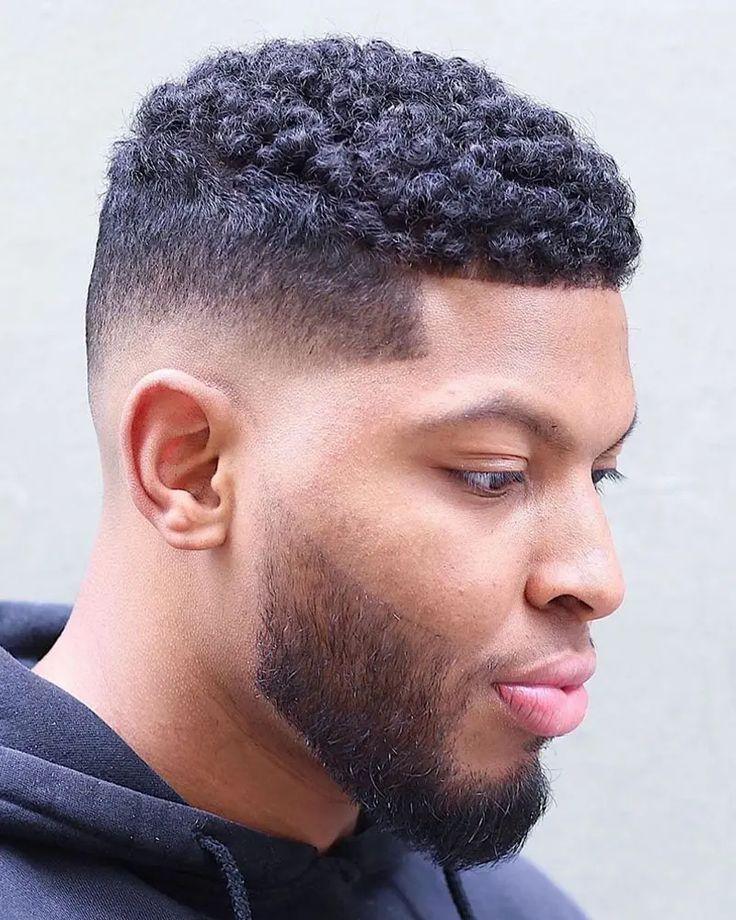
The curly high fade embraces natural curl definition on top while keeping the sides tight. This creates one of the strongest contrasts available because tight curls pop against the skin-faded sides.
Best for naturally curly or coily hair. Use a diffuser to enhance curls and apply curl cream to damp hair. Ask for a curly top with a high fade, leaving three to four inches on top. Avoid heavy gels that flatten curls.
12. Afro High Fade
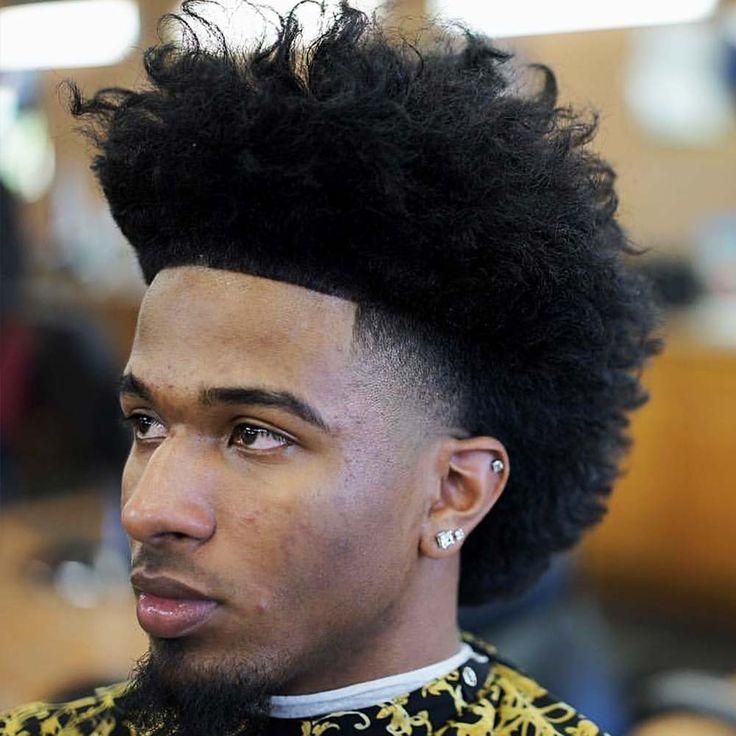
The afro high fade combines a rounded afro on top with a sharp fade on the sides, often incorporating a shape-up at the hairline. Sponge curls on the fade line add detail.
Designed for coily or kinky hair. Pick or shape the afro daily and use a sponge brush on the fade line. Ask for an afro with a high fade, line-up at the temples, and shape-up at the forehead. Line-ups needed every one to two weeks.
13. Wavy Top High Fade
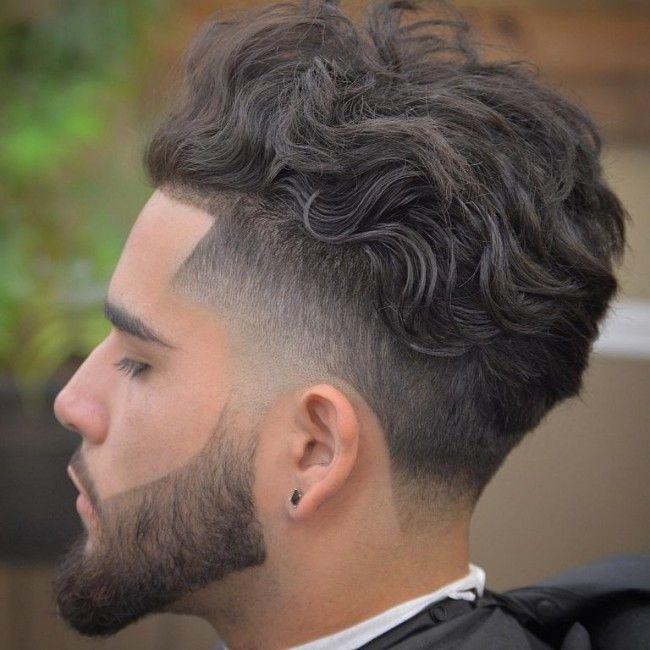
The wavy top high fade lets natural waves flow on top while the sides stay tight and faded. The contrast between flowing waves and sharp fade makes this visually striking.
Suits oval, square, and diamond faces. Naturally wavy hair is essential. Apply sea salt spray to damp hair and let air dry. Ask for a wavy top with a high fade, leaving three to five inches on top. Use light pomade for hold without flattening movement.
14. Sponge Curl High Fade
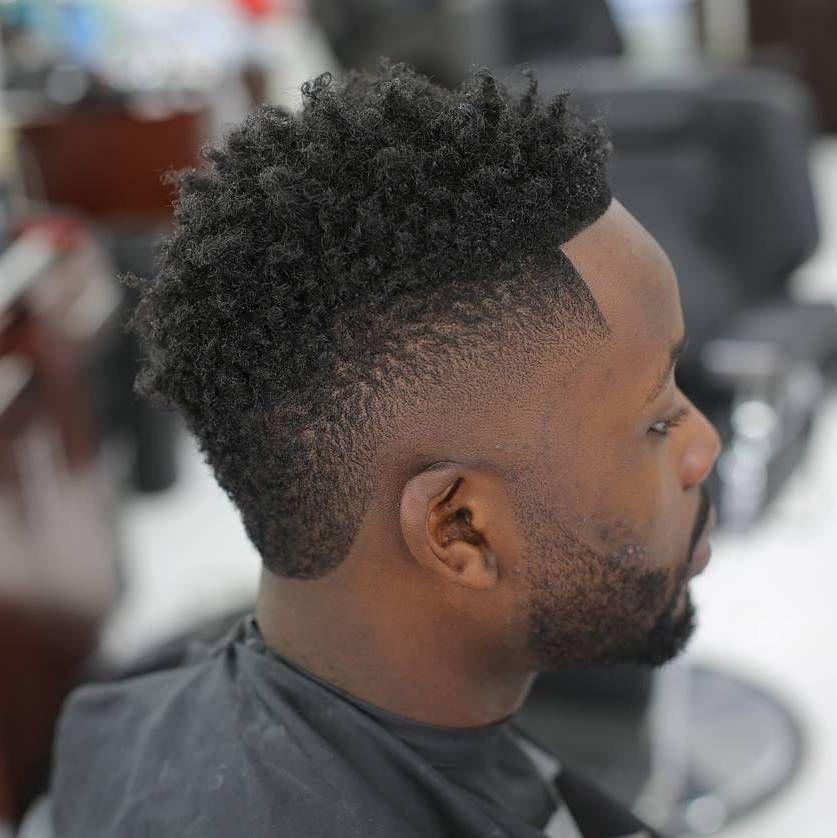
The sponge curl high fade uses a sponge brush to create tight curls near the fade line while the top stays longer. This technique has roots in African barbering traditions and has become a global trend.
Best for coily and kinky hair types. Use a sponge brush on slightly damp hair in circular motions. Ask for a high fade with sponge curls at the transition point. Refresh the curls every few days.
15. Permed High Fade
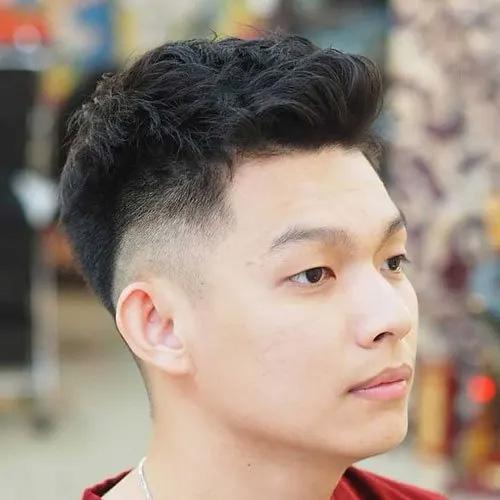
The permed high fade combines chemically enhanced curls or waves on top with a clean high fade on the sides. The contrast between voluminous perm and tight fade creates a head-turning look.
Suits men with straight or slightly wavy hair wanting added texture. The perm should be done by a professional. Ask for a high fade with the top left long enough for the perm. Perm touch-ups every three to four months plus fade trims every two to three weeks.
Edgy and TikTok-Inspired High Fades
16. High Fade Mullet
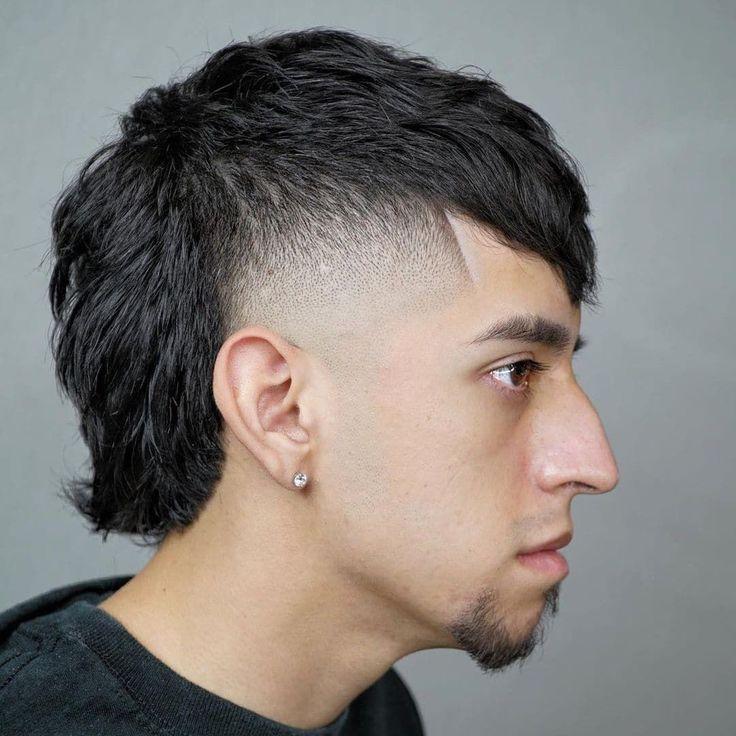
The high fade mullet combines the modern mullet trend with a high fade on the sides. The burst fade mullet is a popular variation where the fade curves around the ear into the longer back. TikTok has made this one of the most talked-about cuts of 2026.
Suits oval, square, and diamond faces. Apply sea salt spray to damp hair and let air dry for surfer-inspired texture. Ask for a mullet with a high or burst fade, leaving length in the back.
17. Burst Fade Mohawk
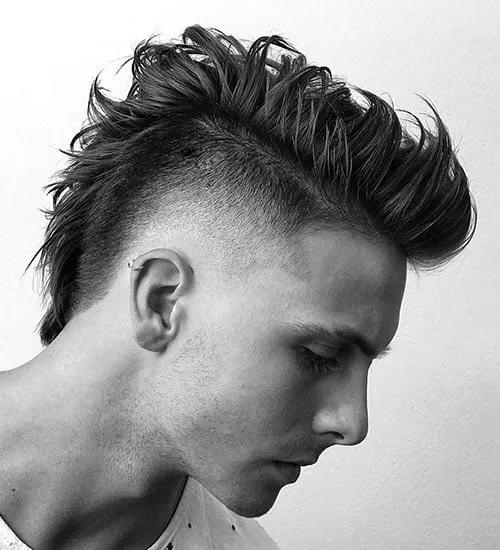
The burst fade mohawk keeps a strip of longer hair down the center while the sides feature a semicircular fade curving around the ear. The burst creates a sunburst effect more artistic than a standard fade.
Suits thick, straight, or curly hair. Apply matte clay and push the center strip upward. Ask for a mohawk with a burst fade. High maintenance, needing trims every two weeks. Keep the strip textured rather than spiked for a wearable look.
18. Faux Hawk High Fade
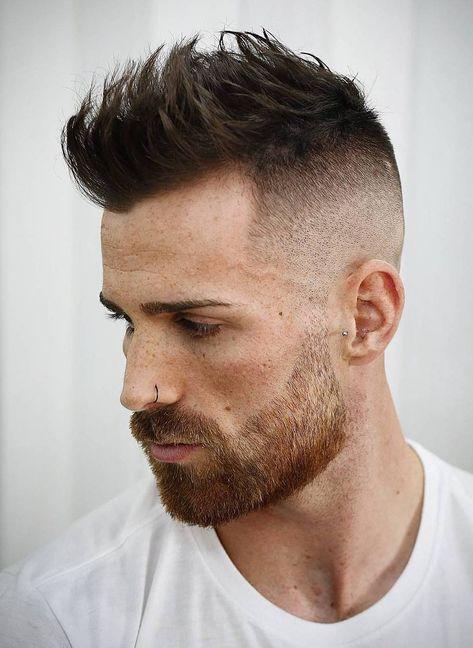
The faux hawk high fade keeps the center strip shorter and more textured than a full mohawk, creating spikes without extreme commitment. This versatile cut works for casual and semi-formal settings.
Suits most face shapes and hair types. Apply matte clay and pinch the center upward into textured spikes. Ask for a faux hawk with a high fade, leaving about two inches in the center. Keep spikes loose rather than stiff.
19. High Fade with Design
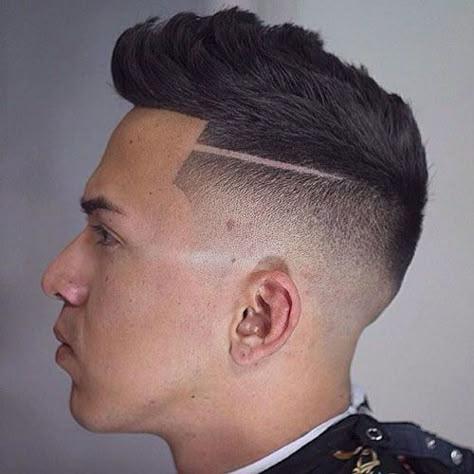
The high fade with design adds creative barber work including shaved lines, hair tattoos, and geometric patterns. This statement cut showcases your barber’s skill and your personal style.
Suits men who want to stand out. Any face shape and hair type works. Bring reference photos. Ask for a high fade with a specific design. High maintenance since designs grow out quickly, needing touch-ups every one to two weeks.
20. Disconnected High Fade
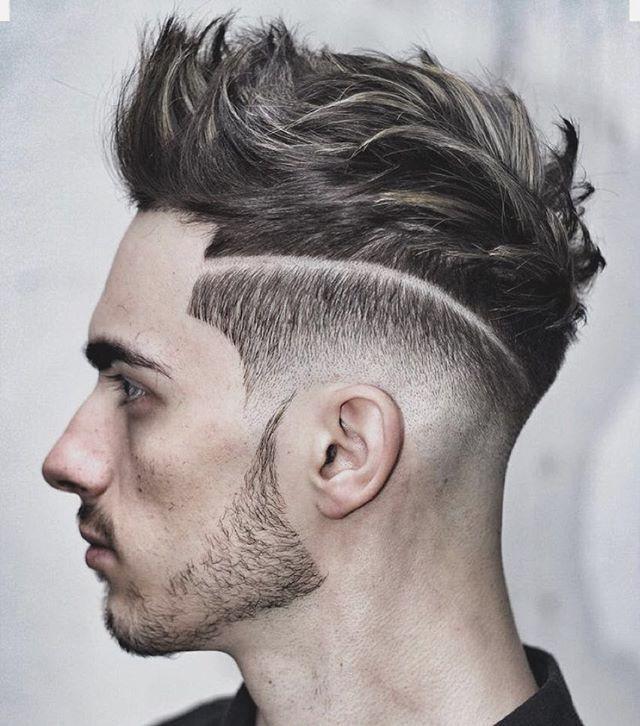
The disconnected high fade features a sharp break between the top and faded sides. Unlike a blended fade, it leaves a visible line where longer top meets skin-tight sides, creating maximum drama.
Suits oval, square, and diamond faces. Ask for a disconnected cut with a high fade, specifying no blend between top and sides. Style the top as desired. The disconnection point should sit clean and sharp.
Professional High Fade Haircuts
21. Slick Back High Fade
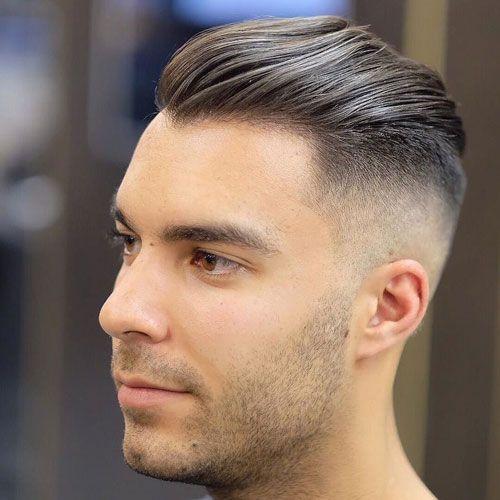
The slick back high fade merges classic sophistication with modern sharpness. The top is left long enough to comb back smoothly, while the high fade creates dramatic contrast on the sides.
Best for straight or slightly wavy hair. Apply medium-hold pomade to towel-dried hair, then blow dry while brushing back. Ask for a slick back with a high fade, leaving four to five inches on top. Leave a few strands loose for a relaxed finish.
22. Pompadour High Fade
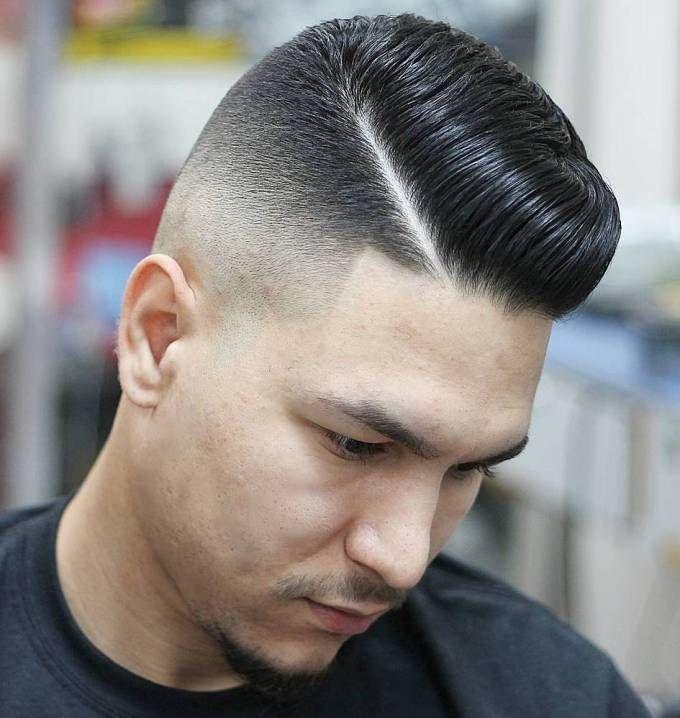
The pompadour high fade is a retro-modern hybrid pairing a voluminous, swept-up front with razor-sharp faded sides. The pompadour has 1950s roots updated with modern fades and textured finishes.
Best for thick, straight, or wavy hair. Blow dry the front upward and back, then set with pomade or clay. Ask for five to six inches at the front. Beard pairing works well here. A faded beard blending into the high fade creates a seamless transition.
23. Executive Contour High Fade
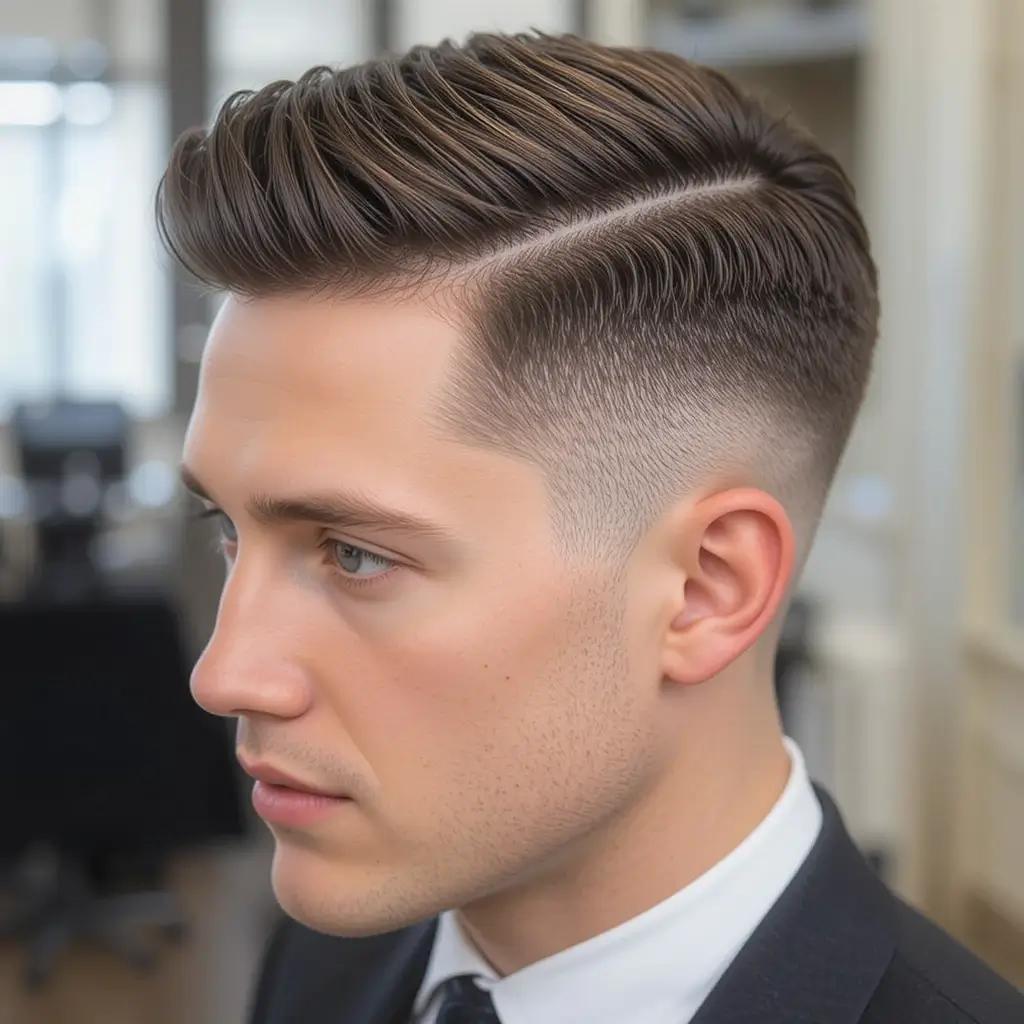
The executive contour high fade is a refined cut featuring a swept-back top with a defined S-shaped wave contour. Originating in the mid-20th century, it has been revived with modern fades for sophisticated styling.
Suits oval, square, and diamond faces. Straight and wavy hair works best. Apply medium-hold pomade and use a comb to shape the S-curve. Ask for an executive contour with a high fade, leaving four to five inches on top.
24. Business Quiff High Fade
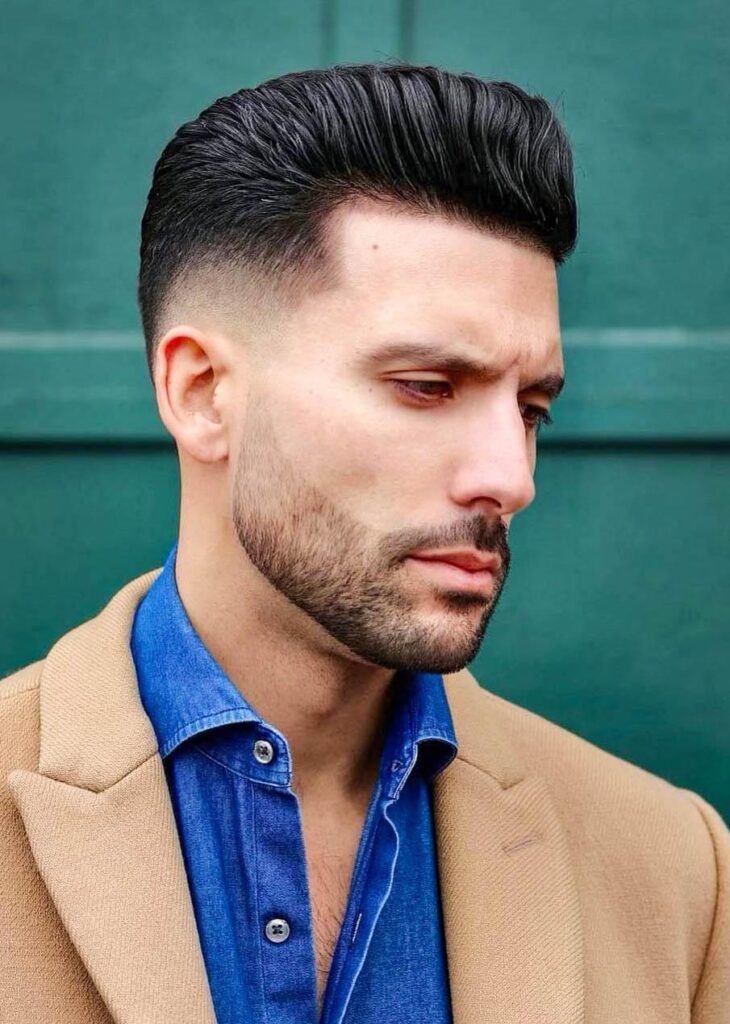
The business quiff high fade is a restrained version of the classic quiff designed for professional environments. The front has moderate volume that sweeps upward and back, but the silhouette is cleaner than a casual quiff.
Suits oval and square faces. Apply light-hold mousse and blow dry the front upward with a round brush. Ask for a business quiff with a high fade, leaving three inches at the front. Set with light pomade for a natural finish.
25. Hard Part High Fade
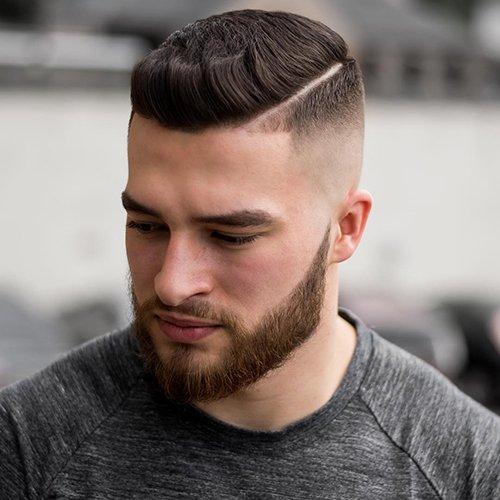
The hard part high fade features a razor-shaved part line carved into the side of the head, combined with a high fade. The hard part creates permanent definition that stays visible between cuts.
Suits oval, square, and diamond faces. Ask for a hard part with a high fade, specifying the part side. Apply pomade or clay and style across the part. The carved line stays sharp for about two weeks before needing a touch-up.
Beard and Masculine High Fade Styles
26. High Fade with Beard
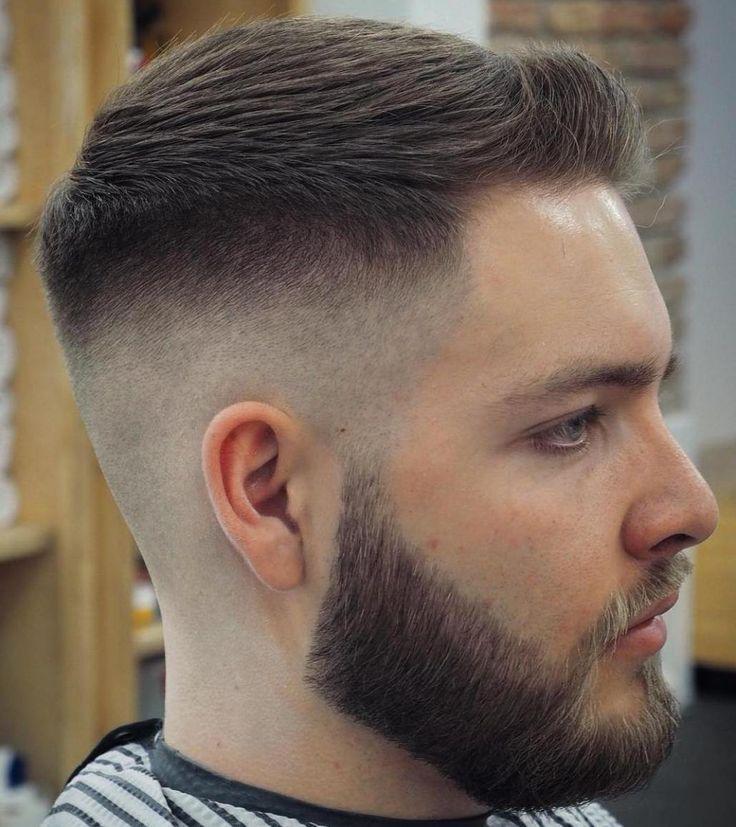
The high fade with beard blends the haircut into facial hair for a seamless transition. The fade-to-beard technique is one of the most requested skills in barbershops. When done right, the hair fades directly into the beard with no visible line.
Suits men with full beards wanting a polished look. Style the top as desired and use beard oil and balm to keep the beard neat. Ask for a high fade that blends into the beard using guard transitions from the sideburns into the cheek line.
27. Ducktail Beard Fade
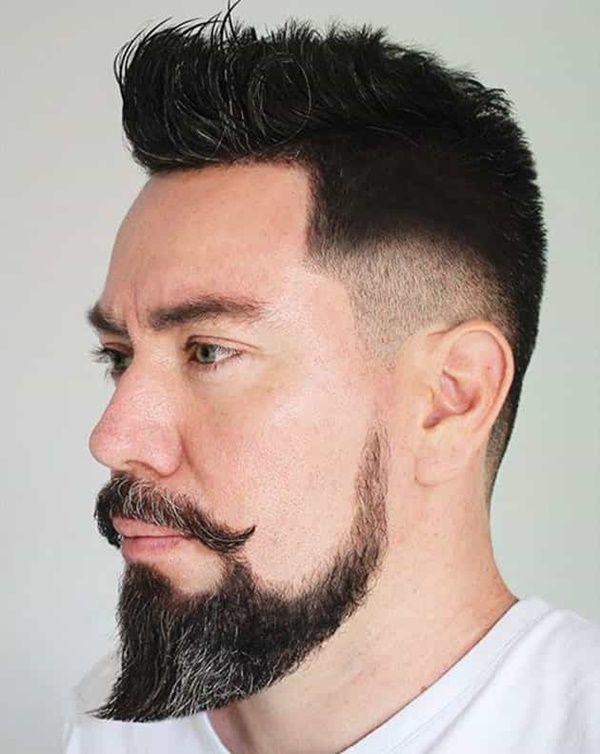
The ducktail beard fade pairs a high fade haircut with a pointed, sculpted beard that tapers to a point at the chin. This creates a striking, masculine silhouette that draws attention to the jawline.
Suits square and oval faces best. Ask for a high fade that blends into a ducktail beard shape. Use beard balm and a blow dryer to shape the point daily. Regular beard shaping needed every two weeks.
28. Stubble Fade Blend
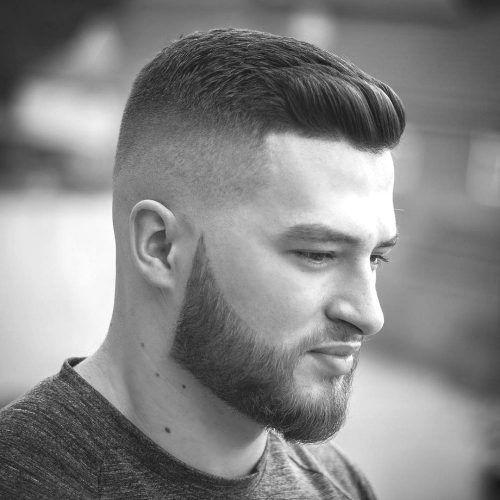
The stubble fade blend connects a high fade directly into short, even stubble across the jaw and neck. The fade transitions from skin to stubble length, creating a clean gradient effect.
Suits most face shapes. Ask for a high fade transitioning into stubble-length beard, typically a number one guard at the cheek line. Use a beard trimmer at home to maintain stubble between visits. Beard oil keeps the skin moisturized.
29. Viking-Inspired High Fade
The Viking-inspired high fade pairs a longer, rugged top with a full beard and a high fade transition between them. The top is left long enough to braid or tie back, while the fade creates a sharp transition into a substantial beard.
Suits oval, square, and diamond faces. Ask for a high fade with length left on top for braiding or tying. Use beard oil and balm for the beard, sea salt spray for the top. Moderate maintenance keeps the fade sharp while the top grows freely.
30. Sharp Line-Up High Fade
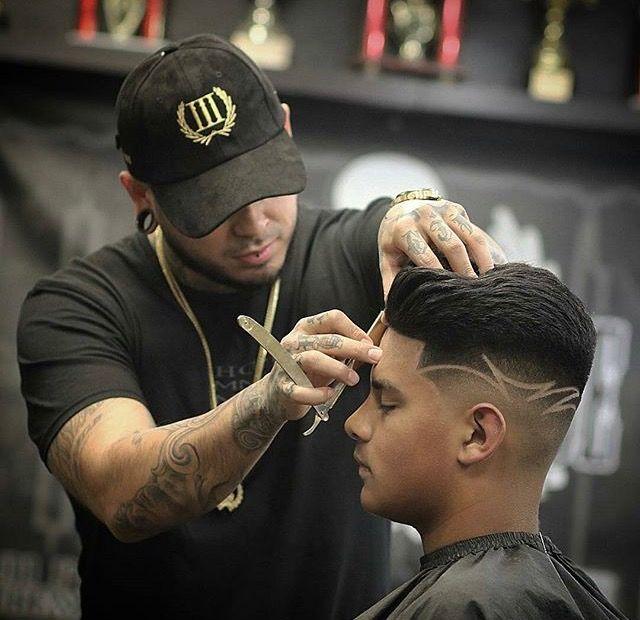
The sharp line-up high fade emphasizes geometric precision at the hairline, temples, and beard edges. The line-up creates razor-sharp corners and straight lines. Combined with a high fade, this cut looks architectural and precise.
Suits all face shapes. Ask for a high fade with a sharp line-up at the forehead, temples, and sideburns. Use edge control product and a toothbrush for daily touch-ups. Line-ups need refreshing every one to two weeks.
Long Top High Fade Hairstyles
31. High Fade with Long Fringe
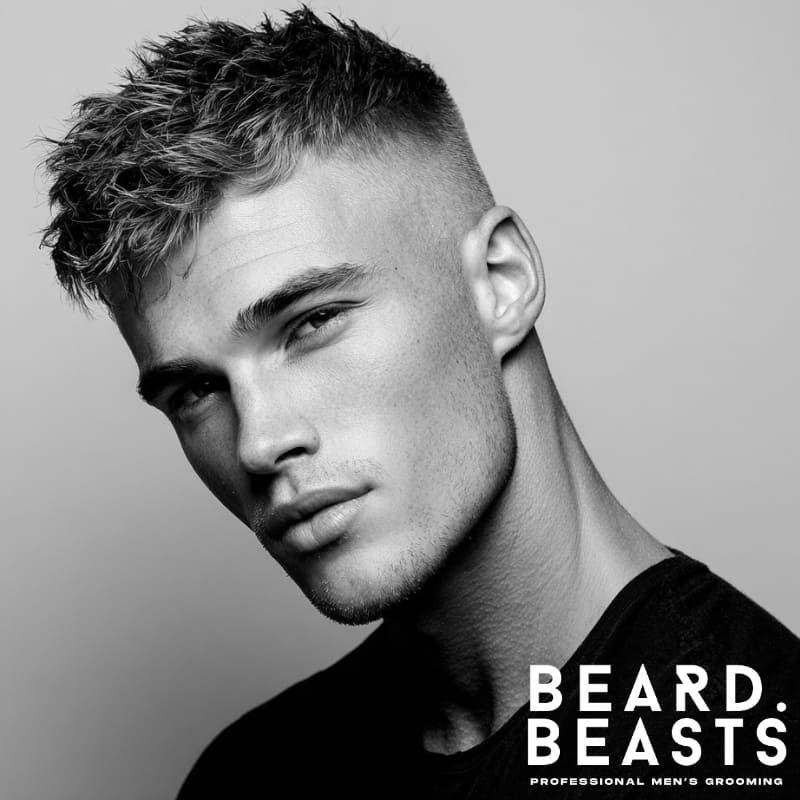
The high fade with long fringe features bangs that fall well past the forehead, often reaching the eyebrows. The long fringe creates a dramatic curtain effect on top while the high fade keeps the sides tight. This style has gained popularity through K-pop and alternative fashion influences.
Suits oval, round, and heart-shaped faces. Apply texture powder to damp hair and push the fringe forward. Ask for a long fringe with a high fade, leaving four to five inches at the front.
32. Bro Flow High Fade
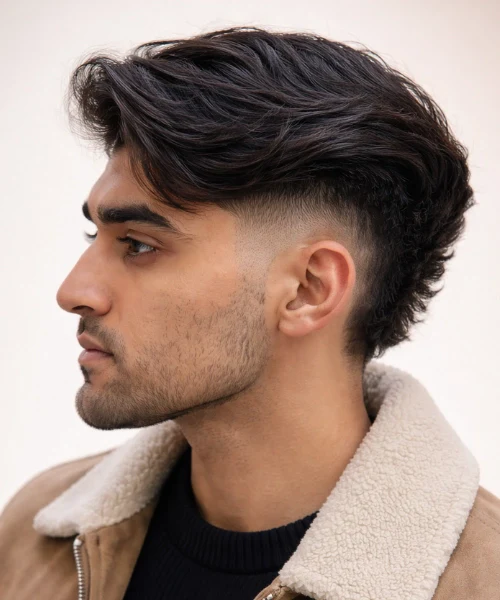
The bro flow high fade lets the top grow long enough to sweep back naturally with the grain. The high fade creates contrast with the flowing, relaxed top. This surfer-meets-barber aesthetic has exploded in 2026.
Suits oval, square, and diamond faces. Apply sea salt spray to damp hair and blow dry while pushing hair back. Ask for a bro flow with a high fade, leaving five or more inches on top. Use light pomade for hold without stiffness.
33. Curtains with High Fade
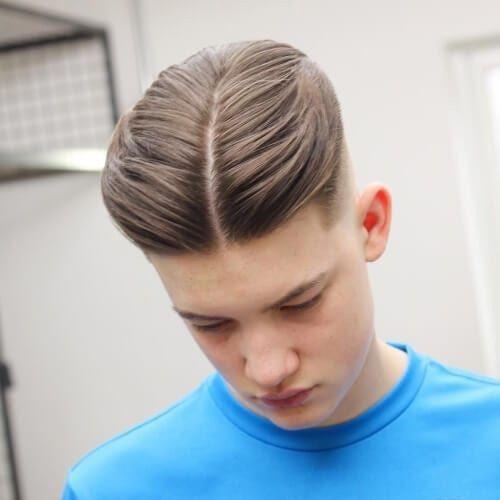
The curtains hairstyle with a high fade features a middle part with hair falling on both sides like curtains. This 1990s-inspired style has made a massive comeback in 2026, driven by nostalgia trends.
Suits oval, square, and diamond faces. Apply sea salt spray or light pomade to damp hair and part down the middle. Ask for curtains with a high fade, leaving four to five inches on top. The hair should fall naturally on both sides.
34. Samurai Bun High Fade
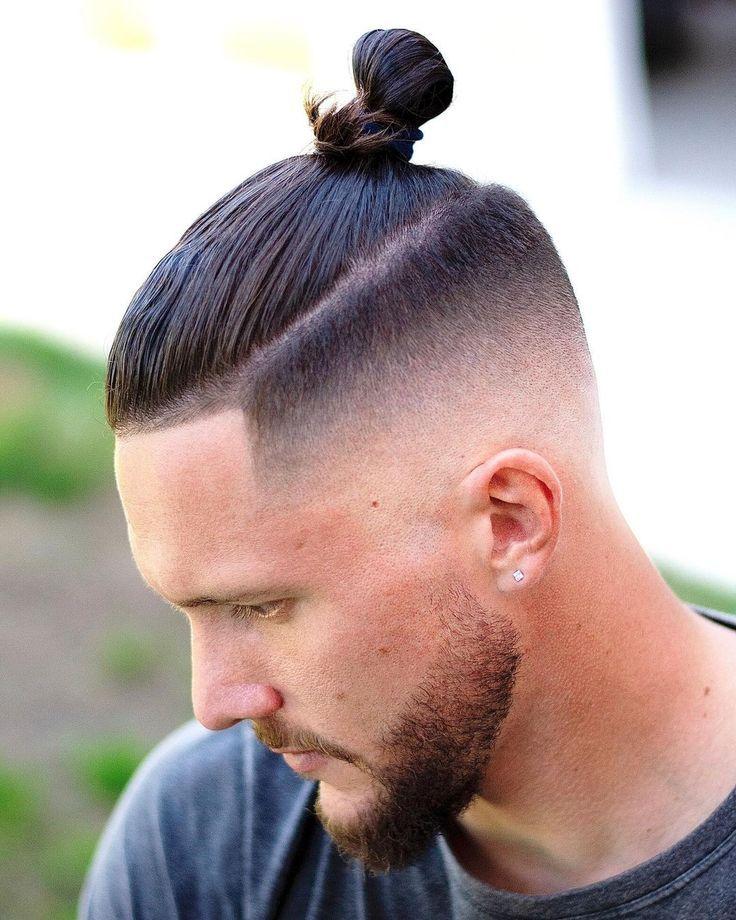
The samurai bun high fade pairs a top knot or man bun with a high fade on the sides. The contrast between the structured bun and skin-tight faded sides creates a bold look that draws from Japanese samurai aesthetics.
Suits oval, square, and diamond faces. Long, straight, or wavy hair is needed. Apply styling cream to damp hair and tie into a top knot. Ask for a samurai bun with a high fade, leaving enough length to tie back. Fade trims every two to three weeks.
35. Textured Long Top Fade
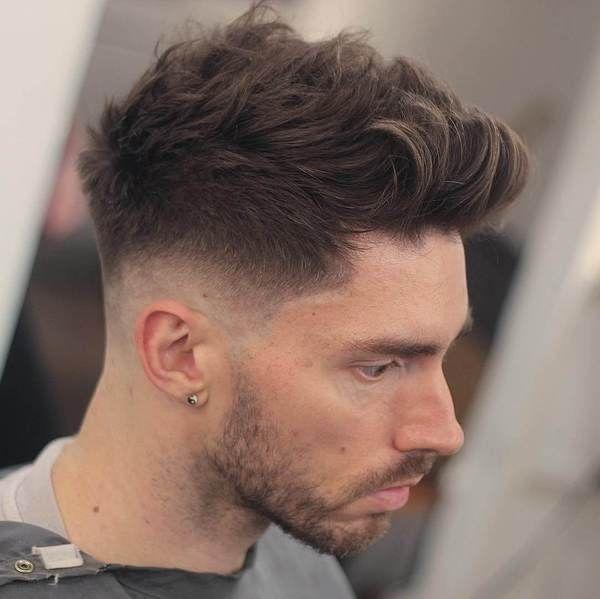
The textured long top fade keeps the top long and layered with visible texture, while the high fade keeps the sides tight. The layering adds movement and dimension, preventing the long top from looking flat or heavy.
Suits most face shapes. Works with thick, straight, wavy, or curly hair. Apply sea salt spray or texture powder to damp hair and scrunch for texture. Ask for a textured long top with a high fade, with layers cut for movement. Use matte clay for hold.
Minimal and Low-Maintenance High Fades
36. Skin High Fade
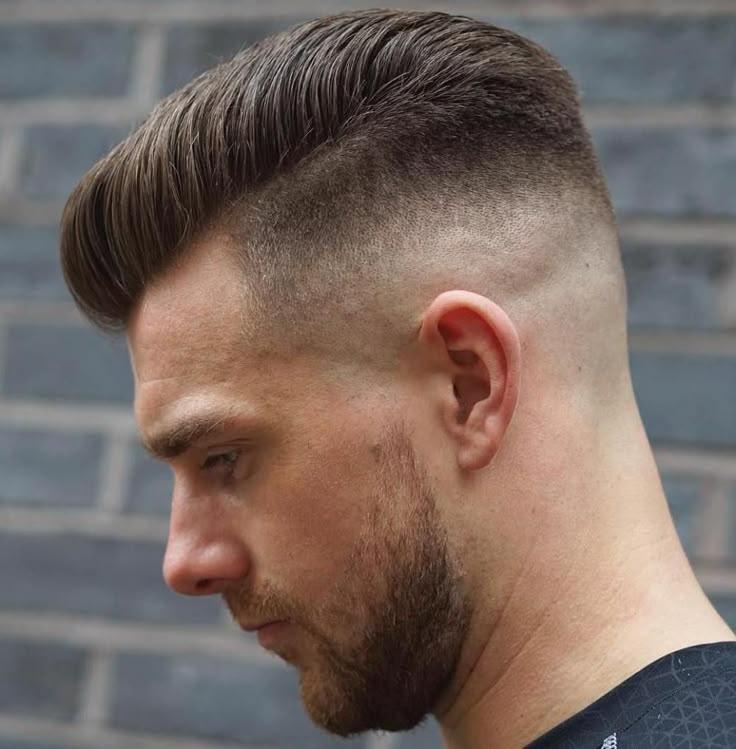
The skin high fade takes the fade all the way to bare skin on the sides and back, creating the sharpest possible contrast with the hair on top. This is the purest form of the high fade.
Suits all face shapes and hair types. Ask for a skin high fade with the sides going completely to the skin. No styling needed on the sides. Biweekly barber visits keep the fade looking sharpest.
37. Bald High Fade
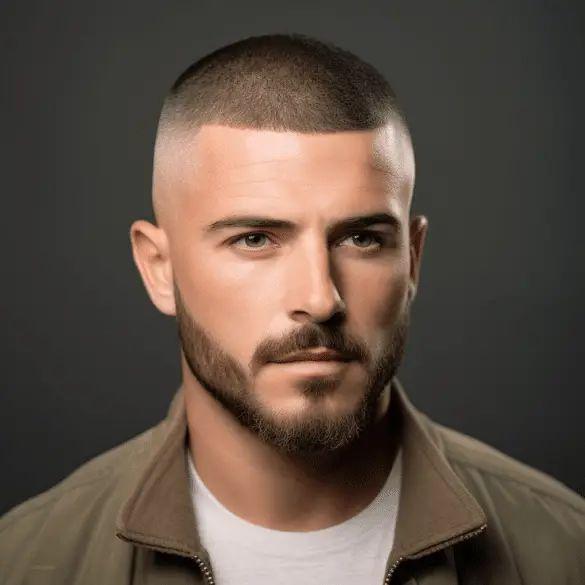
The bald high fade is a zero-guard cut on the sides fading into a completely bald or near-bald finish. The top may have a short buzz or be completely shaved. This is the ultimate low-maintenance cut.
Suits all face shapes, particularly square and oval. Ask for a bald high fade with a zero guard or razor shave on the sides. No styling products needed. Maintenance can be done at home with clippers between visits.
38. Caesar High Fade
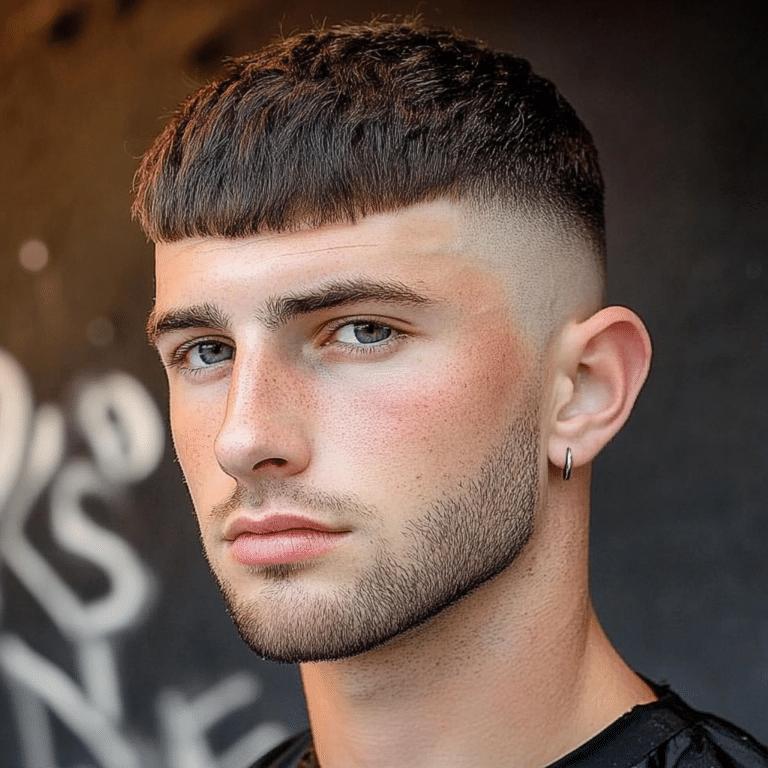
The Caesar high fade features a short horizontal fringe worn forward, paired with high faded sides. This has gained popularity among men with receding hairlines because the forward fringe naturally conceals thinning at the temples.
Suits oval, square, and diamond faces. Apply matte clay and push the fringe forward. Ask for a Caesar cut with a high fade, keeping one to two inches at the front. The fringe should be cut straight across for the authentic look.
39. Military High Fade
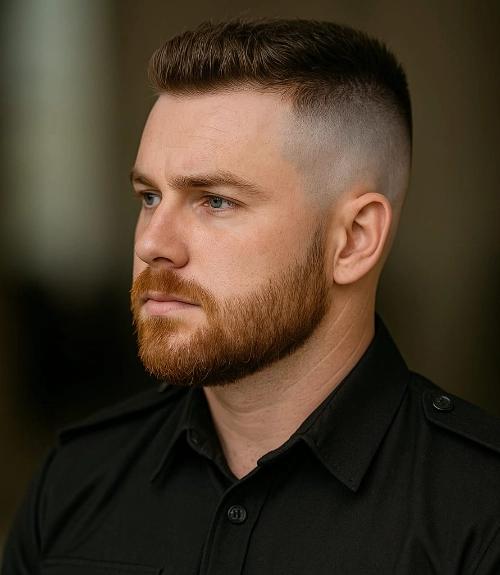
The military high fade is a regulation-inspired cut that keeps the top very short while the sides fade to the skin. Designed for function, it meets military grooming standards while still looking sharp.
Suits all face shapes and hair types. Ask for a military fade with a number one or two guard on top and a skin fade on the sides. No styling products needed. One of the easiest cuts to maintain at home. Trims every two to three weeks.
40. Short Crop High Fade
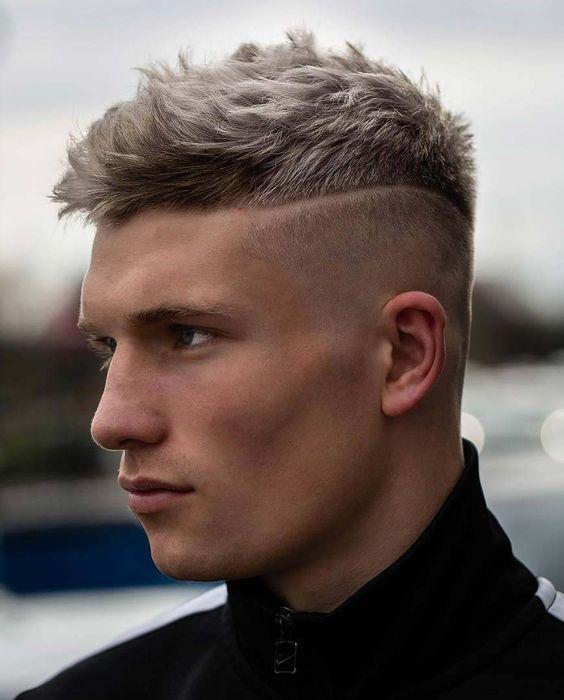
The short crop high fade is a subdued version of the textured crop. The top is cut shorter, usually under two inches, with minimal texture. This is the ideal cut for men who want the crop aesthetic without daily styling commitment.
Suits most face shapes. Apply a small amount of matte clay and push the hair forward. Ask for a short crop with a high fade, keeping the top under two inches. This cut is virtually wash-and-go, perfect for busy schedules.
High Fade Haircuts by Hair Type
High Fade for Straight Hair
Straight hair and high fades are a natural combination. Slick backs, side parts, and comb overs work especially well. Straight hair holds its shape all day with minimal product, making it one of the easiest types to style with a high fade. The clean lines of the fade complement the sleek, uniform texture on top perfectly.
High Fade for Thick Hair
Thick hair benefits from high fades because the faded sides remove bulk where it is not needed. Textured crops, quiffs, and pompadours thrive with thick hair because natural volume creates impressive shapes. Ask your barber to thin the top slightly if it feels too heavy.
High Fade for Thin Hair
Thin hair can work with high fades, but keep the top short. Crew cuts, buzz cuts, and Caesar cuts are ideal because they do not require volume. The high fade creates the illusion of thickness through contrast. Avoid longer styles that expose thinning areas.
High Fade for Curly Hair
Curly hair paired with a high fade creates one of the most striking contrasts available. Keep curls moisturized with curl cream and use a diffuser when blow drying. The curly high fade and afro high fade are the top options for this hair type.
High Fade for Coarse Hair
Coarse hair holds its shape exceptionally well, making it ideal for textured crops, afro fades, and sponge curl styles. The high fade removes bulk on the sides while coarse texture on top creates strong visual interest. Use moisturizing products to keep it manageable.
High Fade for Wavy Hair
Wavy hair offers the best of both worlds with a high fade. Wear it smooth and combed for a polished look or enhance waves with sea salt spray for a relaxed style. The natural movement of waves adds character to any top style paired with a high fade, making it one of the most versatile hair types for this cut.
High Fade Haircuts by Face Shape
Oval Face
Oval faces are the most versatile for high fades. Nearly every variation works. The balanced proportions mean you can focus on the style that matches your hair type and preference.
Round Face
Round faces benefit from high fades that add height and vertical lines. Pompadours, quiffs, and styles with volume at the front help elongate the face. Avoid flat tops that emphasize roundness.
Square Face
Square faces pair perfectly with high fades because the sharp fade lines complement the strong jawline. Textured crops, buzz cuts, and crew cuts all work well. Softer styles like the comb over balance angular features.
Diamond Face
Diamond faces look best with high fades that add width at the forehead and chin. Comb overs, side parts, and fringe cuts create fullness where the diamond face narrows. Avoid too much height on top.
Heart-Shaped Face
Heart-shaped faces are wider at the forehead and narrower at the chin. High fades with volume at chin level, like beards, help balance proportions. Side parts and comb overs worn slightly forward work well.
Long Face
Long faces should avoid excessive height on top. Opt for textured crops, Caesar cuts, and fringe styles that add width. The high fade keeps the sides tight while horizontal volume on top balances proportions.
How to Ask Your Barber for a High Fade
Clipper Guard Numbers Explained
A number zero guard cuts to the skin. A number one leaves one-eighth of an inch. A number two leaves one-quarter inch. A number three leaves three-eighths of an inch. For a high fade, your barber uses multiple guards, starting longer near the top and working down to zero.
Skin Fade vs Taper Fade
A skin fade goes to bare skin. A taper fade leaves a small amount of hair at the bottom for a softer transition. High fades are most commonly cut as skin fades. Ask for a taper fade if you prefer a more conservative look.
Showing Reference Photos
Always bring reference photos. They communicate your vision more clearly than words. Show front, side, and back views. Point out details like fade height, top length, and blend type.
How High the Fade Should Start
A true high fade starts two to three inches above the ear. Ask for a mid-high fade if you want something less dramatic. Specify whether the fade should go to the skin or stop at a short guard length.
Blend and Transition Terminology
Use terms like “blend,” “transition,” and “guard drop.” Request a “tight blend” for sharp transition or “smooth blend” for gradual. Mention whether you want the neckline faded or blocked, and how you want the sideburns shaped.
Common Barber Mistakes to Avoid
Not showing a reference photo is the top mistake. Being vague about fade height leads to disappointment. Failing to specify skin fade versus taper fade can result in a different look. Always communicate clearly before cutting begins.
Best Styling Products for High Fade Haircuts
Matte Clay
The most versatile high fade product. Provides hold without shine, creating a natural, textured finish. Apply a small amount to damp or dry hair. Works best for textured crops, crew cuts, and faux hawks.
Pomade
Delivers hold with shine, perfect for slick backs, side parts, and comb overs. Water-based pomades wash out easily with flexible hold. Oil-based pomades offer stronger hold and more shine.
Texture Powder
Adds instant volume and grip without weighing hair down. Shake into dry hair and massage through. Works well for quiffs, fringes, and messy styles. Lightweight and buildable throughout the day.
Sea Salt Spray
Creates beachy texture and natural volume. Spray onto damp hair and blow dry or air dry. Ideal for mullets, flow styles, and wavy tops. Works best as a pre-styler before your main product.
Curl Cream
Essential for curly and coily high fade styles. Defines curls, reduces frizz, and adds moisture without crunchiness. Apply to damp hair and style with fingers or a diffuser.
Hair Mousse
Adds volume and lightweight hold, ideal for quiffs and pompadours. Apply to damp hair before blow drying for maximum lift. Provides structure without the weight of heavier products.
Heat Protectant
Essential if you use a blow dryer or flat iron. Spray onto damp hair before heat tools. Prevents damage and reduces breakage. Styles requiring blow drying benefit most.
Beard Oil for Fade-Beard Blends
Keeps the beard moisturized and soft, crucial when your fade blends into facial hair. Apply a few drops daily, focusing on the transition zone. Keeps the blend seamless between barber visits.
How to Style a High Fade at Home
Blow Drying Techniques
Use a round brush at the roots while directing heat upward for lift. For slick backs, blow dry while brushing hair back. Always use heat protectant before blow drying.
Creating Volume
Volume starts at the roots. Apply mousse or sea salt spray to damp hair, then blow dry while lifting. Texture powder at the roots adds instant lift. Avoid heavy products that weigh hair down.
Textured Styling Methods
Apply matte clay or texture powder to dry hair and style with your fingers. Pinch and twist small sections. Push forward for a crop, upward for a faux hawk, or across for a messy comb over.
Wet vs Matte Finish
A wet finish uses pomade or gel for a sleek, shiny look. A matte finish uses clay or powder for natural texture. Choose based on the occasion and your personal style.
Daily Maintenance Routine
Wash or rinse your hair, apply product, and style. Check the fade line for uneven growth. Use a small trimmer on the sideburns and neckline if needed. Schedule trims every two to three weeks.
How Often Should You Trim a High Fade?
Weekly Maintenance
Some men visit weekly for a freshly cut look. Common for skin fades and designs that grow out quickly. Requires time and budget commitment.
Biweekly Trims
Most barbers recommend biweekly trims. After two weeks, the fade loses sharpness. A biweekly schedule keeps the fade clean without weekly expense. This is the most popular schedule.
Growing Out a High Fade
Ask your barber to trim the top and fade the sides less aggressively each visit. This gradually blends the fade into a longer style. Expect four to eight weeks for the process.
Avoiding Uneven Fade Growth
Hair grows at different rates on different parts of the head. Schedule regular trims and ask your barber to even out the sides rather than re-fading them. This keeps the transition smooth while adding length.
High Fade vs Other Popular Haircuts
High Fade vs Taper Fade
A taper fade leaves hair at the bottom. A high fade goes down to the skin. Taper fades offer a softer look. High fades deliver bolder contrast.
High Fade vs Skin Fade
“High fade” refers to where the fade starts. “Skin fade” refers to how short it goes. Most high fades are cut as skin fades for the sharpest result.
High Fade vs Burst Fade
A burst fade curves around the ear in a semicircle. A high fade goes straight up the sides. Burst fades work well with mohawks and mullets. High fades are more versatile.
High Fade vs Undercut
An undercut disconnects the top from the sides with no blend. A high fade creates a smooth transition. Undercuts are bolder. High fades are more refined.
High Fade vs Low Fade
A low fade starts just above the ears for a subtle gradient. A high fade starts near the top for dramatic contrast. Low fades grow out more gracefully.
High Fade vs Mid Fade
A mid fade starts around the temples for a balanced look. A high fade starts higher with more contrast. Choose a mid fade for something noticeable but not extreme.
Celebrity and Social Media High Fade Inspiration
Athlete-Inspired High Fades
NFL players like Joe Burrow and Patrick Mahomes sport high fade variations that influence barbershop requests. Their cuts combine athletic practicality with sharp styling.
Rapper Hairstyle Influence
Rappers have driven high fade trends for decades. The high top fade, line-up, and afro fade have deep roots in hip-hop culture. Modern rappers continue with textured crops and burst fades.
K-Pop Hairstyle Trends
K-pop idols have introduced high fade variations to a global audience. Two-block cuts and textured fringes with high fades are particularly popular. K-pop influence has made these styles mainstream across Asia and beyond.
TikTok High Fade Trends
TikTok is the primary platform for high fade inspiration in 2026. Barber transformation videos go viral regularly. Variations like the burst fade mullet and textured crop fade gain traction here before appearing in barbershops worldwide.
Instagram Barber Trends
Instagram remains the gold standard for high fade inspiration. Top barbers post daily cuts with detailed captions about techniques and products. Following skilled barbers is one of the best ways to stay current.
Common High Fade Mistakes
Choosing the Wrong Fade Height
Not every head shape suits a high fade. If your head is round or flat on the sides, a high fade can exaggerate those features. Ask your barber which fade height complements your head shape.
Ignoring Head Shape
A high fade on a very round head can look bulbous. On a flat head, it can look severe. Work with your barber to find the right fade height and top style for your proportions.
Overusing Product
Too much product weighs hair down, creates buildup, and looks greasy. Start with a small amount and add more only if needed. Apply to damp hair for better distribution.
Poor Beard Blending
A high fade that does not blend into the beard looks disconnected. Ask your barber to use the same guard progression from the fade into the beard line.
Waiting Too Long Between Cuts
After three weeks, most high fades look like a regular short cut. Stick to a two-week schedule for the best results. If you cannot visit that often, consider a mid or low fade instead.
Frequently Asked Questions About High Fade Haircuts
Are high fades professional?
Yes. High fades are widely accepted in professional environments when paired with clean top styles like side parts, Ivy League cuts, and crew cuts.
Do high fades work with receding hairlines?
Yes, especially with short top styles like Caesar cuts or buzz cuts. The fade draws attention away from the temples, and a forward fringe can conceal thinning.
Which fade is easiest to maintain?
The low fade is easiest because the subtle transition grows out more gracefully. High fades require the most frequent trims, typically every two weeks.
Are high fades still in style in 2026?
Yes. High fades remain one of the most popular men’s haircuts in 2026. Social media and barber culture continue to drive demand. New variations keep the style evolving.
Can you get a high fade with curly hair?
Absolutely. Curly hair and high fades create one of the best contrasts in men’s haircuts. Use curl cream for definition and a diffuser for styling.
What is the difference between taper and fade?
A taper gradually shortens hair but does not go to the skin. A fade goes all the way to the skin. All fades are tapers, but not all tapers are fades.
How long does a high fade last?
A high fade looks sharp for about two weeks. After that, contrast softens as hair grows. Most barbers recommend a trim every two to three weeks.
What products work best for textured styles?
Matte clay and texture powder are the top products. Matte clay provides hold with a natural finish. Texture powder adds volume and grip. Sea salt spray works as a pre-styler.
Final Thoughts
Choosing the right high fade comes down to your hair type, face shape, and lifestyle. A textured crop suits thick hair and casual settings. A side part works for straight hair and professional environments. A curly high fade celebrates natural texture with bold contrast. With 40 variations to choose from across eight categories, there is a high fade for every man.
High fades remain timeless and modern because they combine clean structure with creative freedom. The fade provides the foundation and the top style provides personality. Whether influenced by athletes, TikTok trends, or classic barbershop tradition, there is a high fade that fits your look and lifestyle perfectly.
Experiment with texture, beard combinations, and styling products until you find the combination that feels right. Bring reference photos to your barber, communicate clearly, and commit to a regular trim schedule. Book a consultation or browse a hairstyle gallery to find the high fade that works for you.
