
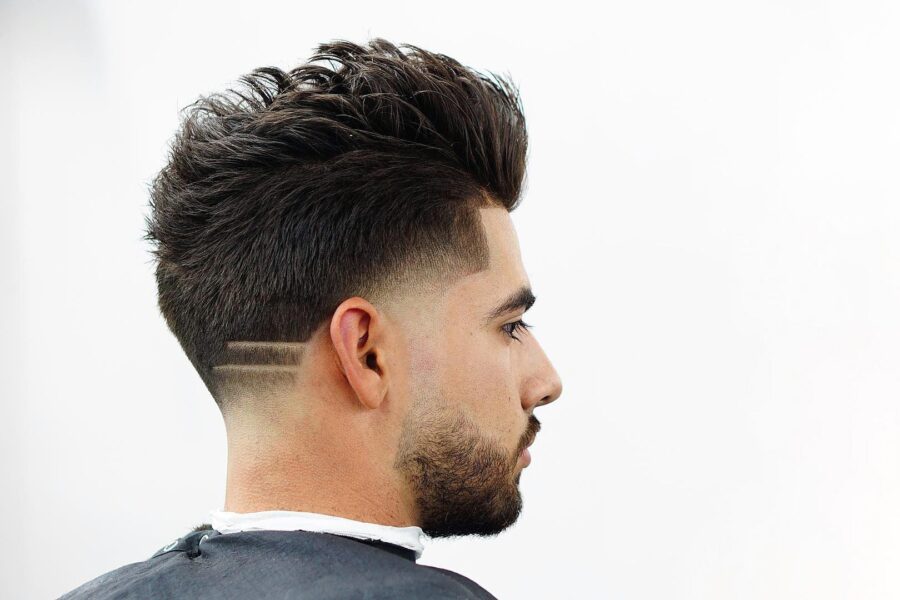
The drop fade has become one of the most requested men’s haircuts in barbershops across the country, with the U.S. barbershop industry reaching $6.9 billion in revenue in 2024 according to IBISWorld. Its curved silhouette follows the natural contour of the head, dipping behind the ears and tapering toward the nape, unlike a standard fade that runs in a straight line. Google search data reported by
GCI Magazine showed “low fade haircut men” among the top haircut searches in 2024. Its adaptability across curly, straight, wavy, and coarse textures makes it universally flattering. This guide covers 45 trending drop fade variations across every hair texture, fade height, and modern style pairing, with expert tips and barber communication phrases to help you find the exact cut you want.
What Is a Drop Fade Haircut?
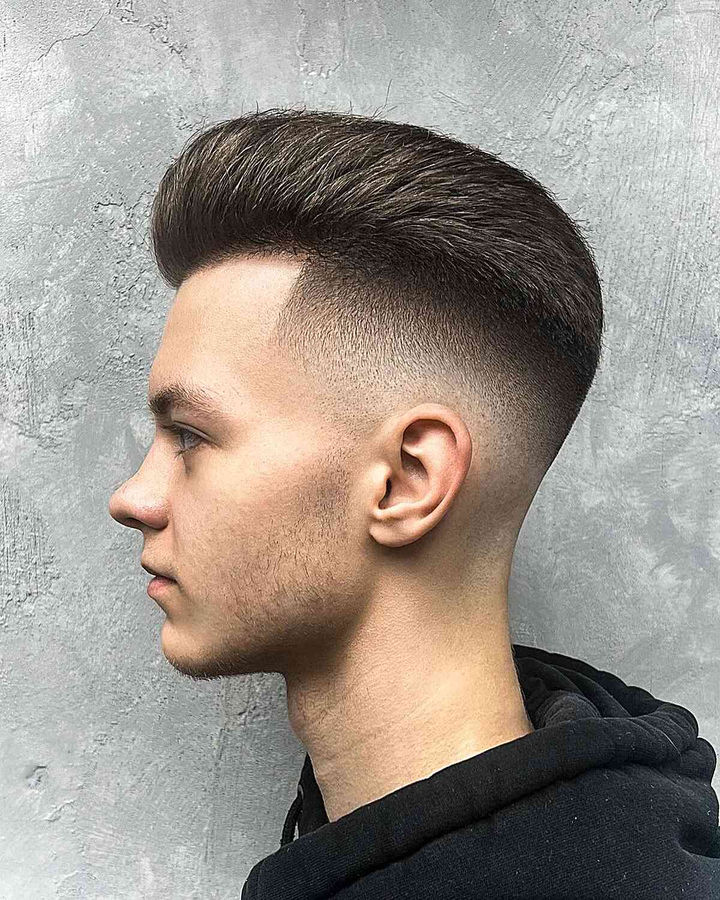
A drop fade is a fade haircut where the fade line curves downward, following the natural shape of the skull around the sides and back of the head. Instead of maintaining a consistent height all the way around, the fade “drops” behind the ear and dips lower at the nape of the neck. This creates a curved fade silhouette that looks organic and sculpted rather than geometric and boxy. With 151,554 barbershop businesses operating in the U.S. as of 2024 per IBISWorld, the drop fade has become a core technique taught in barber academies nationwide.
The key distinction is that a standard fade maintains a level line around the head. A low fade stays low, a mid fade stays at mid-height, and a high fade stays high. The drop fade, however, starts at whatever height you choose but then arcs downward as it wraps around the back. This gradual taper effect adds a natural contour that many barbers and clients find more flattering than a straight-across fade.
Drop fades pair beautifully with textured tops, fringes, comb overs, and even buzz cuts. The curved fade draws the eye upward toward the longer hair on top, creating the illusion of more volume and height. This makes the drop fade especially effective for men with rounder faces who want to add the appearance of length and structure.
Drop Fade vs Taper Fade: What Is the Difference?
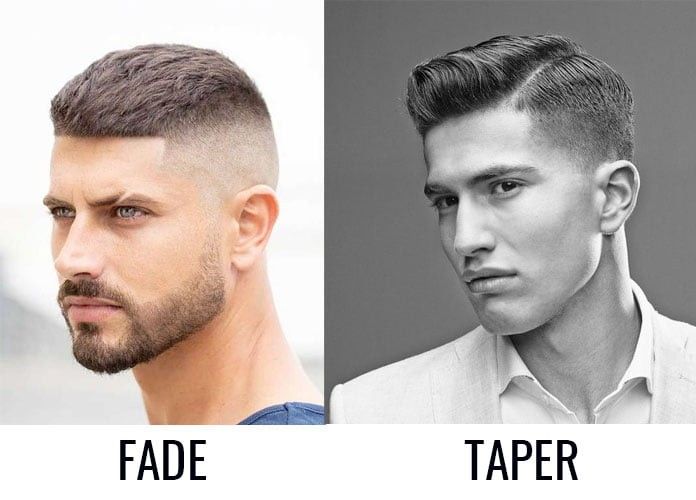
This is one of the most common questions in any barbershop. A taper fade changes the hair length gradually, typically leaving some length at the edges. It is a subtle, blended reduction that never goes down to bare skin. Think of a taper as a dimmer switch: the light fades slowly rather than clicking off all at once.
A drop fade, on the other hand, can go all the way to skin (a skin drop fade or bald drop fade) and features that signature downward curve. The drop fade is more dramatic, more sculpted, and more visually striking. While a taper keeps things conservative and natural, a drop fade makes a statement. Both have their place, but if you want sharp blended sides with a modern feel, the drop fade wins.
In practical terms, a taper works well with pompadours, classic side parts, and longer styles that need a subtle cleanup at the edges. A drop fade looks best with crops, textured tops, and contemporary styles where the contrast between the sides and the top is a design feature, not an afterthought.
Who Does the Drop Fade Suit Best?
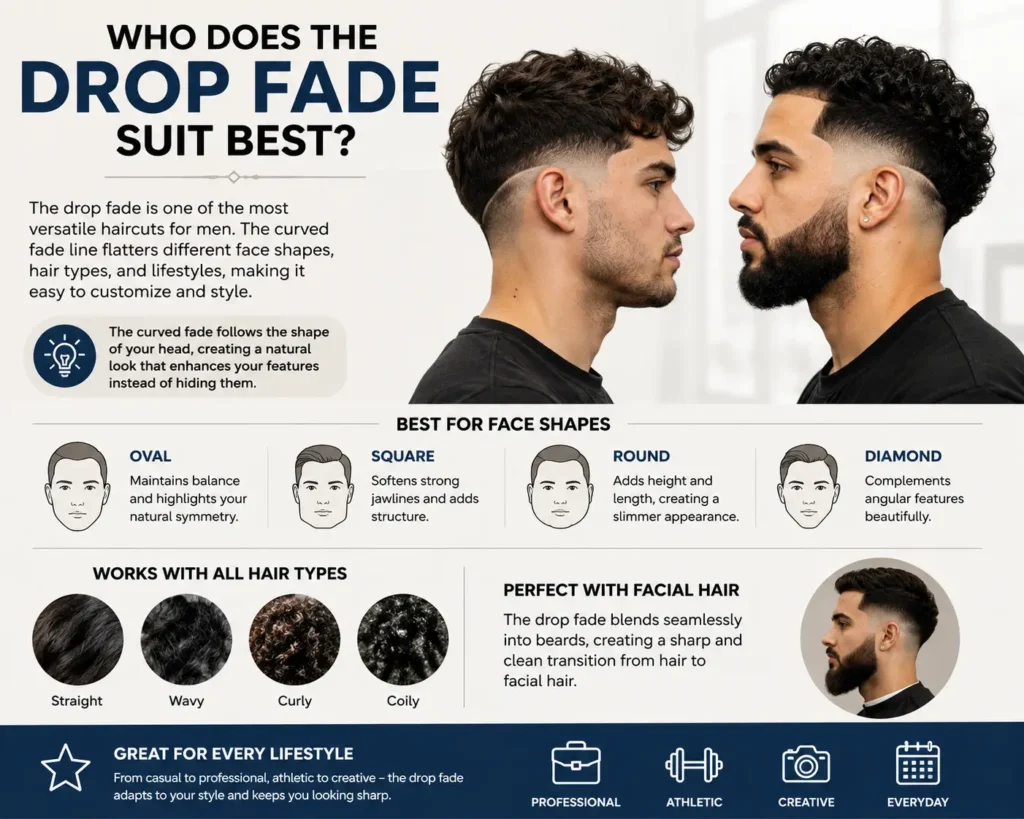
The drop fade is remarkably inclusive. It works well for men with oval, square, round, and diamond face shapes. The curved line softens angular features on square faces while adding structure to rounder faces. It also suits almost every hair type, from tight curls to pin-straight hair, because the fade line itself is about the sides and back. The top can be styled however you prefer.
Men who wear beards will find that the drop fade blends seamlessly into a beard fade, creating a continuous transition from hair to facial hair. This is one reason the drop fade with beard combination has become so popular. The U.S. men’s grooming category reached $7.1 billion in sales in 2024, up 6.9% year-over-year, according to NielsenIQ, and fade-with-beard combinations are among the top drivers of that growth. The drop naturally guides the fade line toward the sideburns and beard, making the blend intuitive and clean.
45 Trending Drop Fade Haircuts for Men
Below are 45 drop fade variations organized to give you maximum inspiration. Each entry includes the best hair type, styling difficulty, maintenance level, ideal face shape, and a ready-to-use barber request phrase. These styles cover every fade height, hair texture, and modern pairing to help you find the exact cut you want.
Texture-Based Drop Fade Styles
1. Curly Hair Low Drop Fade
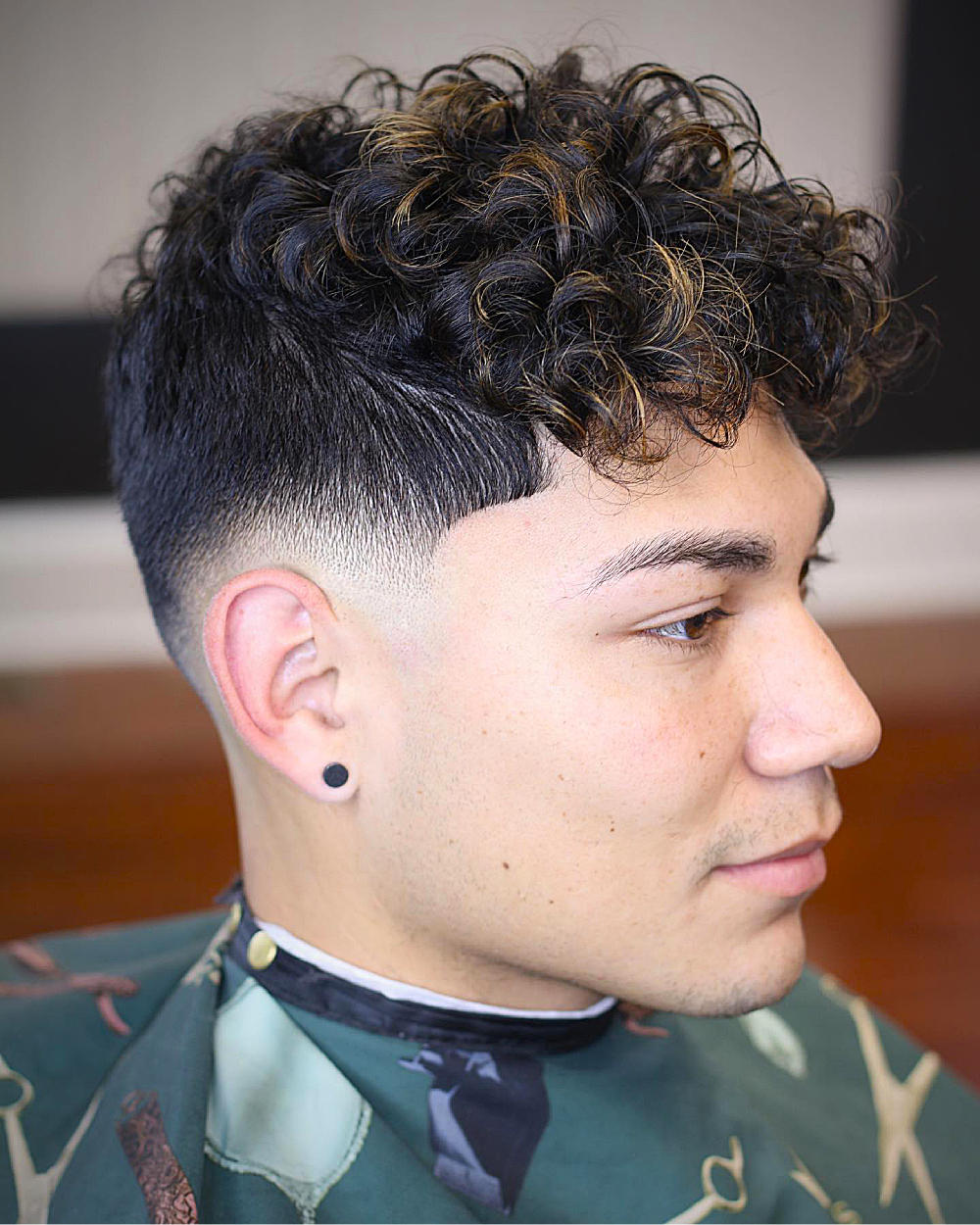
The curly hair low drop fade keeps the fade tight near the ears while letting your natural curls take center stage on top. The low drop curve follows the natural hairline, creating a clean silhouette without exposing too much scalp. This is one of the most popular variations for men with tight curls because it preserves the texture on top while eliminating bulk on the sides.
- Best for: Tight curls, coily hair, type 3C-4C hair
- Styling difficulty: Low
- Maintenance: Trim every 2-3 weeks
- Ideal face shape: Oval, square
- Barber request: “I want a low drop fade, keep the curls long on top, fade starts just above the ears and drops in the back.”
2. Wavy Hair Mid Drop Fade
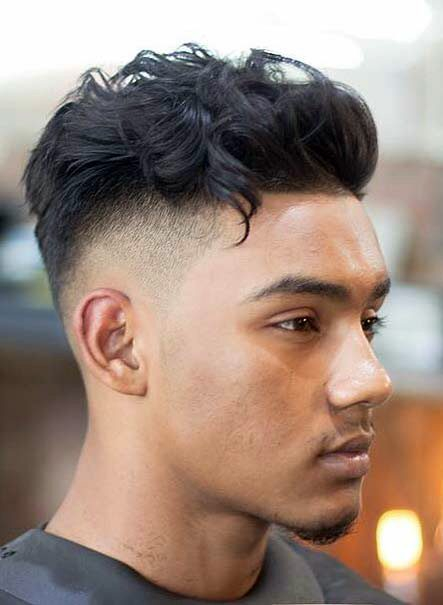
Men with wavy hair benefit enormously from a mid drop fade because the mid-height starting point creates a balanced contrast. The waves on top stay prominent while the sides taper smoothly from the mid-point downward. This cut works beautifully with a finger-length top that shows off your natural wave pattern without needing heavy styling products.
- Best for: Wavy hair, type 2A-2C hair
- Styling difficulty: Low
- Maintenance: Trim every 2-3 weeks
- Ideal face shape: Oval, rectangle
- Barber request: “Mid drop fade, keep about two inches on top so the waves show, taper it down from the temples.”
3. Straight Hair Skin Drop Fade

Straight hair paired with a skin drop fade creates a sharp, clean contrast that looks intentional and polished. The skin fade goes down to the scalp, and the straight hair on top provides a sleek, structured top section. This combination is ideal for men who want a modern, high-contrast look without curly texture on the sides.
- Best for: Straight hair, fine to medium thickness
- Styling difficulty: Medium
- Maintenance: Trim every 2 weeks
- Ideal face shape: Square, oval
- Barber request: “Skin drop fade, take the sides to zero, leave about three inches of straight hair on top for a comb over.”
4. Textured Fringe Drop Fade
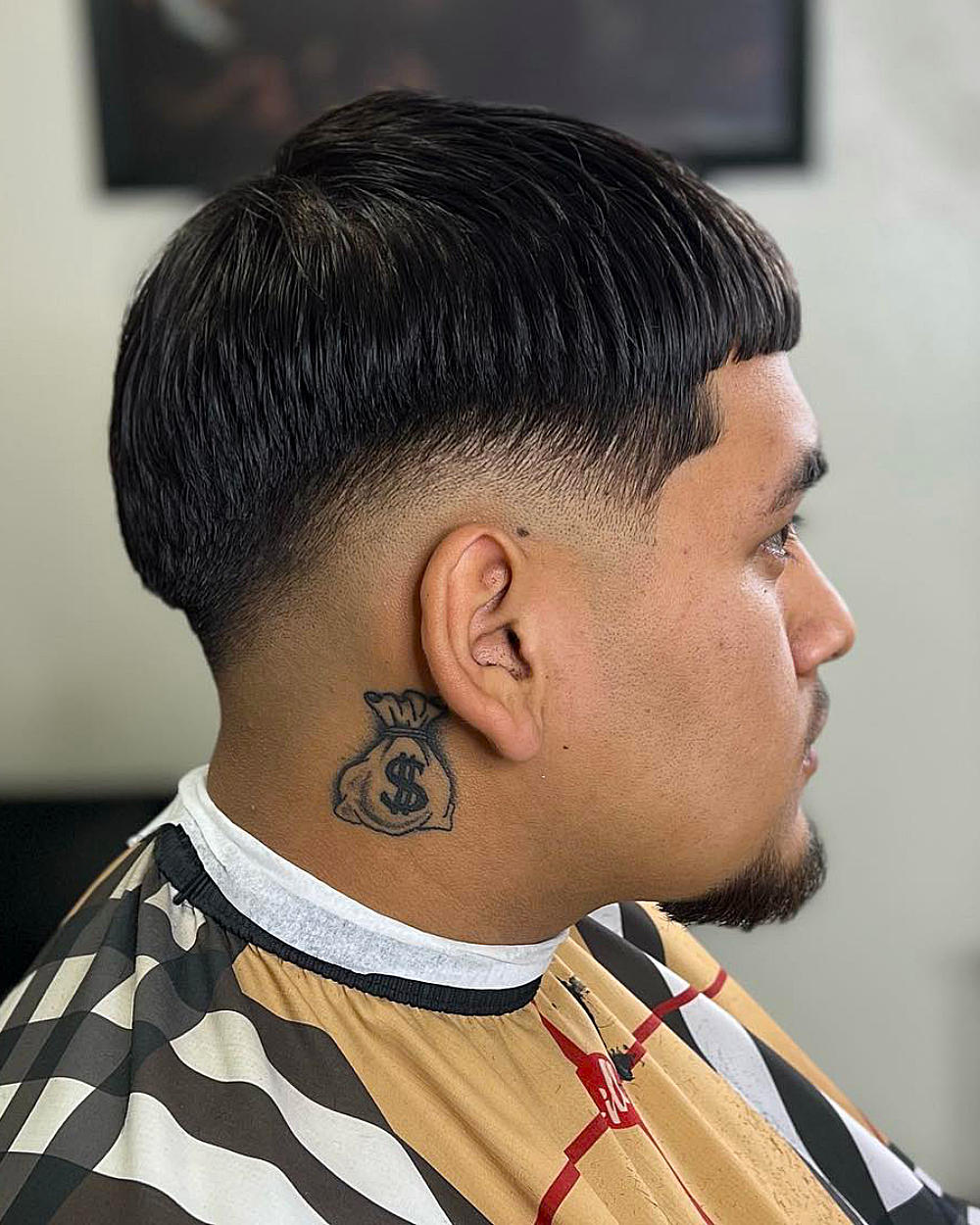
The textured fringe drop fade is arguably the most trendy drop fade variation right now. The fringe hangs forward with piece-y, dimensional texture, while the drop fade carves out a clean arc on the sides. The contrast between the messy, forward-swept fringe and the precision fade is what makes this cut so visually appealing. It works on nearly every hair type when styled correctly.
- Best for: All hair types, especially wavy and straight
- Styling difficulty: Medium
- Maintenance: Trim every 3-4 weeks; fringe grows fast
- Ideal face shape: Oval, square, diamond
- Barber request: “Textured fringe with a drop fade, leave the front long enough to sweep forward, fade drops behind the ears.”
5. Thick Hair High Drop Fade
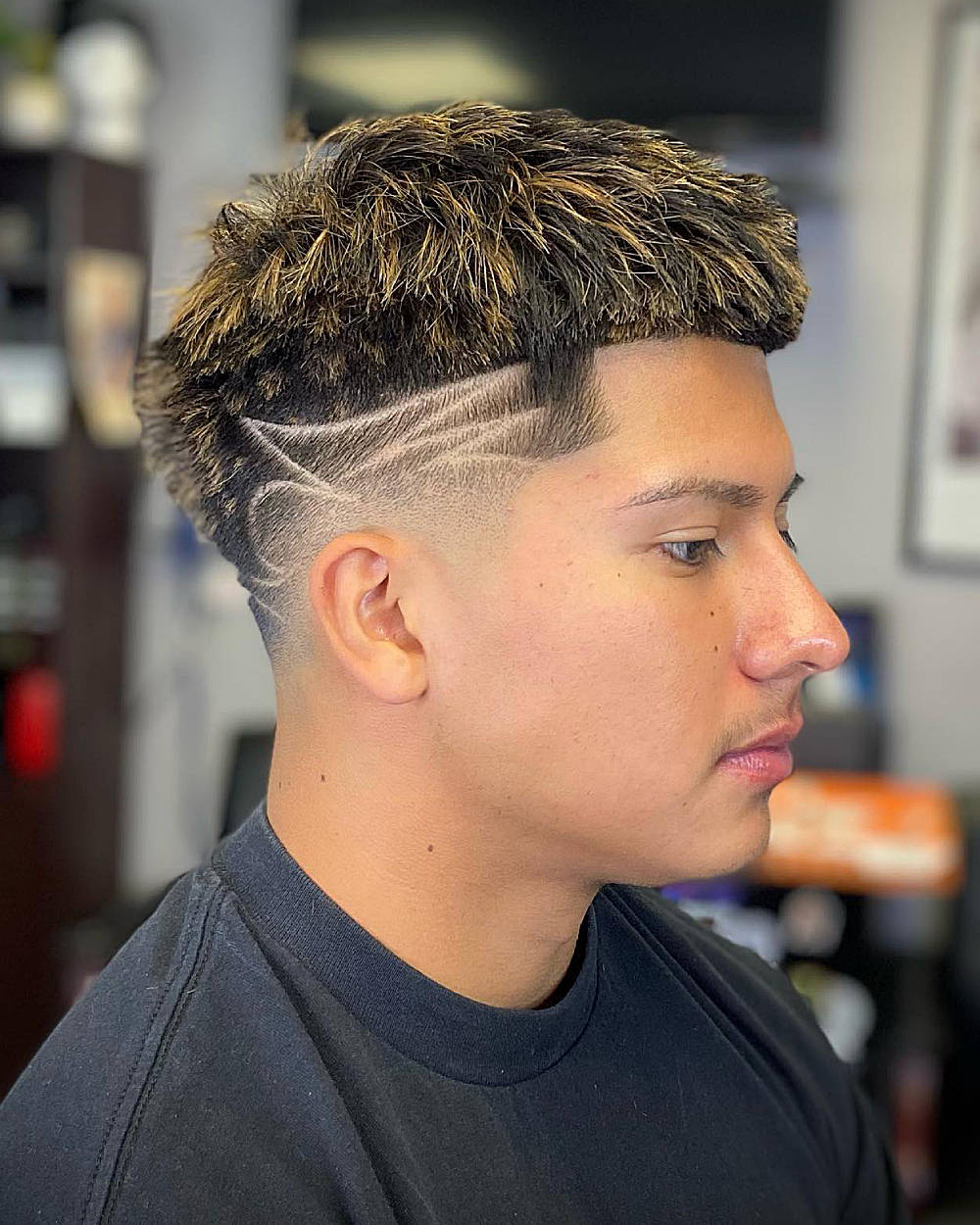
Thick hair can overwhelm a low or mid fade because the volume differential is too extreme. A high drop fade solves this by removing more hair on the sides, which balances the density on top. The drop curve at the back prevents the fade from looking like a bowl cut, adding natural shape to what could otherwise be a blocky silhouette.
- Best for: Thick, dense hair of any texture
- Styling difficulty: Low
- Maintenance: Trim every 2-3 weeks
- Ideal face shape: Round, square
- Barber request: “High drop fade, thin out the top slightly so it’s not too bulky, fade starts above the temples and drops in back.”
6. Afro Drop Fade
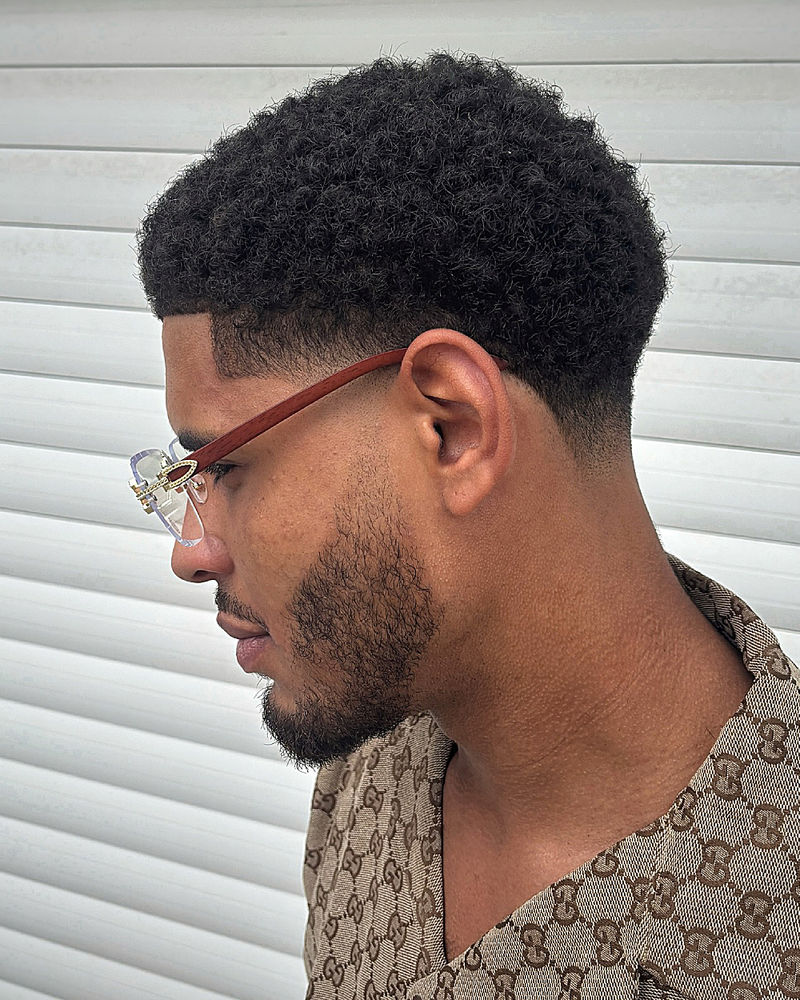
The afro drop fade is a celebration of texture and shape. The afro on top remains round and full, while the drop fade creates a clean, curved transition on the sides. The drop curve mirrors the roundness of the afro, making the entire hairstyle feel cohesive. This is a go-to for Black men who want to keep their natural texture while adding a structured, modern element.
- Best for: Coily, type 4 hair
- Styling difficulty: Low
- Maintenance: Trim every 2-3 weeks; shape the afro regularly
- Ideal face shape: Oval, square, diamond
- Barber request: “Drop fade on the sides, keep the afro round on top, fade should drop behind the ears and blend into the shape.”
7. Curly Top with Bald Drop Fade
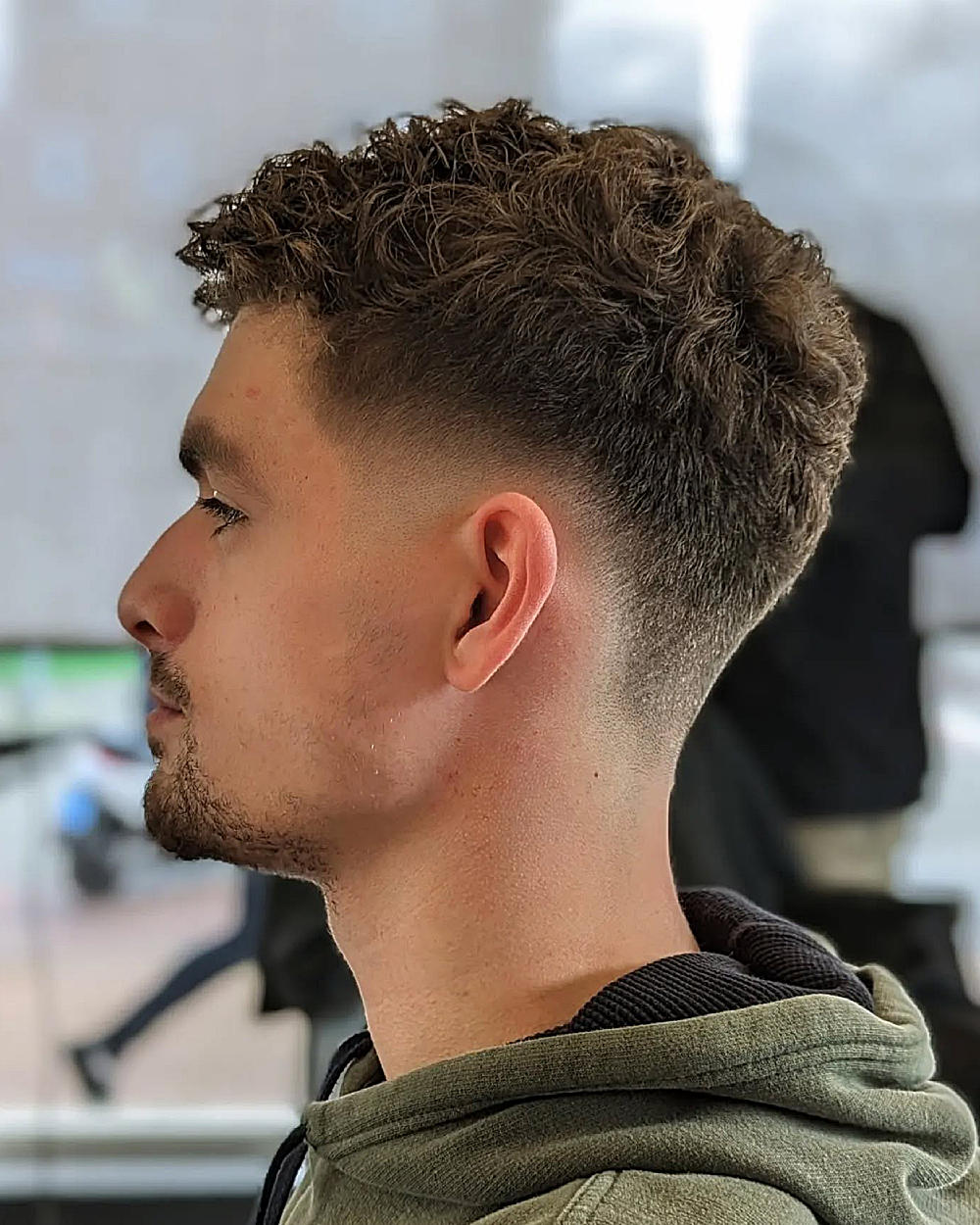
The bald drop fade takes the sides all the way to the skin, creating maximum contrast with a curly top. This is a bold look that works particularly well for men who want to emphasize their curls while keeping the sides ultraclean. The bald fade also makes curly hair on top appear more voluminous by comparison.
- Best for: Curly hair, all curl types
- Styling difficulty: Low
- Maintenance: Trim every 2 weeks for clean skin fade
- Ideal face shape: Oval, rectangle
- Barber request: “Bald drop fade, take the sides to the skin, leave the curls full on top, drop it behind the ears.”
8. Fine Hair Taper Drop Fade
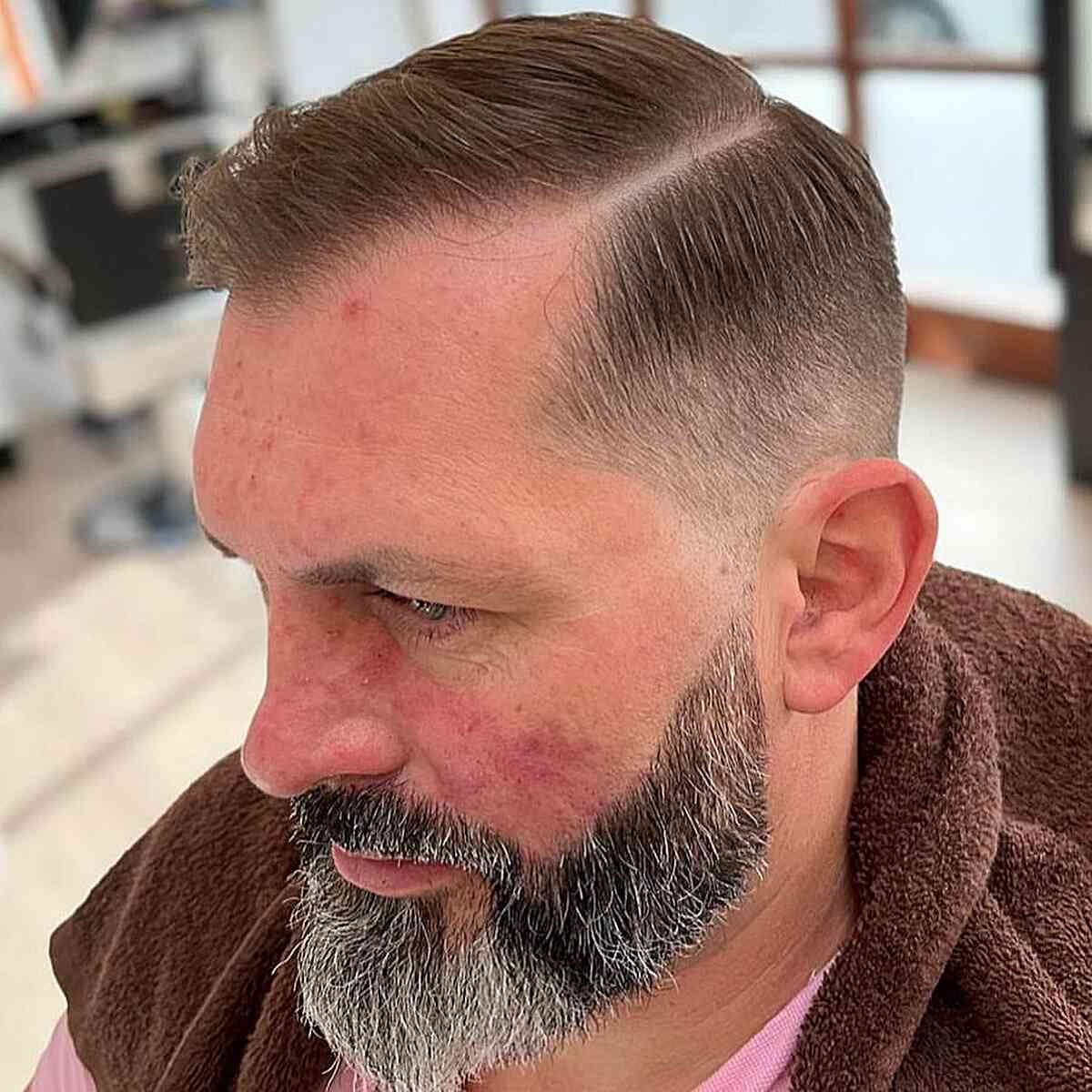
Men with fine or thinning hair often avoid fades, but a taper drop fade can actually make fine hair look thicker. By keeping some length at the edges rather than going to skin, the taper creates the illusion of density. The drop curve adds dimension, and the slightly longer sides prevent the scalp from showing through.
- Best for: Fine, thinning hair
- Styling difficulty: Medium
- Maintenance: Trim every 3-4 weeks
- Ideal face shape: Oval, round
- Barber request: “Taper drop fade, don’t go to skin, leave a little length on the sides so it doesn’t look too thin.”
9. Coarse Hair Mid Drop Fade
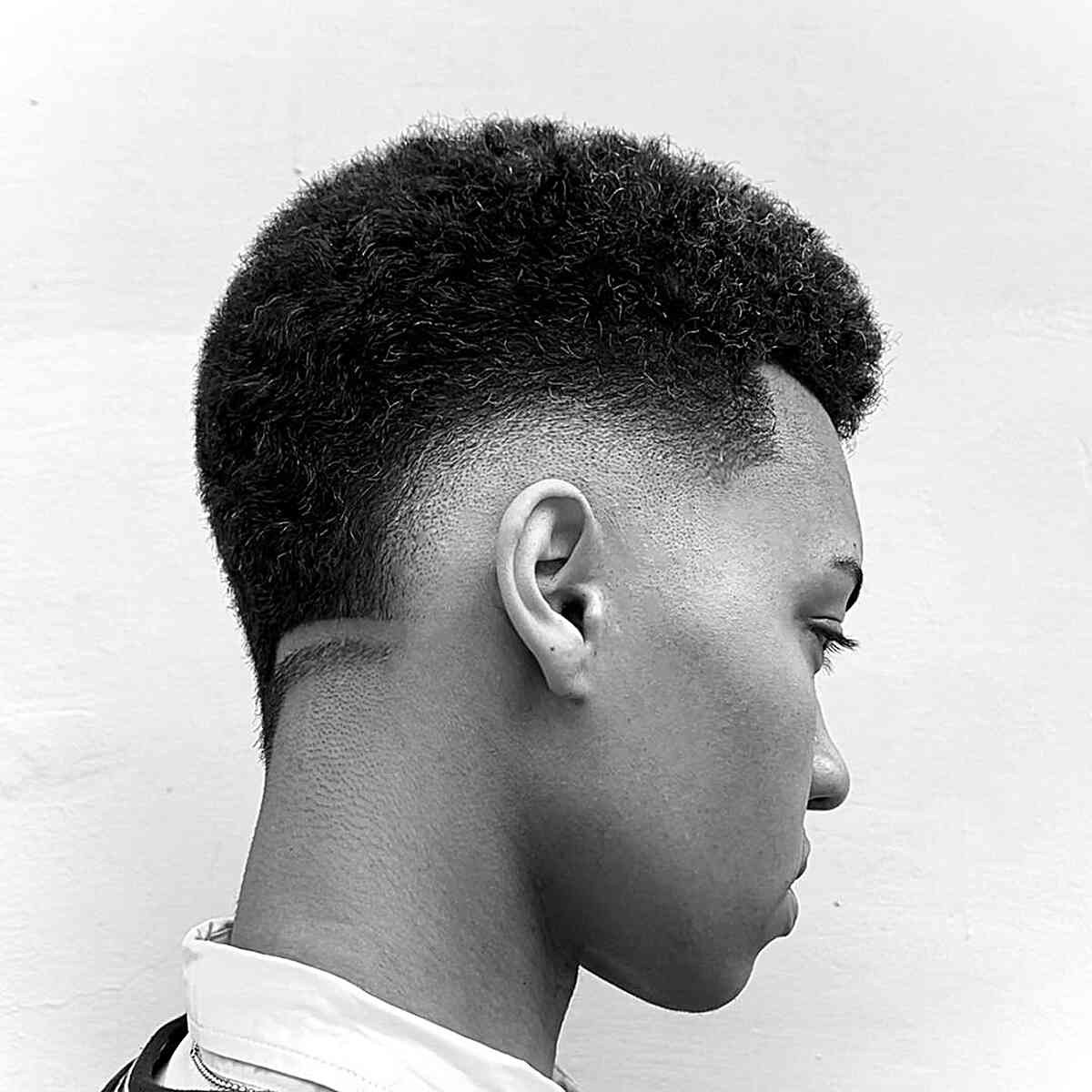
Coarse hair holds its shape well, which makes it an excellent candidate for a mid drop fade. The natural stiffness of coarse hair means the top section stays structured without heavy product, and the mid drop fade provides enough contrast to make the style pop without removing too much of the natural texture on the sides.
- Best for: Coarse, wiry hair
- Styling difficulty: Low
- Maintenance: Trim every 2-3 weeks
- Ideal face shape: Square, oval
- Barber request: “Mid drop fade, keep it natural on top, the coarse texture should stay visible, fade starts at the temples.”
10. Kinky Hair Low Drop Fade with Line-Up
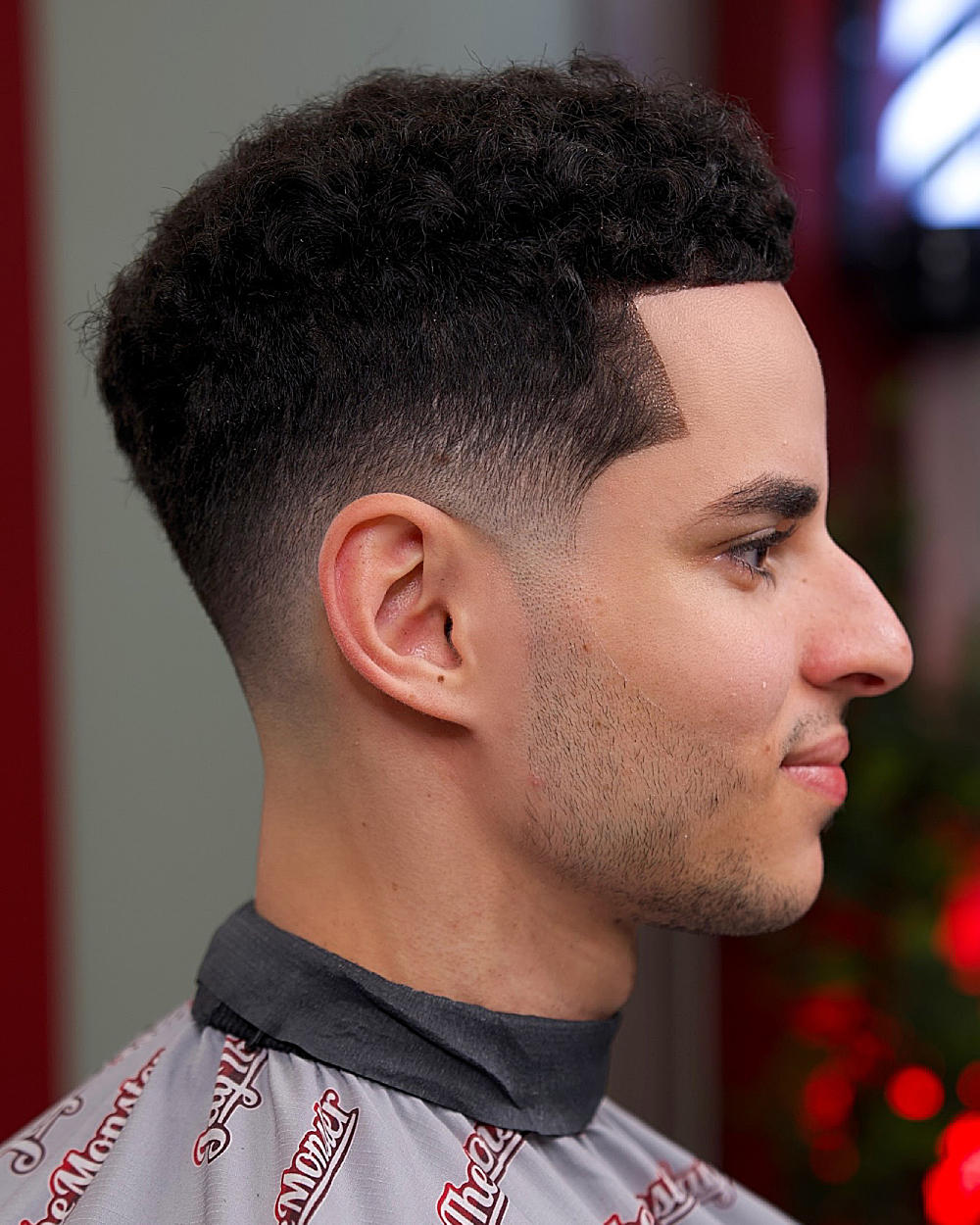
For men with kinky or tightly coiled hair, the low drop fade with a line-up creates a crisp, polished appearance. The line-up sharpens the edges at the temples and forehead, while the low drop fade keeps the transition subtle. This combination is a staple in Black barbershops and remains one of the most requested styles.
- Best for: Kinky, tightly coiled hair
- Styling difficulty: Low
- Maintenance: Trim every 2 weeks; line-up every 1-2 weeks
- Ideal face shape: Oval, square, diamond
- Barber request: “Low drop fade with a line-up, clean up the edges, fade starts low and drops in the back.”
11. Wavy Drop Fade with Volume
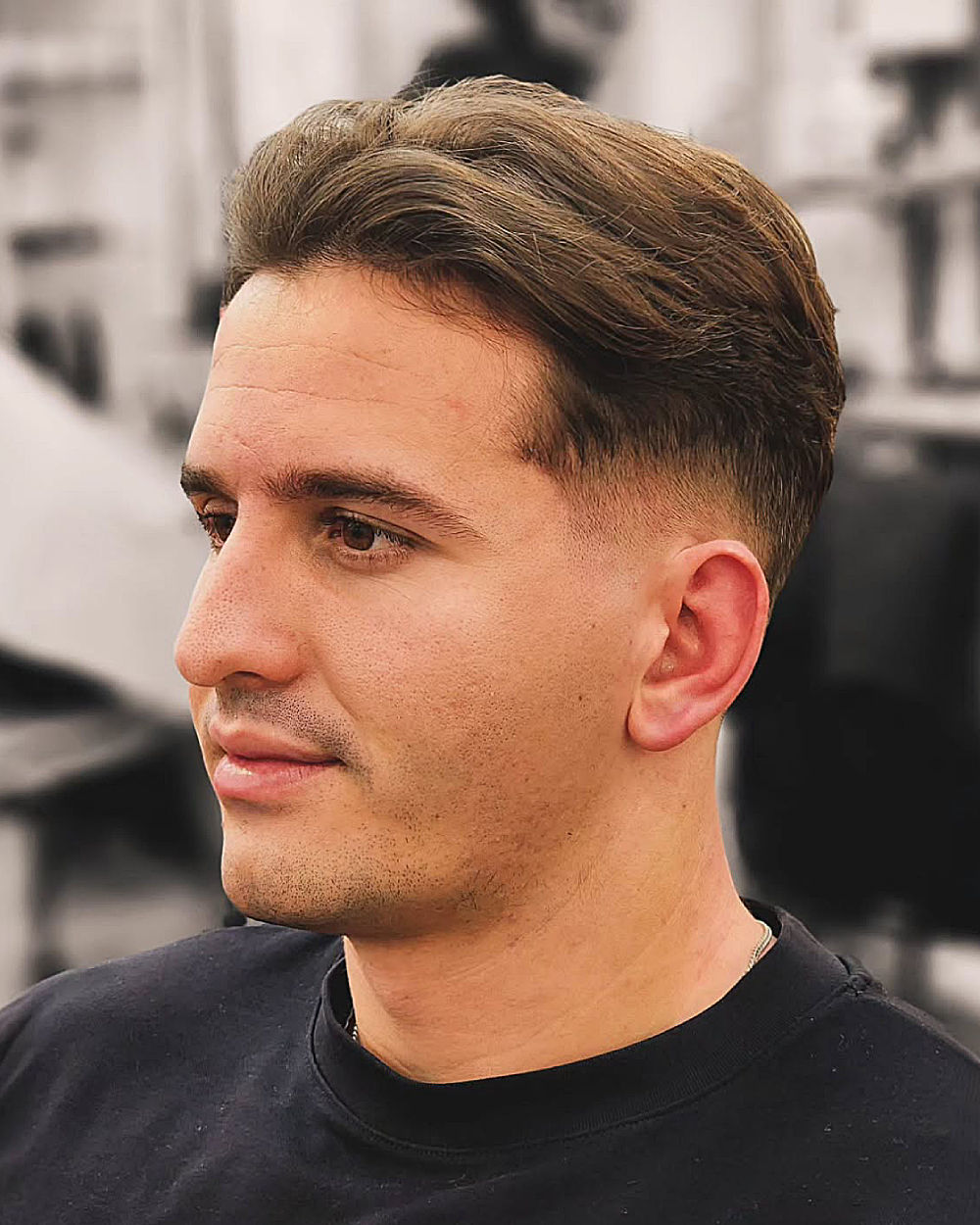
This style maximizes the natural volume that wavy hair provides. The drop fade keeps the sides clean while the waves on top are styled upward and slightly back for dramatic height. The result is a bold, dimensional look that turns heads. A sea salt spray and a blow dryer are your best tools for this one.
- Best for: Wavy hair with natural volume
- Styling difficulty: Medium
- Maintenance: Trim every 3 weeks
- Ideal face shape: Round, oval
- Barber request: “Drop fade on the sides, keep the top long enough for volume, style it up and back with some height.”
12. Straight Hair Textured Crop Drop Fade
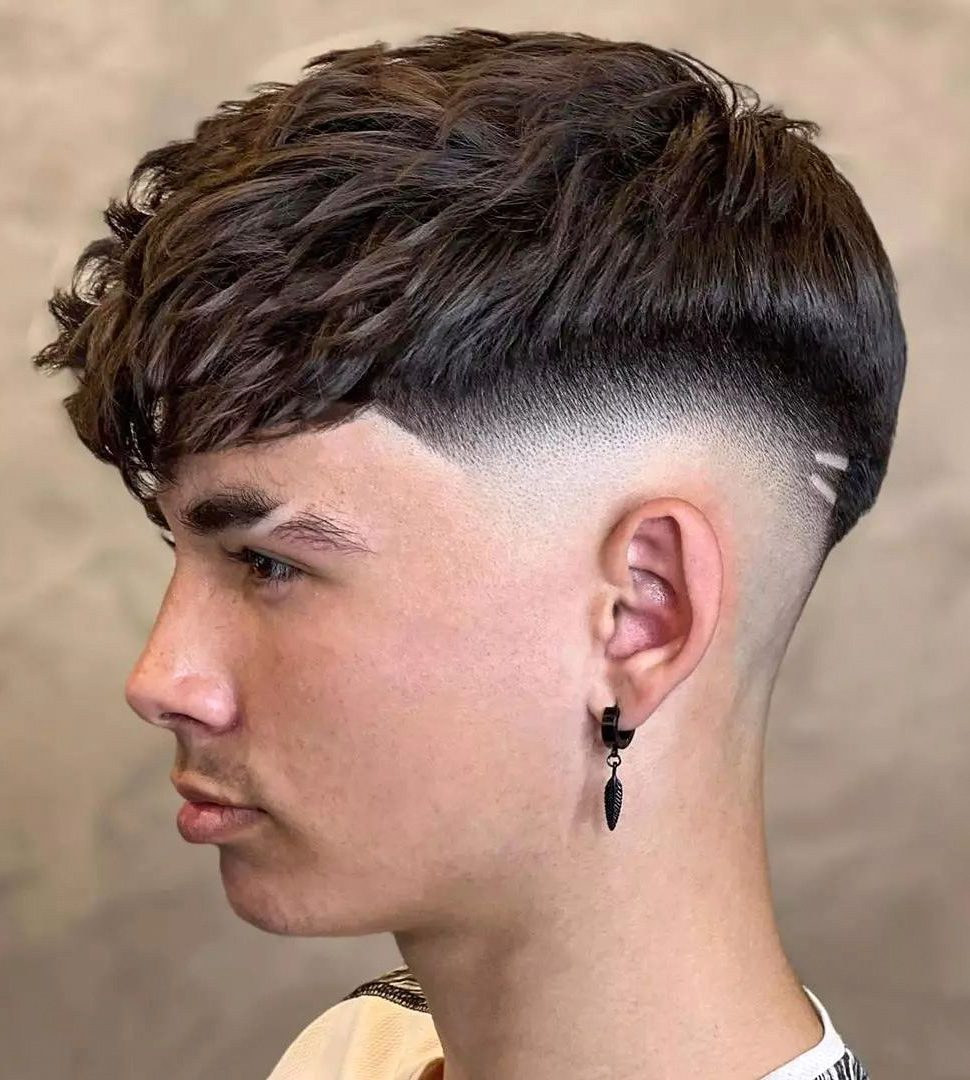
The textured crop has been one of the most popular men’s hairstyles in recent years, and pairing it with a drop fade elevates the look. The straight hair is cut short and textured on top, typically combed forward, while the drop fade carves a clean arc on the sides. This is a low-maintenance style that looks high-effort.
- Best for: Straight hair, medium density
- Styling difficulty: Low
- Maintenance: Trim every 3-4 weeks
- Ideal face shape: Square, oval, diamond
- Barber request: “Textured crop with a drop fade, cut the top short and choppy, fade drops behind the ears.”
13. Curly Drop Fade with Sponge Twist
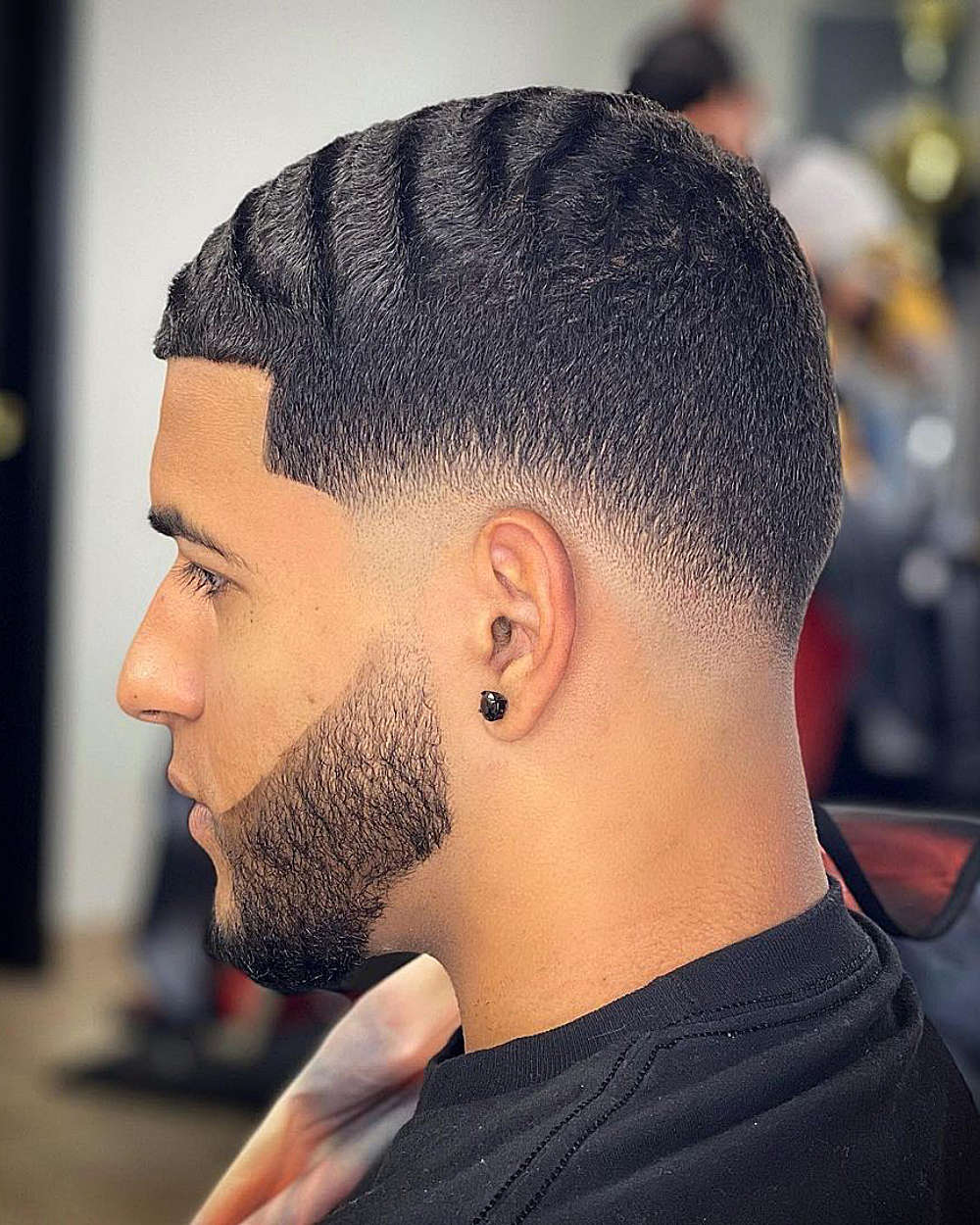
The sponge twist technique enhances natural curl definition, creating tight, uniform coils on top. Combined with a drop fade, the contrast between the precise coils and the smooth fade is striking. This style is especially popular among Black men and works well for those who want a clean, stylish look that does not require daily styling.
- Best for: Curly, coily hair
- Styling difficulty: Low
- Maintenance: Trim every 2-3 weeks; sponge daily
- Ideal face shape: Oval, square
- Barber request: “Drop fade with sponge twists on top, keep the curls defined, fade starts at the temples and drops.”
14. Relaxed Hair Mid Drop Fade
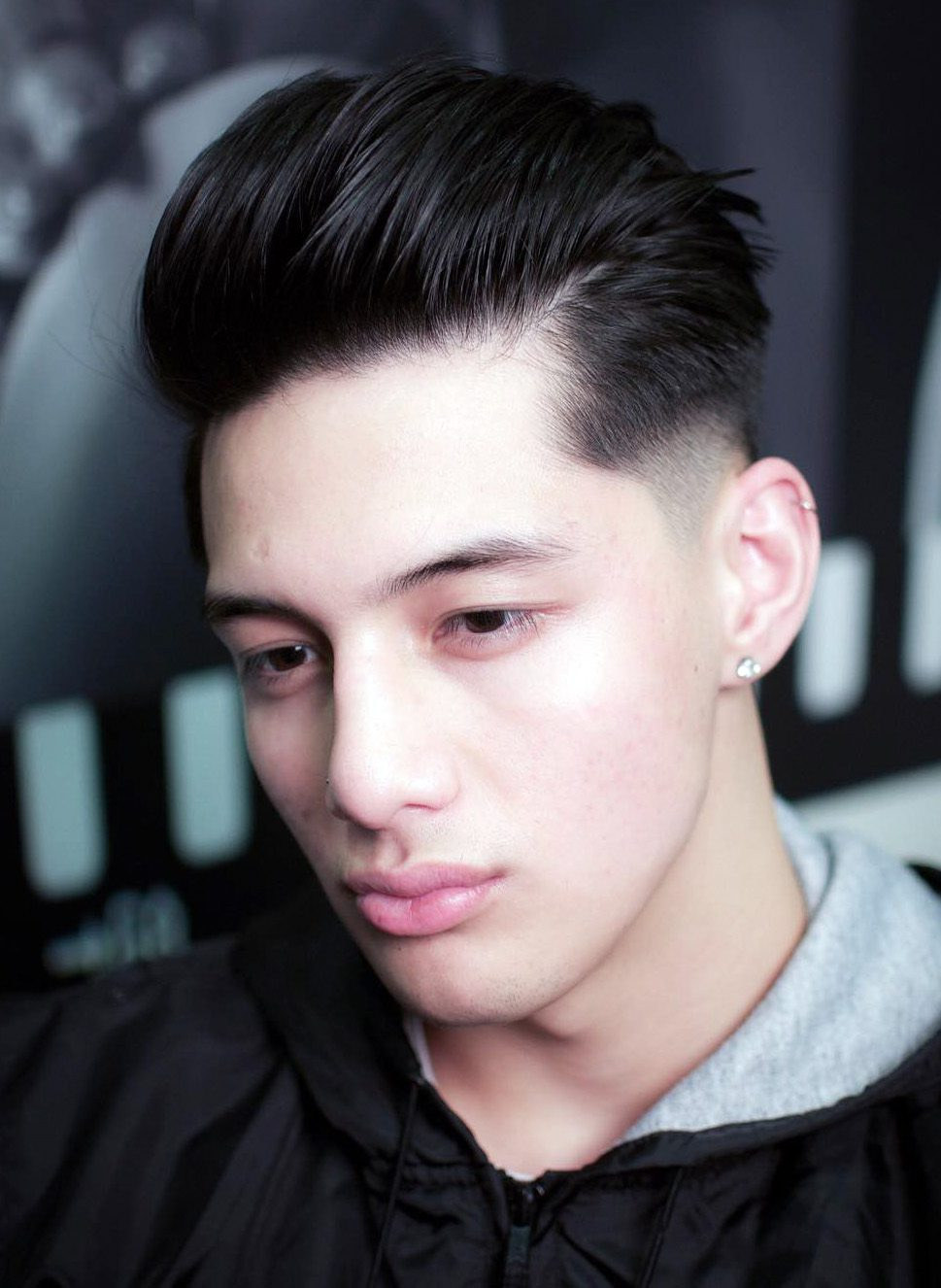
Men with chemically relaxed hair can achieve a sleek mid drop fade that looks incredibly polished. The relaxed texture on top allows for smooth comb overs or side parts, while the mid drop fade provides structure on the sides. This is a sophisticated, office-friendly style that transitions seamlessly from day to night.
- Best for: Relaxed, chemically treated hair
- Styling difficulty: Medium
- Maintenance: Trim every 3 weeks; touch up relaxer every 6-8 weeks
- Ideal face shape: Oval, rectangle
- Barber request: “Mid drop fade, relaxed texture on top, style it smooth with a side part.”
15. Mixed Texture Drop Fade
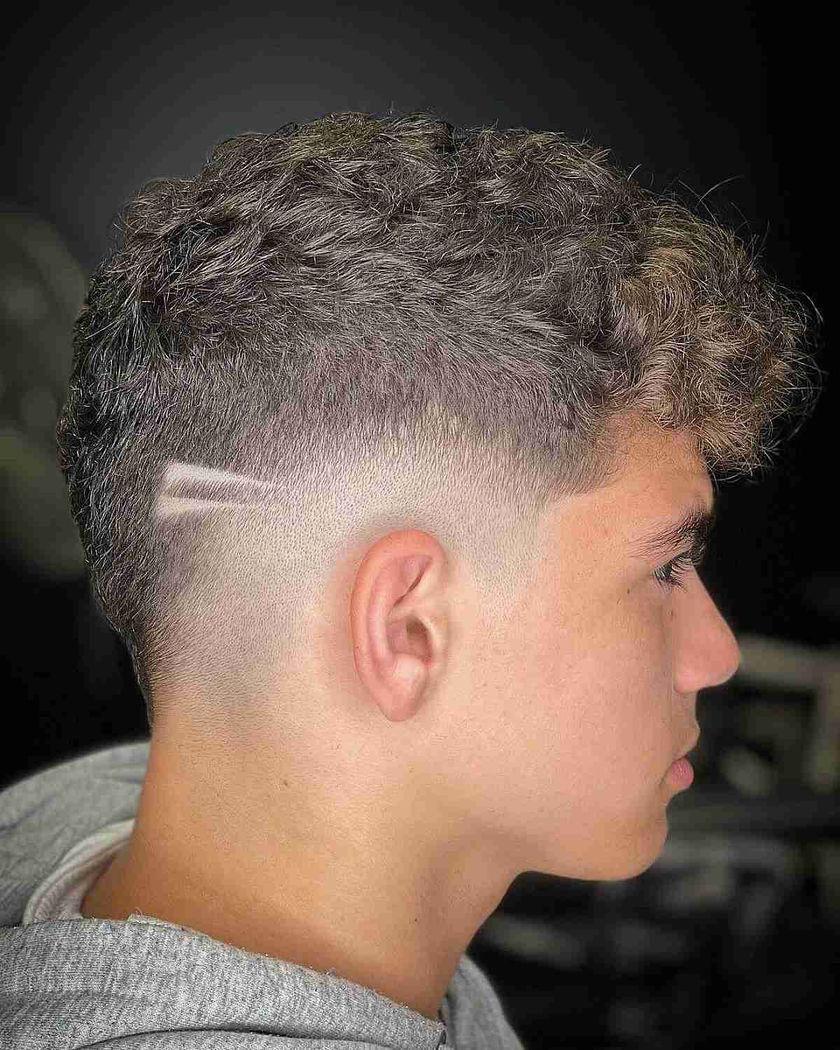
Men with mixed hair textures, such as wavy roots with curly ends, can benefit from a drop fade that removes the sides entirely and lets the top texture shine. The key is to work with your natural pattern rather than fighting it. A skilled barber can blend the fade so the transition from the mixed-texture top to the clean sides looks intentional and cohesive.
-
- Best for: Mixed texture, wavy-curly combination
- Styling difficulty: Medium
- Maintenance: Trim every 2-3 weeks
- Ideal face shape: Oval, diamond
- Barber request: “Drop fade, work with the natural texture on top, don’t try to force it one way, let it do its thing.”
Fade Height Variations
16. Classic Low Drop Fade
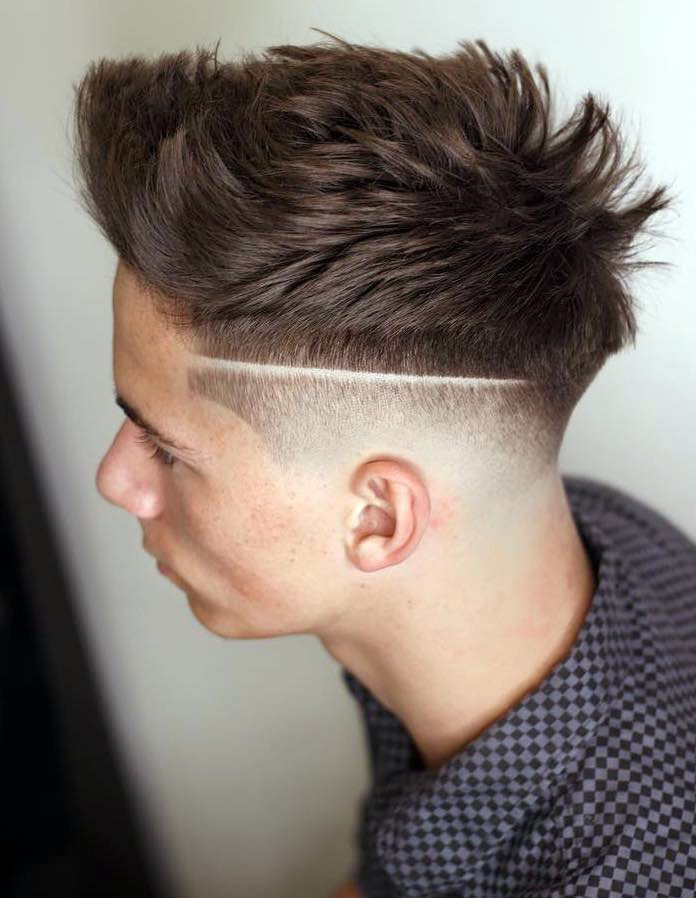
The low drop fade is the most subtle and conservative option. The fade starts just above the ears and drops behind them, creating a gentle curve that is barely noticeable at first glance. This makes it ideal for professional environments where you want a clean look without drawing too much attention to the fade itself. It is also the easiest drop fade to maintain because the short length at the fade point means grow-out is less visible.
- Best for: All hair types
- Styling difficulty: Low
- Maintenance: Trim every 3-4 weeks
- Ideal face shape: All face shapes
- Barber request: “Low drop fade, keep it tight near the ears, drop it in the back, nothing too dramatic.”
17. Mid Drop Fade Comb Over
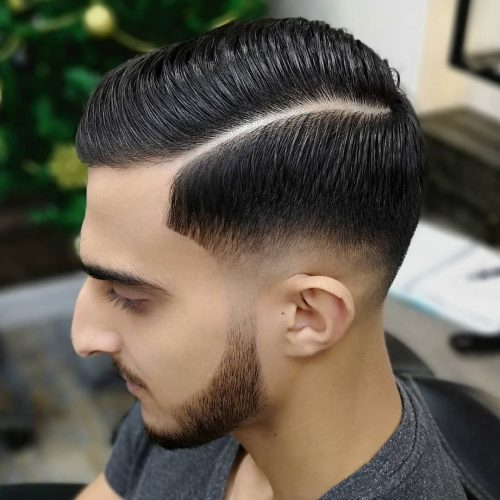
The mid drop fade comb over combines the balanced height of a mid fade with the timeless appeal of a comb over. The fade starts at the temples and drops behind the ears, while the top is left long enough to sweep to one side. This is one of the most versatile drop fade styles because it works in both casual and formal settings.
- Best for: Straight to wavy hair
- Styling difficulty: Low to medium
- Maintenance: Trim every 2-3 weeks
- Ideal face shape: Oval, square, rectangle
- Barber request: “Mid drop fade with a comb over, leave about three inches on top, part on the left, fade drops in the back.”
18. High Drop Fade with Sharp Line-Up
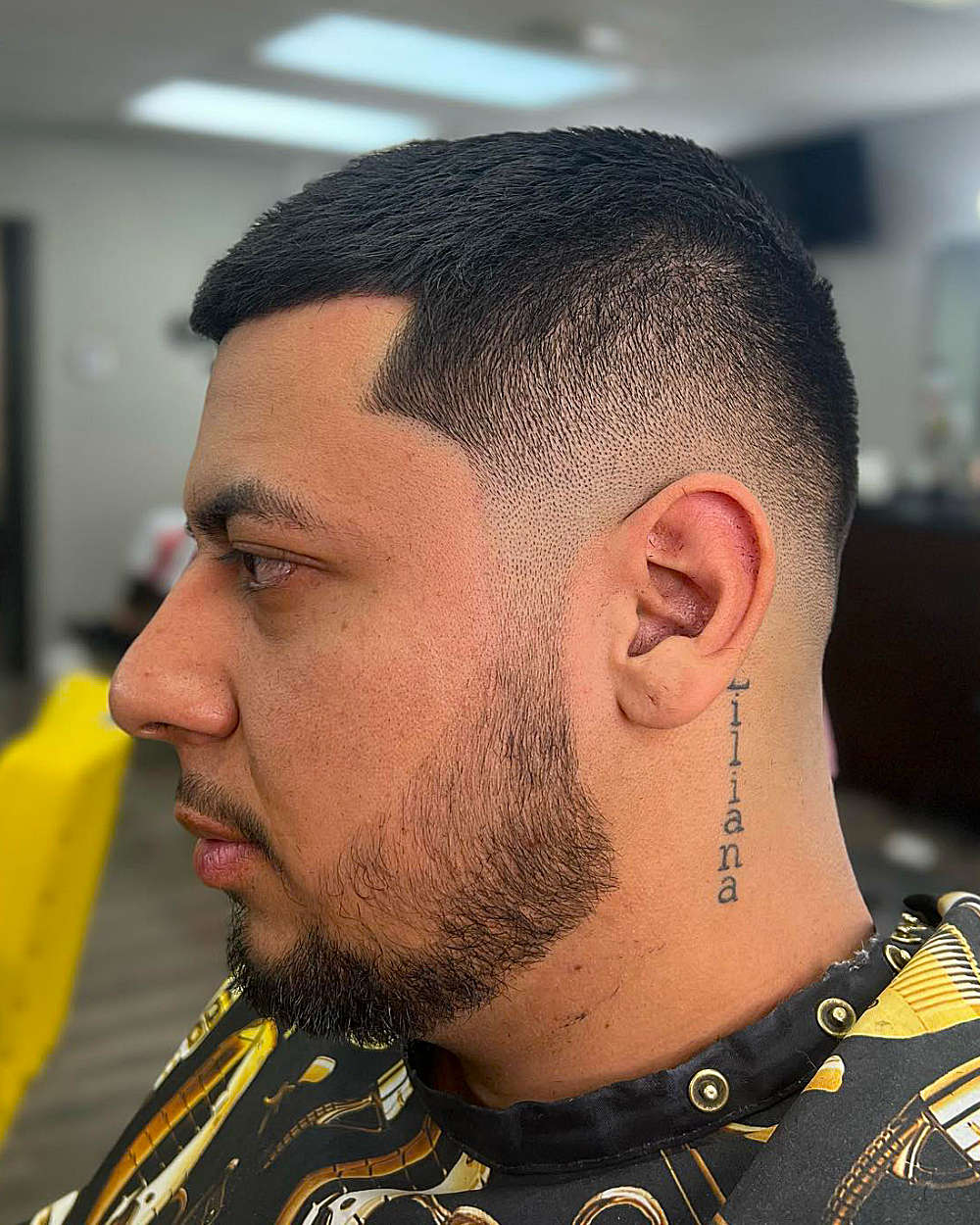
The high drop fade starts well above the temples, creating a dramatic contrast between the long top and the nearly bare sides. Adding a line-up at the temples and forehead sharpens the look even further, creating geometric precision that looks like it was cut with a laser. This is a bold, confident style that commands attention.
- Best for: All hair types, especially curly and coarse
- Styling difficulty: Medium
- Maintenance: Trim every 2 weeks; line-up weekly
- Ideal face shape: Oval, square, diamond
- Barber request: “High drop fade, take it up past the temples, clean line-up at the forehead, drop it behind the ears.”
19. Skin Drop Fade with Beard Blend
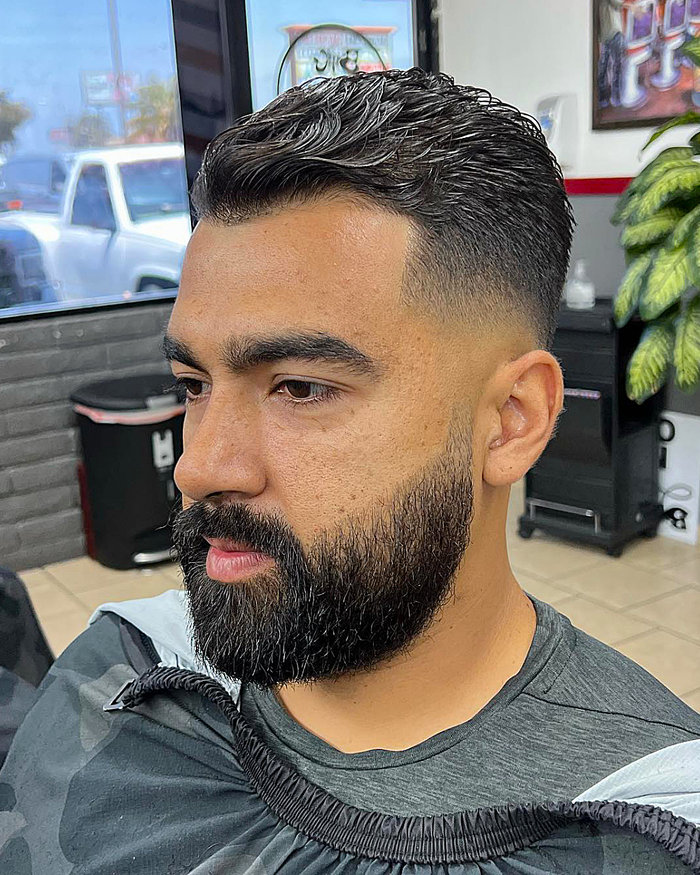
The skin drop fade goes all the way to the scalp on the sides, and when it blends into a beard, the effect is seamless. The barber transitions the skin fade into a graduated beard that starts short at the sideburns and gets fuller toward the chin. This creates a continuous flow from the crown to the jawline that looks intentional and refined.
- Best for: All hair types; works best with full beard
- Styling difficulty: Low
- Maintenance: Trim every 2 weeks; beard trim every 2-3 weeks
- Ideal face shape: Oval, square, rectangle
- Barber request: “Skin drop fade with a beard blend, take the sides to zero, blend the fade right into the beard.”
20. Bald Drop Fade Buzz Cut
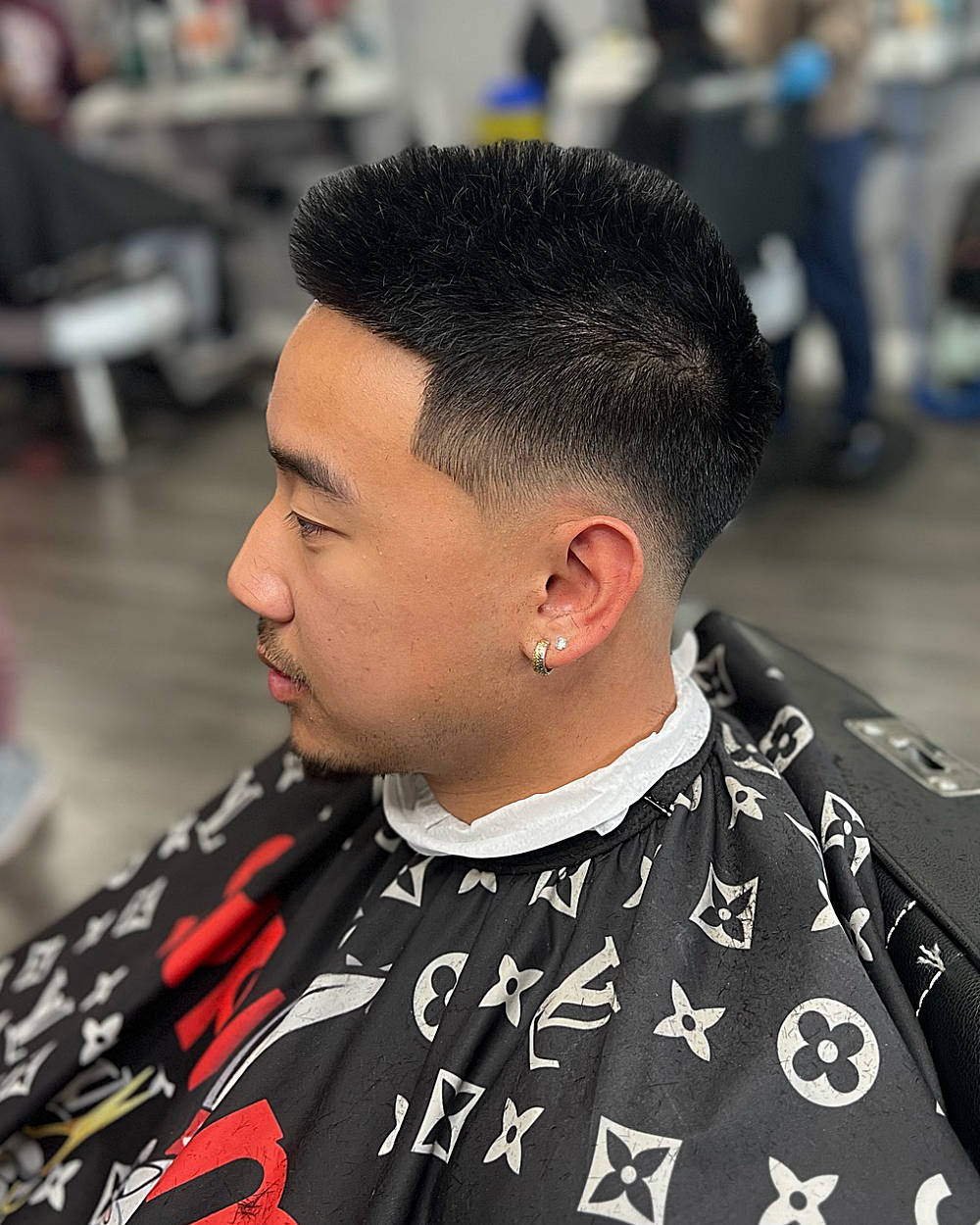
The bald drop fade buzz cut is the ultimate low-maintenance style. The top is cut to a uniform short length (typically a number 2 or 3 guard), while the sides are taken to the skin with a drop fade curve. It is clean, sharp, and requires virtually no styling. This is a favorite among athletes and men who prefer a wash-and-go routine.
- Best for: All hair types, especially straight and wavy
- Styling difficulty: Very low
- Maintenance: Trim every 2-3 weeks
- Ideal face shape: All face shapes, especially square
- Barber request: “Bald drop fade buzz cut, number 2 on top, take the sides to the skin, drop it in the back.”
21. Taper Drop Fade with Side Part
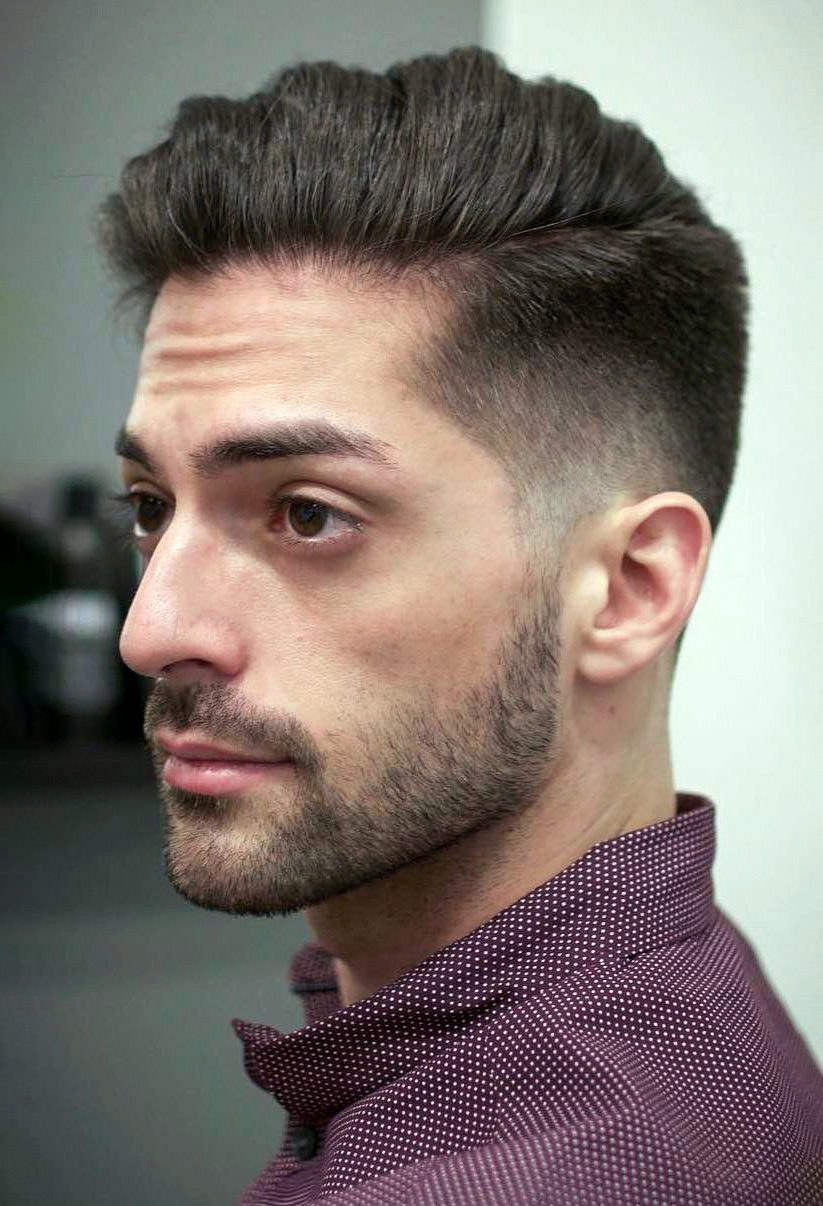
The taper drop fade with a side part is a classic gentleman’s cut with a modern twist. The taper keeps some length at the edges rather than going to skin, and the drop curve adds a contemporary element. The side part gives it a polished, professional feel that works in any office or formal setting.
- Best for: Straight to wavy hair
- Styling difficulty: Low to medium
- Maintenance: Trim every 3-4 weeks
- Ideal face shape: Oval, rectangle, diamond
- Barber request: “Taper drop fade with a hard side part, keep some length at the edges, drop the fade in the back, part on the left.”
22. Zero Drop Fade with Clean Crown
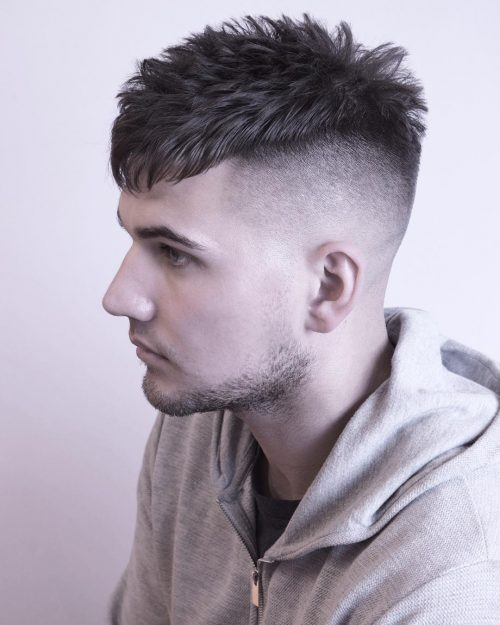
The zero drop fade uses a clipper-without-guard technique on the sides, creating a near-skin finish that is slightly softer than a razor shave. The clean crown refers to a precise, blended transition at the top of the fade where the longer hair meets the faded section. This is a technical cut that requires a skilled barber for the best results.
- Best for: All hair types
- Styling difficulty: Low
- Maintenance: Trim every 2 weeks
- Ideal face shape: Oval, square
- Barber request: “Zero drop fade, no guard on the sides, blend it clean at the crown, drop the curve in the back.”
23. Low Drop Fade with Temple Fade
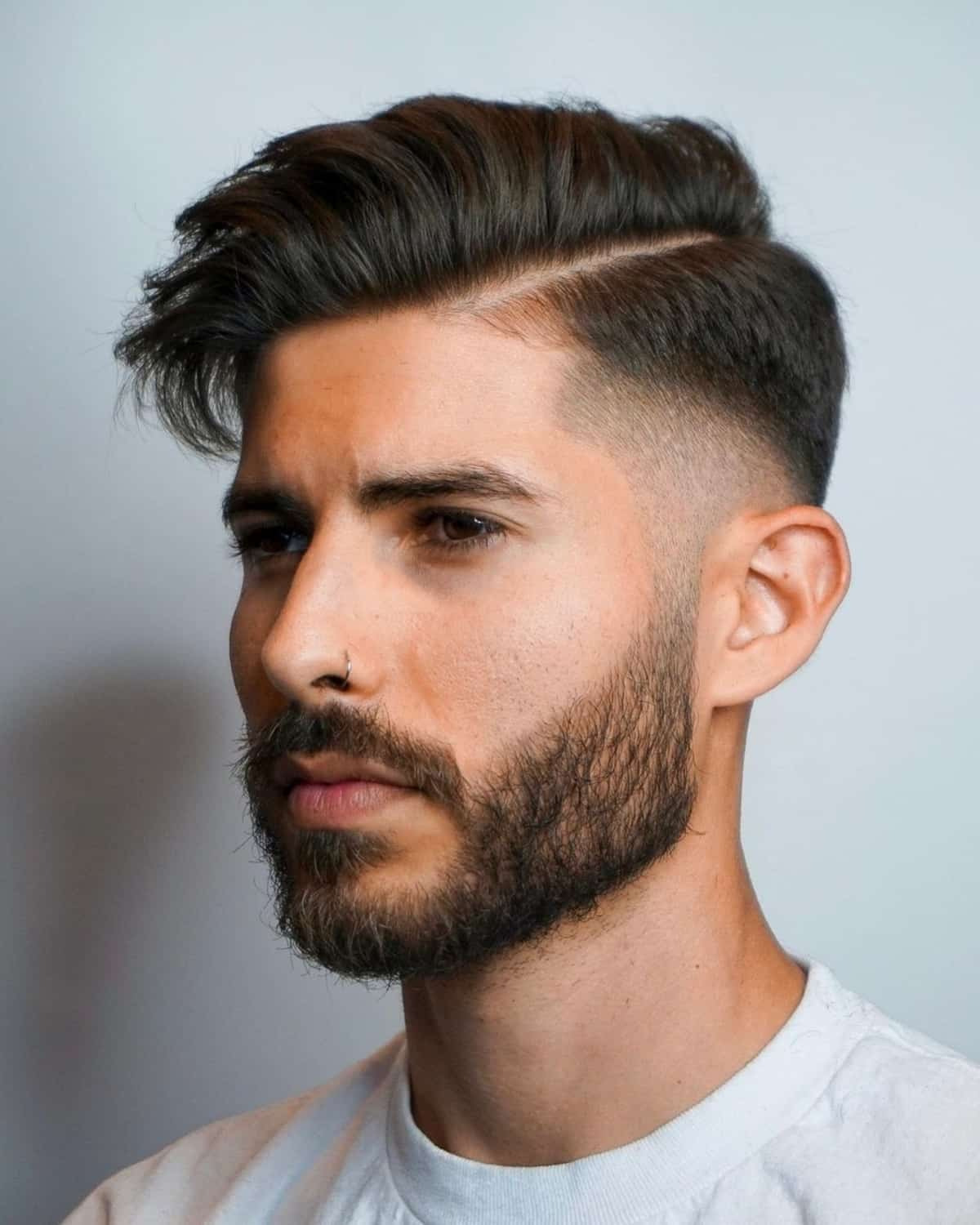
This variation adds a secondary fade at the temples, creating a stepped effect that looks sharp and architectural. The main drop fade runs low around the sides, while the temple fade creates a crisp edge at the hairline. This is an excellent choice for men who want extra detail without going to a full high fade.
- Best for: All hair types
- Styling difficulty: Low
- Maintenance: Trim every 2-3 weeks
- Ideal face shape: Oval, square, diamond
- Barber request: “Low drop fade with a temple fade, keep the main fade low but add a clean fade at the temples.”
24. Mid Drop Fade with Volume Top
The mid drop fade with volume top is all about creating height and presence. The mid-height fade provides a strong baseline, while the top is styled with maximum volume using a blow dryer and matte clay. This style works particularly well for men with fine or thinning hair who want to create the appearance of density and fullness.
- Best for: Straight to wavy hair
- Styling difficulty: Medium
- Maintenance: Trim every 2-3 weeks; daily styling required
- Ideal face shape: Round, oval
- Barber request: “Mid drop fade, leave enough on top for volume, style it up with some height in the front.”
25. High Drop Fade with Disconnected Top
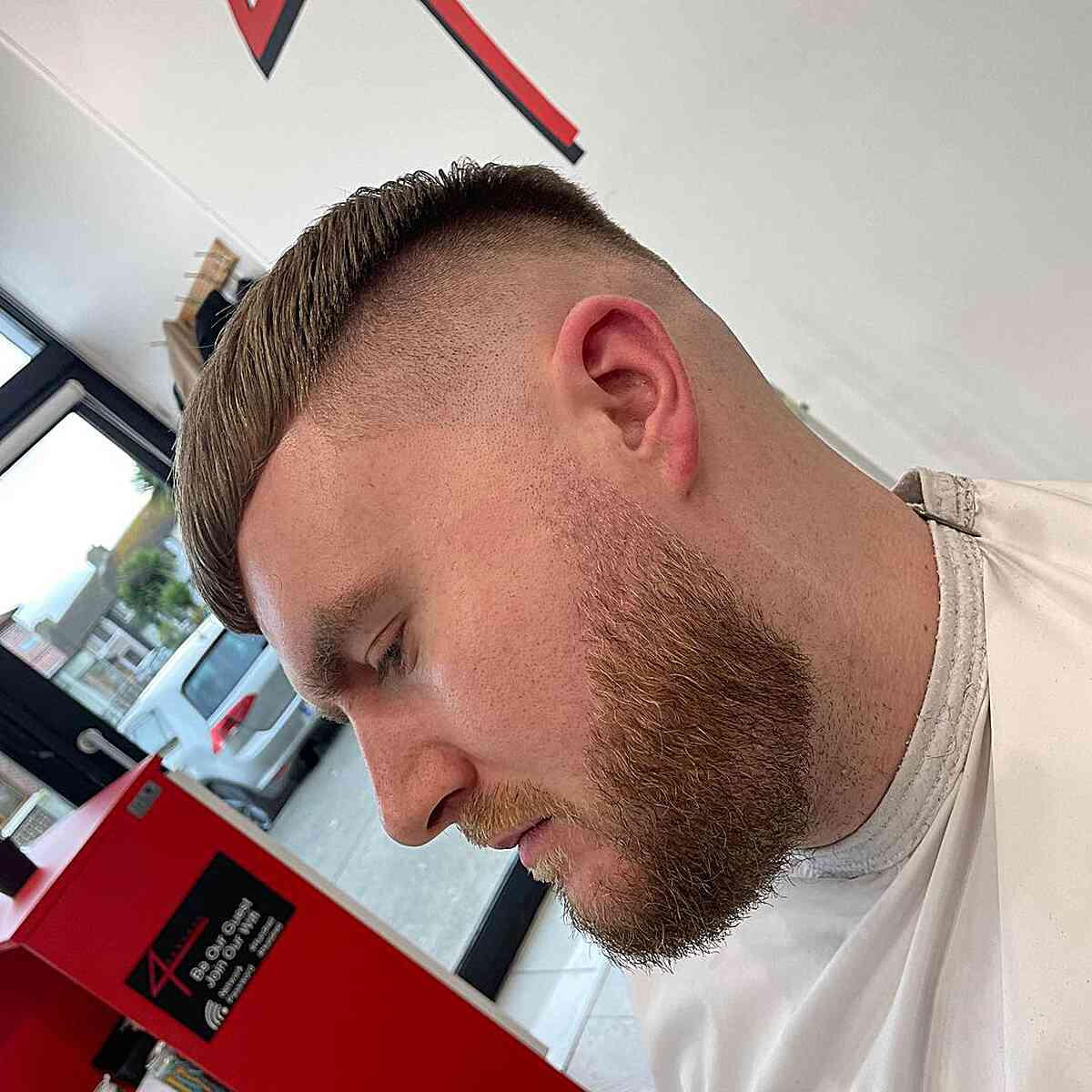
The disconnected top creates a sharp, visible line between the long hair on top and the faded sides. Unlike a blended fade where the transition is gradual, the disconnected look features an abrupt shift that makes the top appear to float above the fade. The drop curve on the sides adds a sculptural element that elevates the entire cut.
- Best for: All hair types
- Styling difficulty: Medium
- Maintenance: Trim every 2 weeks
- Ideal face shape: Oval, square, diamond
- Barber request: “High drop fade with a disconnected top, sharp line between the top and the sides, fade drops in the back.”
26. Skin Drop Fade with Hard Part
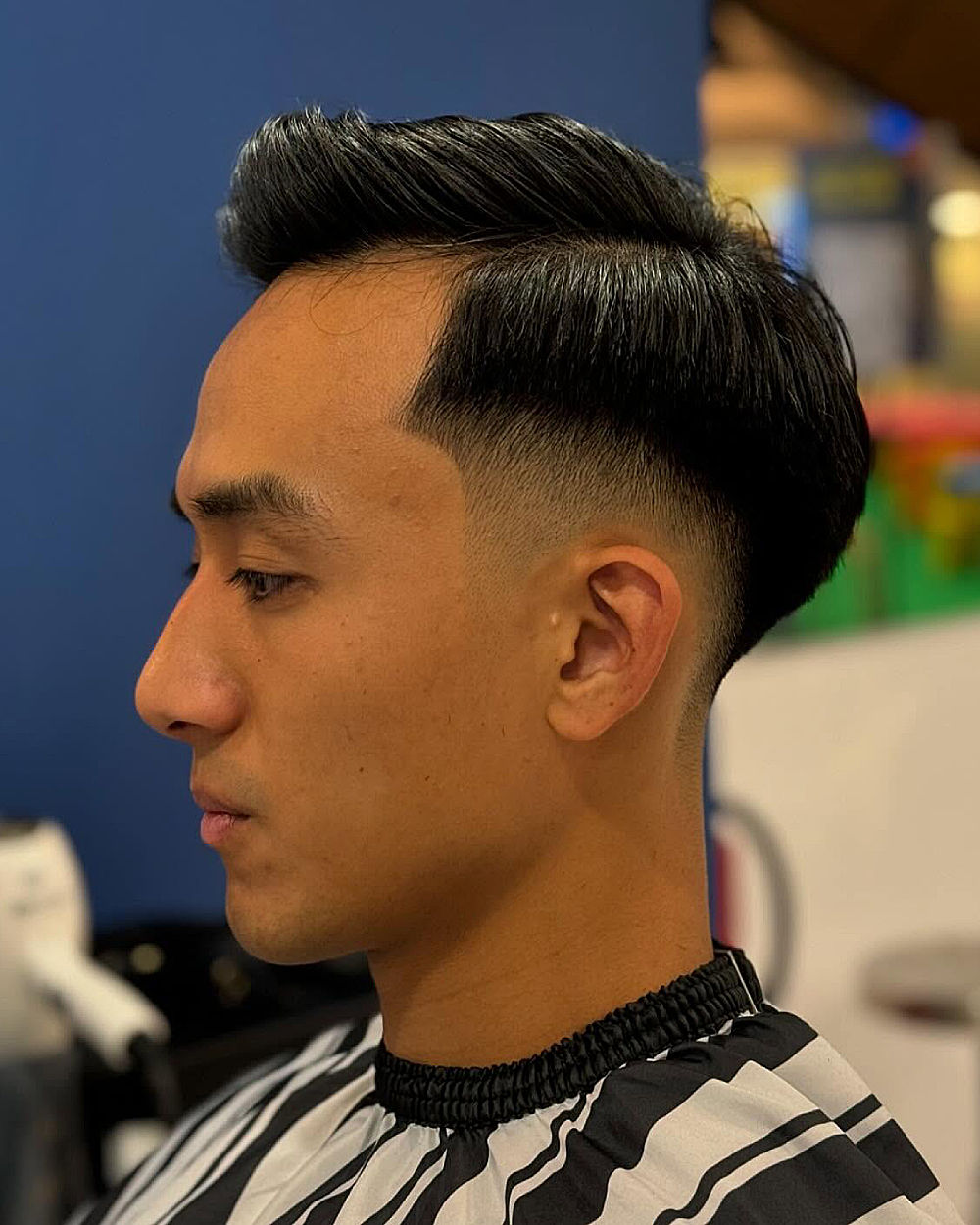
A hard part is a shaved line that creates a permanent, visible part in the hair. When combined with a skin drop fade, the hard part adds an extra element of precision and detail. The shaved line typically runs from the crown to the temple, creating a strong visual line that draws the eye and gives the style an intentional, designed feel.
- Best for: Straight to wavy hair
- Styling difficulty: Low to medium
- Maintenance: Trim every 2-3 weeks
- Ideal face shape: Oval, square
- Barber request: “Skin drop fade with a hard part, shave a line from the crown to the temple, fade drops behind the ears.”
27. Drop Fade with V-Cut Nape
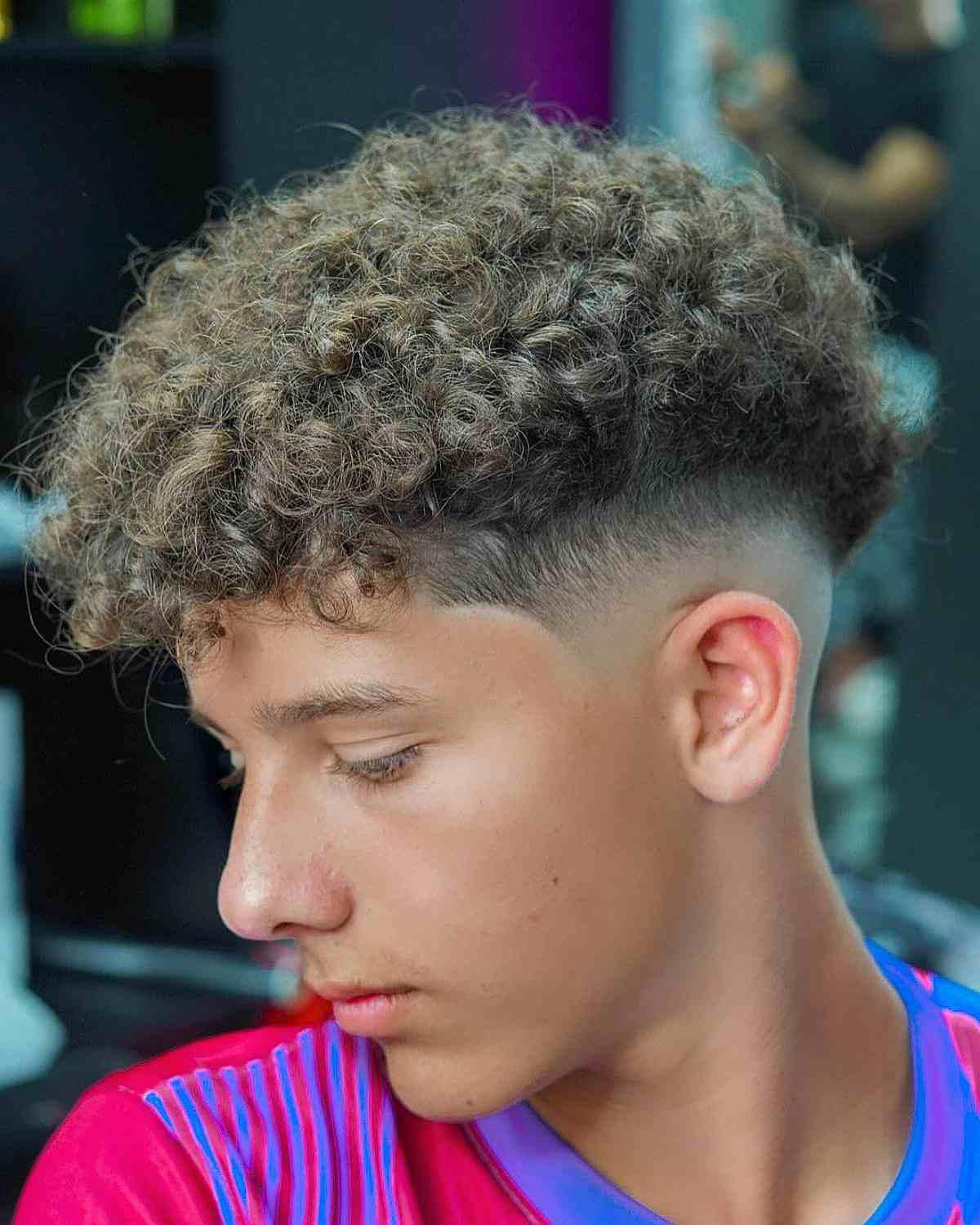
The V-cut nape is a detail at the back of the neck where the hairline is shaped into a V rather than a straight or rounded line. Combined with a drop fade, this creates a distinctive look that is visible from behind and adds an unexpected design element. It is a subtle detail that sets your cut apart from the standard fade.
- Best for: All hair types
- Styling difficulty: Low
- Maintenance: Trim every 2-3 weeks
- Ideal face shape: All face shapes
- Barber request: “Drop fade with a V-cut at the nape, shape the neckline into a V, fade drops naturally into it.”
28. Low Drop Fade with Natural Neckline
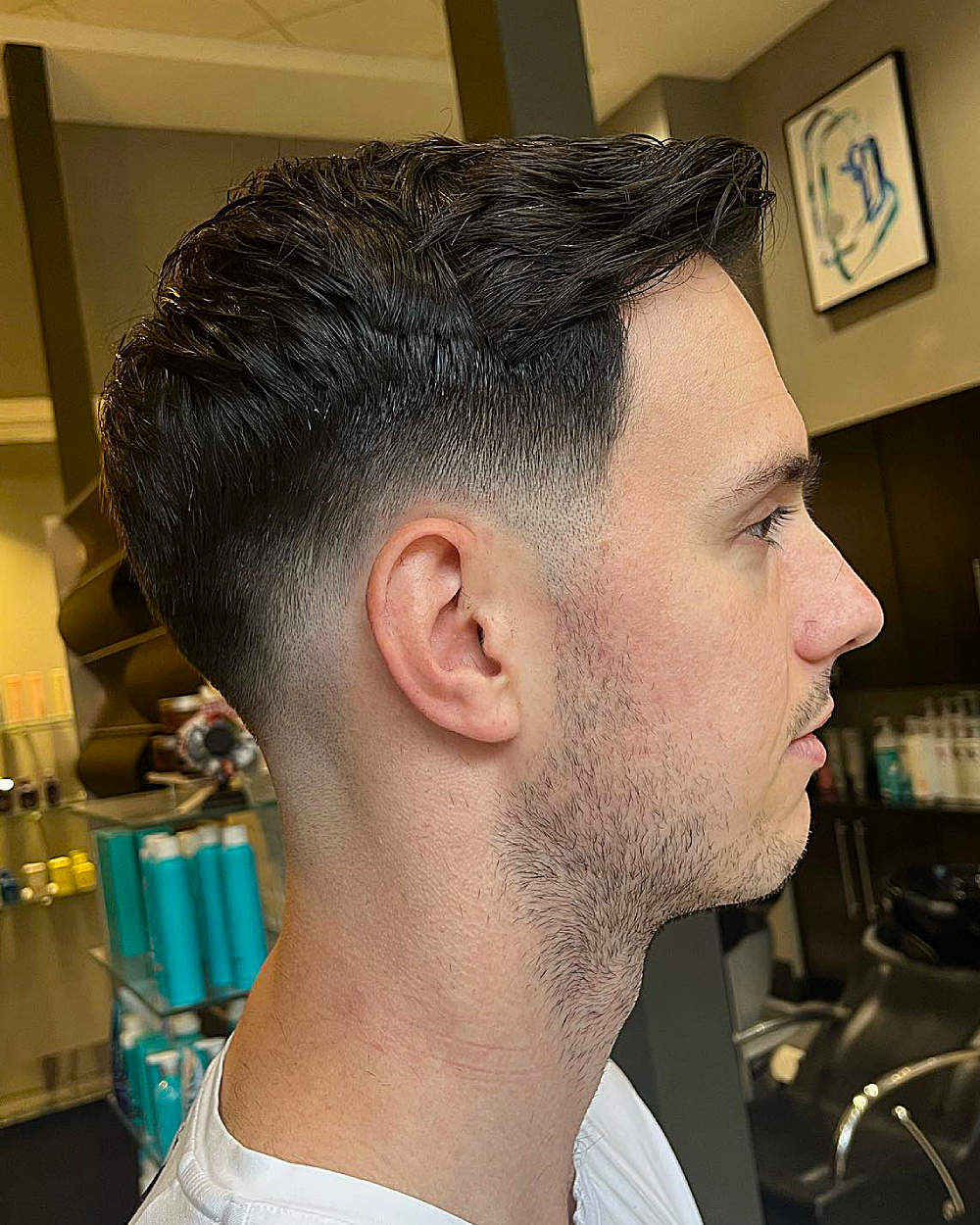
Not every drop fade needs a sculpted neckline. The low drop fade with a natural neckline leaves the hair at the back of the neck at its natural growth pattern, only cleaning up the strays. This creates a softer, more relaxed look that is perfect for men who prefer a less manicured appearance.
- Best for: All hair types
- Styling difficulty: Low
- Maintenance: Trim every 3-4 weeks
- Ideal face shape: Oval, round, diamond
- Barber request: “Low drop fade, leave the neckline natural, just clean up the strays, fade drops behind the ears.”
29. Mid Drop Fade with Tapered Sideburns
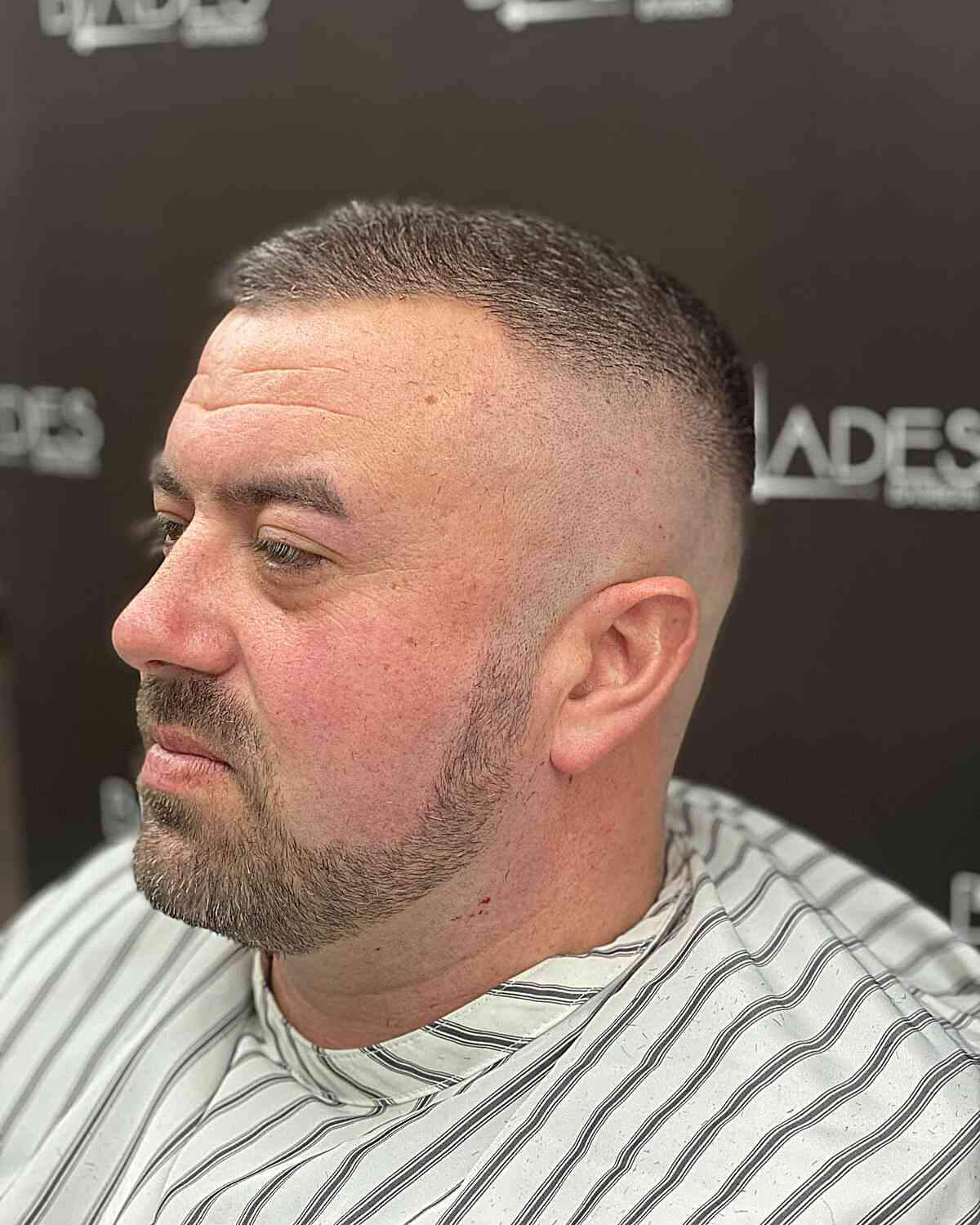
Tapered sideburns that narrow as they descend create a clean transition from the fade into the face. When paired with a mid drop fade, the tapered sideburns add a polished detail that makes the entire cut feel intentional from every angle. This is a small detail that makes a big difference in the overall quality of the haircut.
- Best for: All hair types
- Styling difficulty: Low
- Maintenance: Trim every 2-3 weeks; sideburn detail weekly
- Ideal face shape: All face shapes
- Barber request: “Mid drop fade with tapered sideburns, narrow them as they go down, fade drops in the back.”
30. High Drop Fade with Design
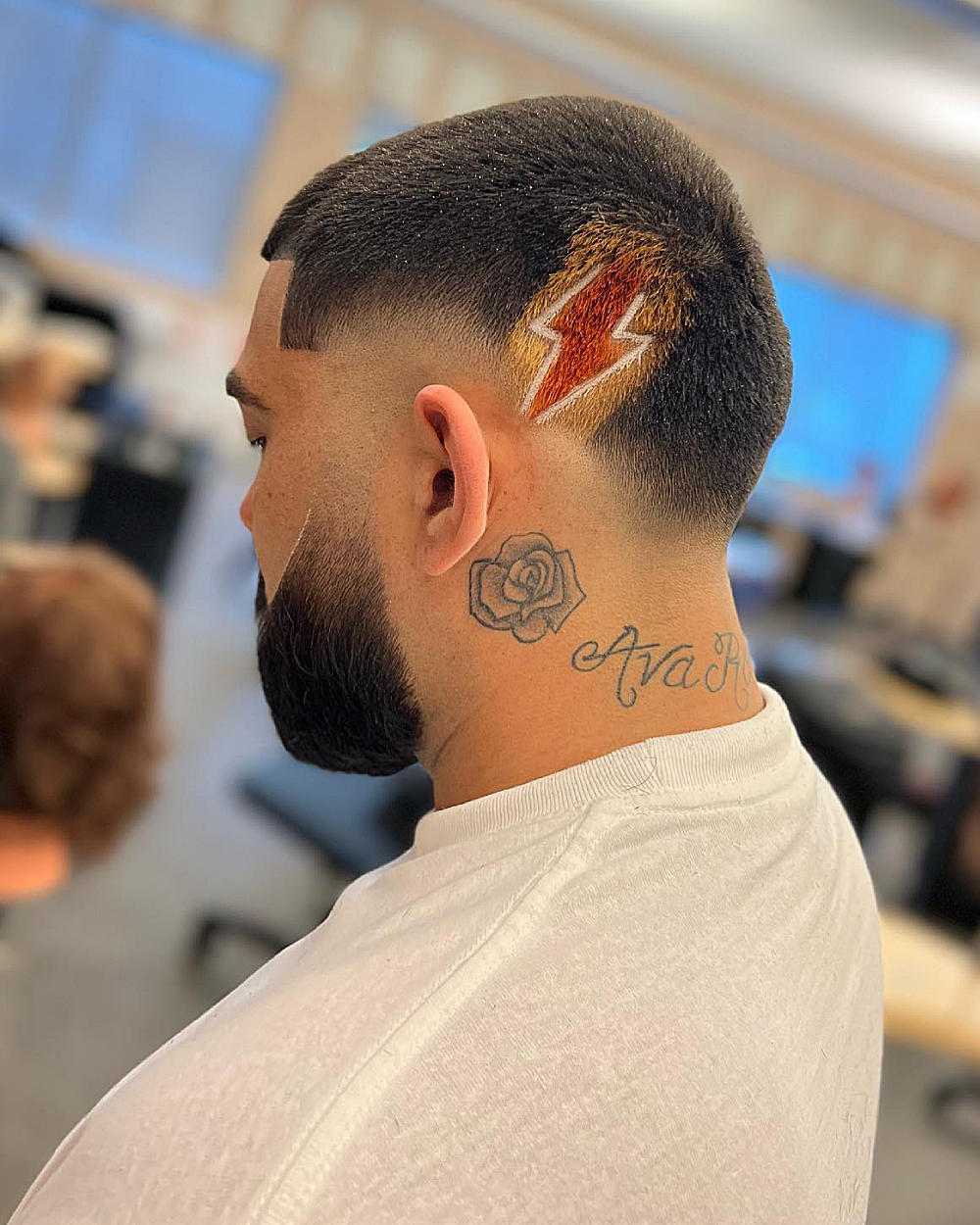
Adding a design to a high drop fade transforms the cut into a wearable piece of art. Designs can range from simple geometric lines to intricate patterns carved into the faded section. The high fade provides more canvas space for the design, and the drop curve adds an organic element that complements both linear and curved patterns.
- Best for: All hair types; bold personalities
- Styling difficulty: Medium to high
- Maintenance: Trim every 1-2 weeks to keep design crisp
- Ideal face shape: Oval, square, diamond
- Barber request: “High drop fade with a design on the side, carve in [specific pattern], fade drops in the back.”
Trending Style Pairings
31. Drop Fade Mullet
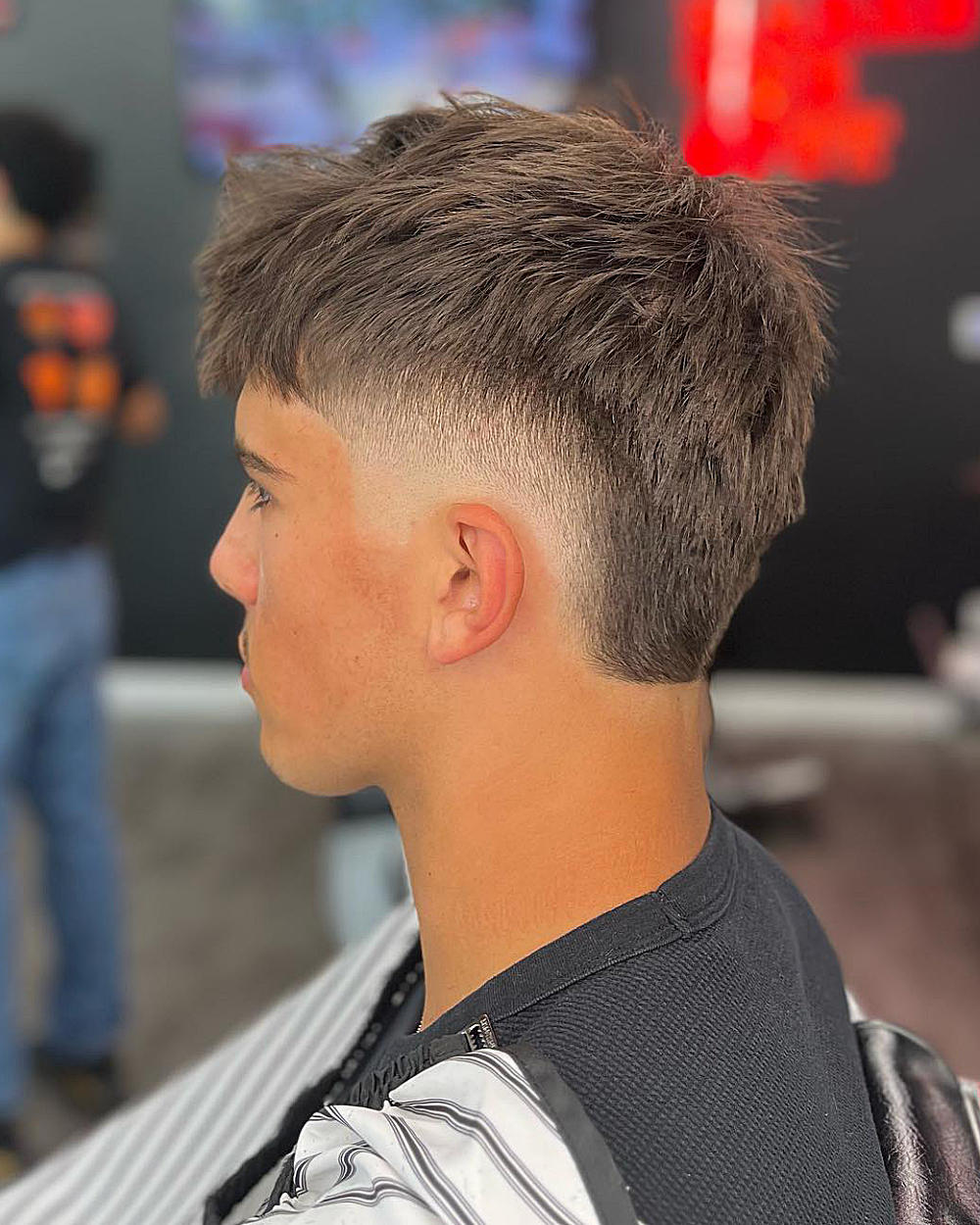
The modern mullet has made a massive comeback, and pairing it with a drop fade creates a version that is surprisingly wearable. The mullet keeps length in the back while the drop fade trims the sides tight. The drop curve ensures the transition from the mullet to the fade looks intentional rather than accidental. This is one of the boldest styles on this list, but it is also one of the most talked-about.
- Best for: Wavy to curly hair
- Styling difficulty: Medium
- Maintenance: Trim every 3-4 weeks; mullet grows out gracefully
- Ideal face shape: Oval, square, diamond
- Barber request: “Drop fade mullet, keep the back long, fade the sides with a drop, blend it where the mullet meets the fade.”
32. Drop Fade Undercut
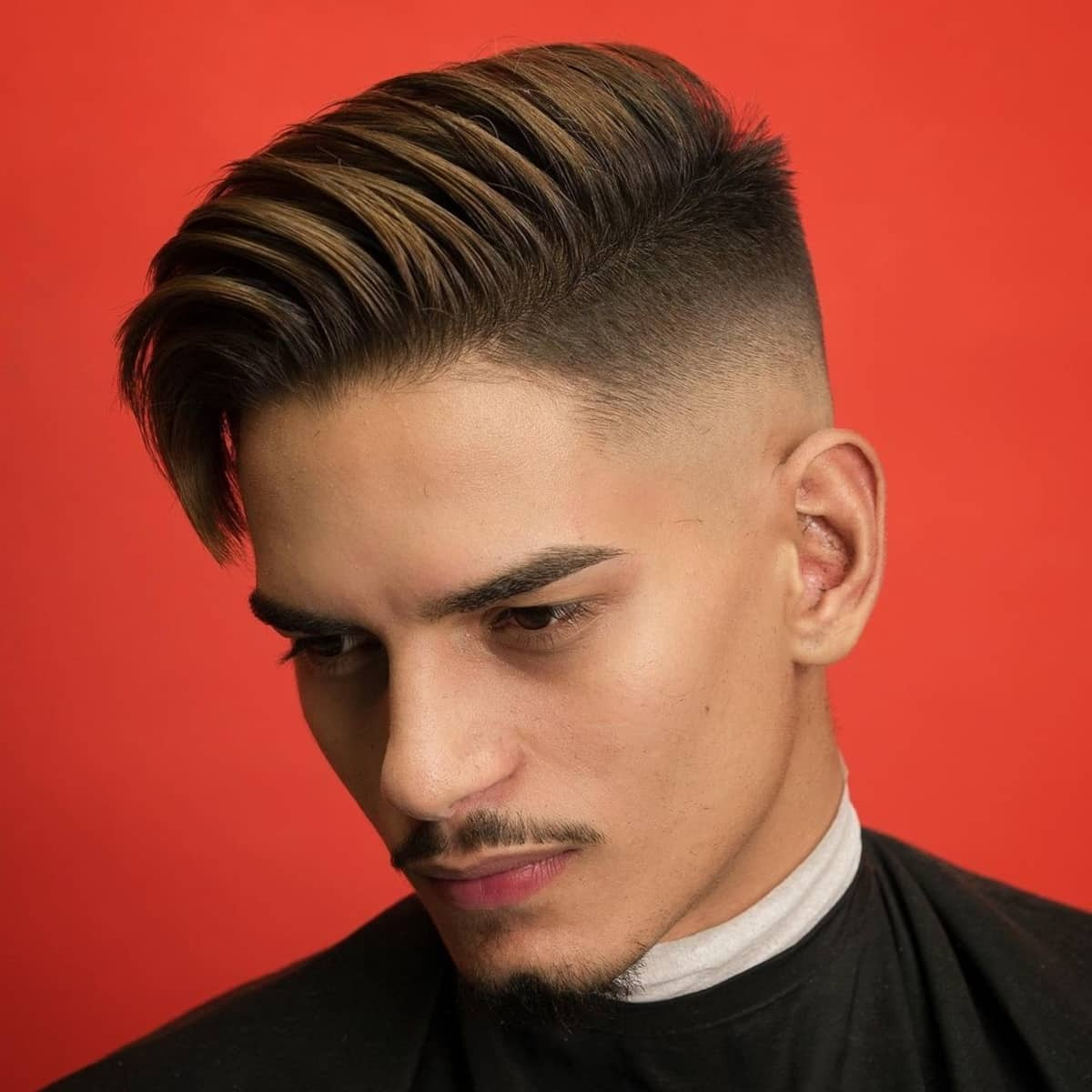
The drop fade undercut removes the sides and back entirely, creating maximum contrast with the long hair on top. Unlike a traditional undercut that uses a straight disconnect line, the drop fade undercut uses the curved fade to transition from the long top to the bare sides. This creates a more dynamic, sculpted look that feels less severe than a standard undercut.
- Best for: All hair types, especially straight and thick
- Styling difficulty: Low to medium
- Maintenance: Trim every 2-3 weeks
- Ideal face shape: Oval, square, rectangle
- Barber request: “Drop fade undercut, take the sides short, leave the top long, fade drops behind the ears.”
33. Crew Cut Drop Fade
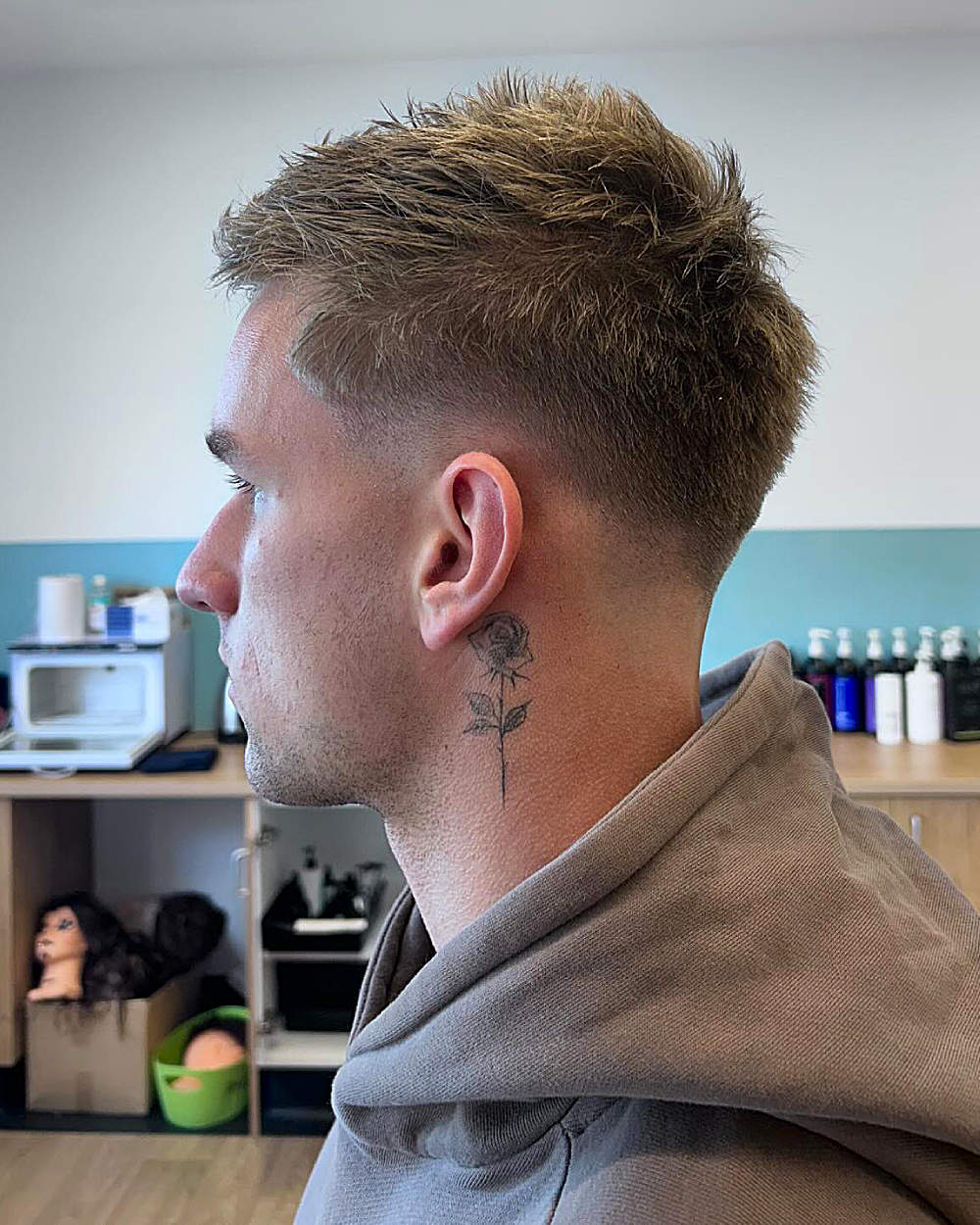
The crew cut is a timeless style, and the drop fade adds a modern update. The crew cut keeps the top short and graduated from front to back, while the drop fade handles the sides with its signature curve. This is one of the most low-maintenance drop fade options, perfect for men who want a clean look without any daily styling commitment.
- Best for: Straight to wavy hair
- Styling difficulty: Very low
- Maintenance: Trim every 3-4 weeks
- Ideal face shape: Oval, square, round
- Barber request: “Crew cut with a drop fade, keep it short on top graduating to shorter in the back, fade the sides with a drop.”
34. Slick Back Drop Fade
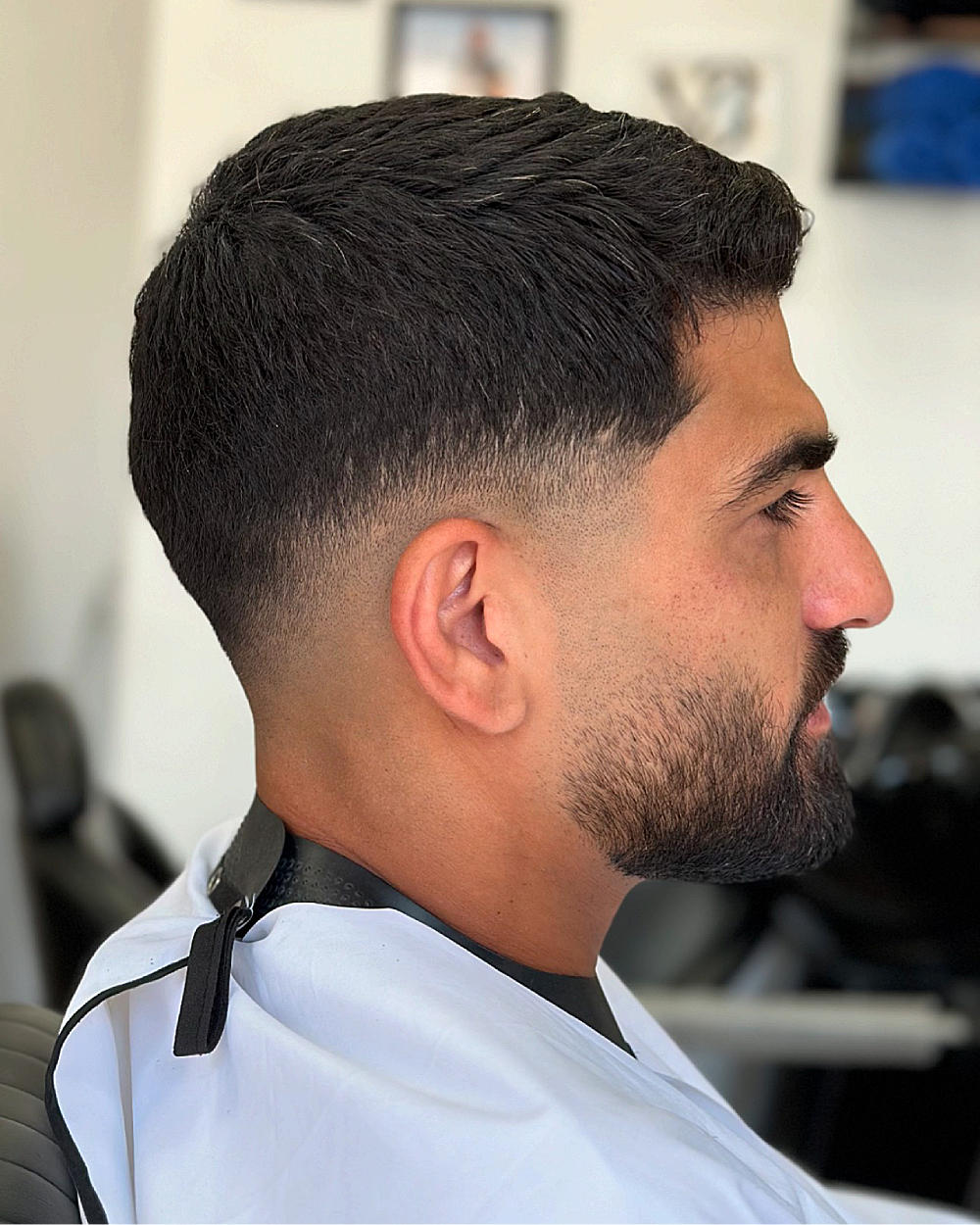
The slick back drop fade combines old-school sophistication with modern fade technique. The top is left long enough to sweep back with pomade, while the drop fade keeps the sides clean and tapered. The drop curve creates a natural transition that makes the slicked-back top appear to flow into the faded sides, rather than sitting on top of them abruptly.
- Best for: Straight to wavy hair, medium to thick
- Styling difficulty: Medium
- Maintenance: Trim every 2-3 weeks; daily styling with pomade
- Ideal face shape: Oval, rectangle, square
- Barber request: “Slick back with a drop fade, leave enough on top to pull back, fade drops behind the ears, use a medium hold pomade.”
35. Faux Hawk Drop Fade
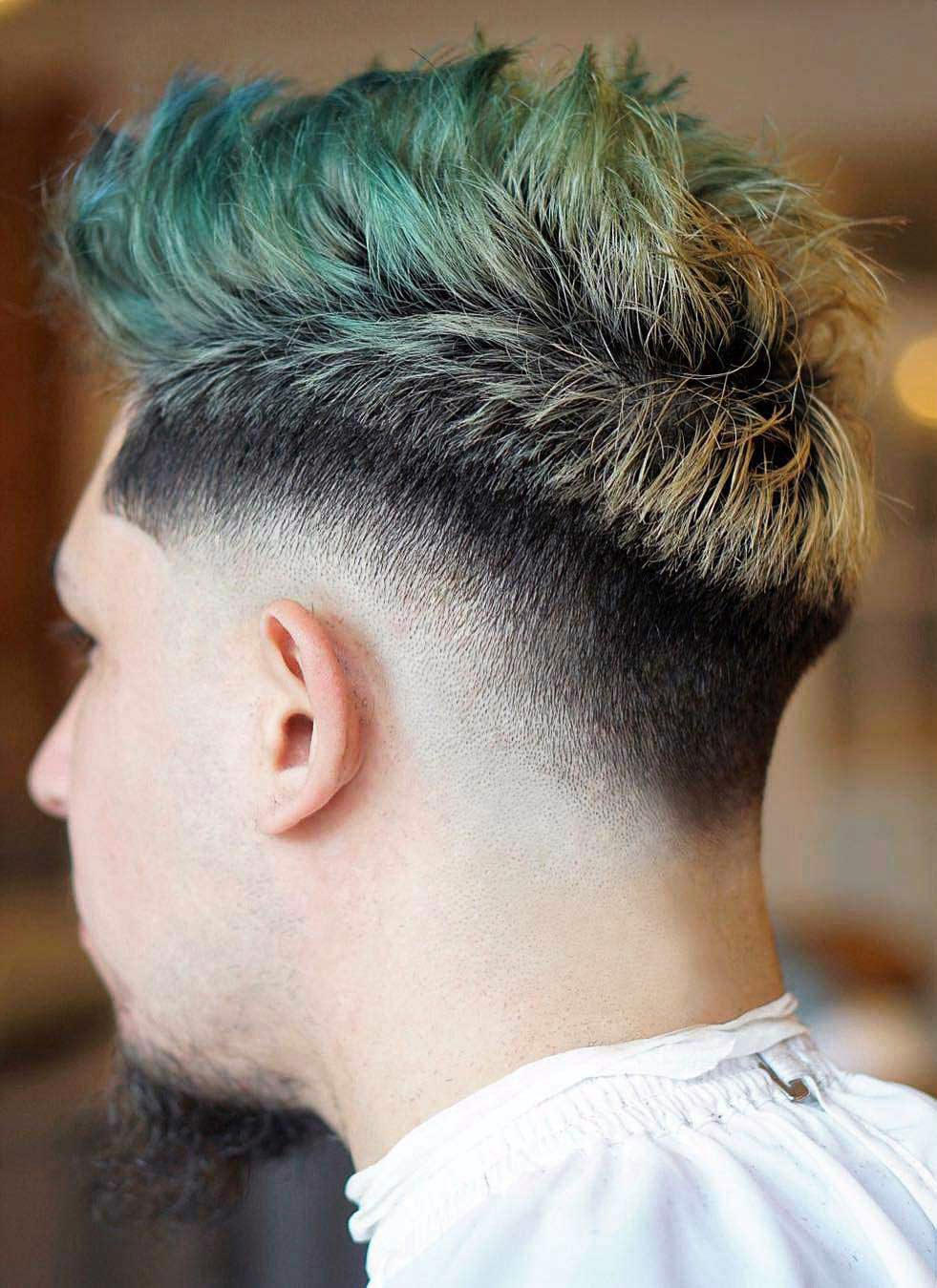
The faux hawk gives you the edgy silhouette of a mohawk without the commitment of shaving the sides. When combined with a drop fade, the faux hawk on top becomes the focal point while the faded sides create a clean, dramatic backdrop. The drop curve adds a softer transition than a straight fade would, making this style feel more refined than rebellious.
- Best for: All hair types, especially thick and straight
- Styling difficulty: Medium
- Maintenance: Trim every 2-3 weeks; daily styling required
- Ideal face shape: Oval, square, diamond
- Barber request: “Faux hawk with a drop fade, keep the center strip raised, fade the sides with a drop, blend it at the crown.”
36. Pompadour Drop Fade
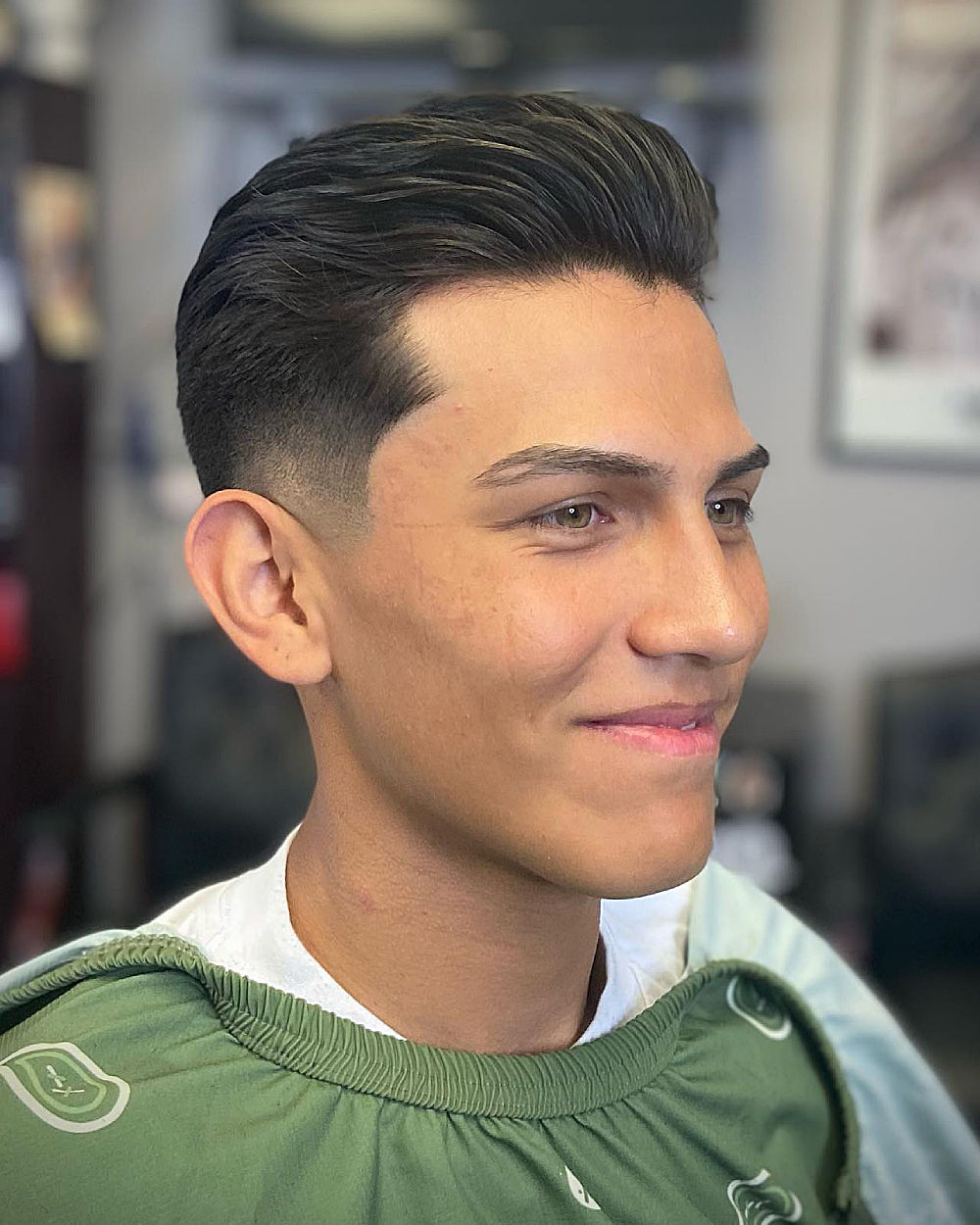
The pompadour is a statement style that demands attention, and the drop fade provides the perfect side treatment. The volume and height of the pompadour on top contrast sharply with the clean, curved fade on the sides. The drop curve ensures the transition from the pompadour to the fade feels natural and flowing rather than abrupt and disconnected.
- Best for: Straight to wavy hair with natural volume
- Styling difficulty: High
- Maintenance: Trim every 2-3 weeks; daily blow-drying and styling
- Ideal face shape: Oval, rectangle, diamond
- Barber request: “Pompadour with a drop fade, leave the front long for height, fade the sides starting at mid-height, drop in the back.”
37. Messy Top Drop Fade
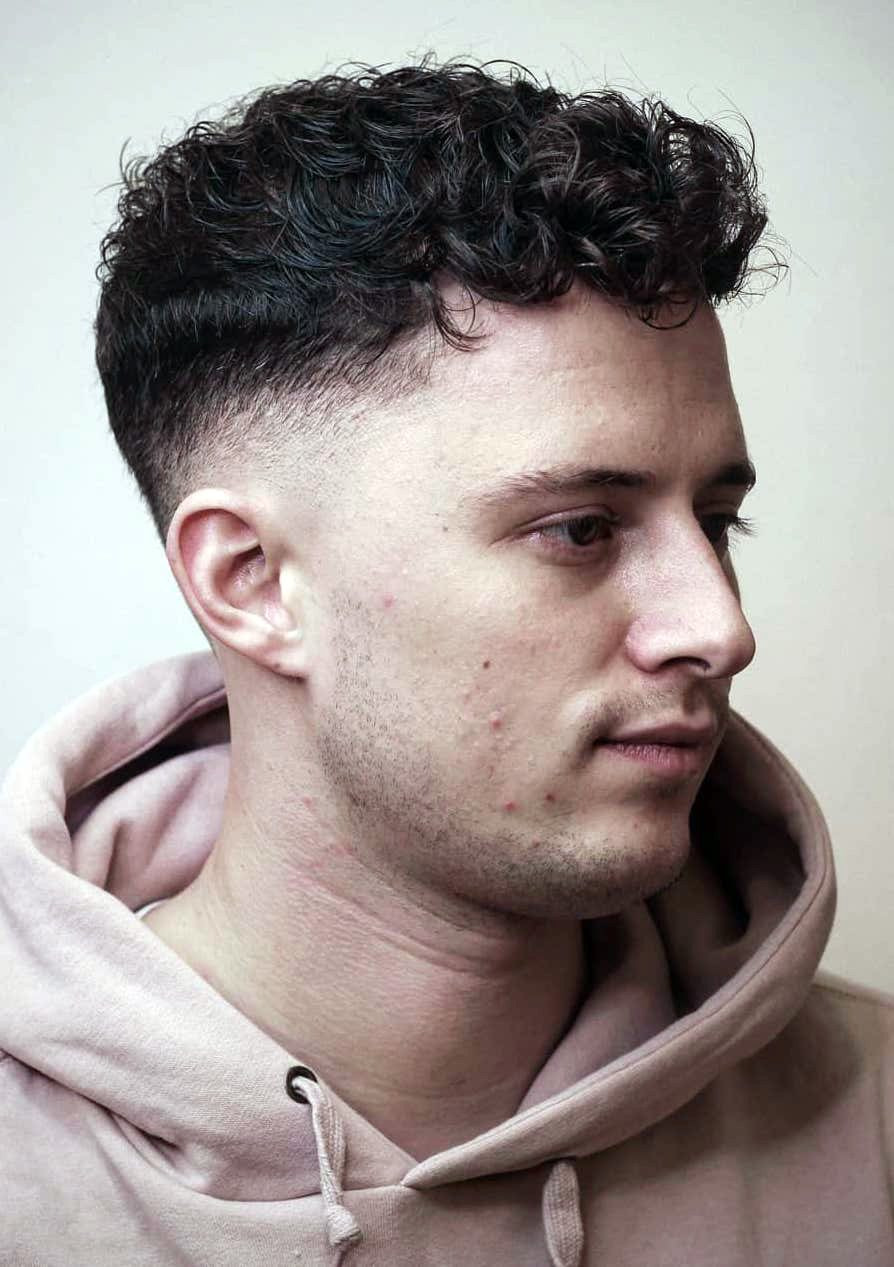
The messy top drop fade is the ultimate effortless style. The top is cut to a medium length and styled loosely with matte clay or texture powder, creating a relaxed, lived-in look. The drop fade on the sides provides enough structure to keep the style looking intentional rather than sloppy. This is a weekend-ready cut that also works in creative professional environments.
- Best for: All hair types, especially wavy and straight
- Styling difficulty: Low
- Maintenance: Trim every 3-4 weeks; minimal daily styling
- Ideal face shape: Oval, square, round
- Barber request: “Messy top with a drop fade, leave it choppy and textured on top, fade the sides with a drop, keep it relaxed.”
38. Drop Fade with Full Beard
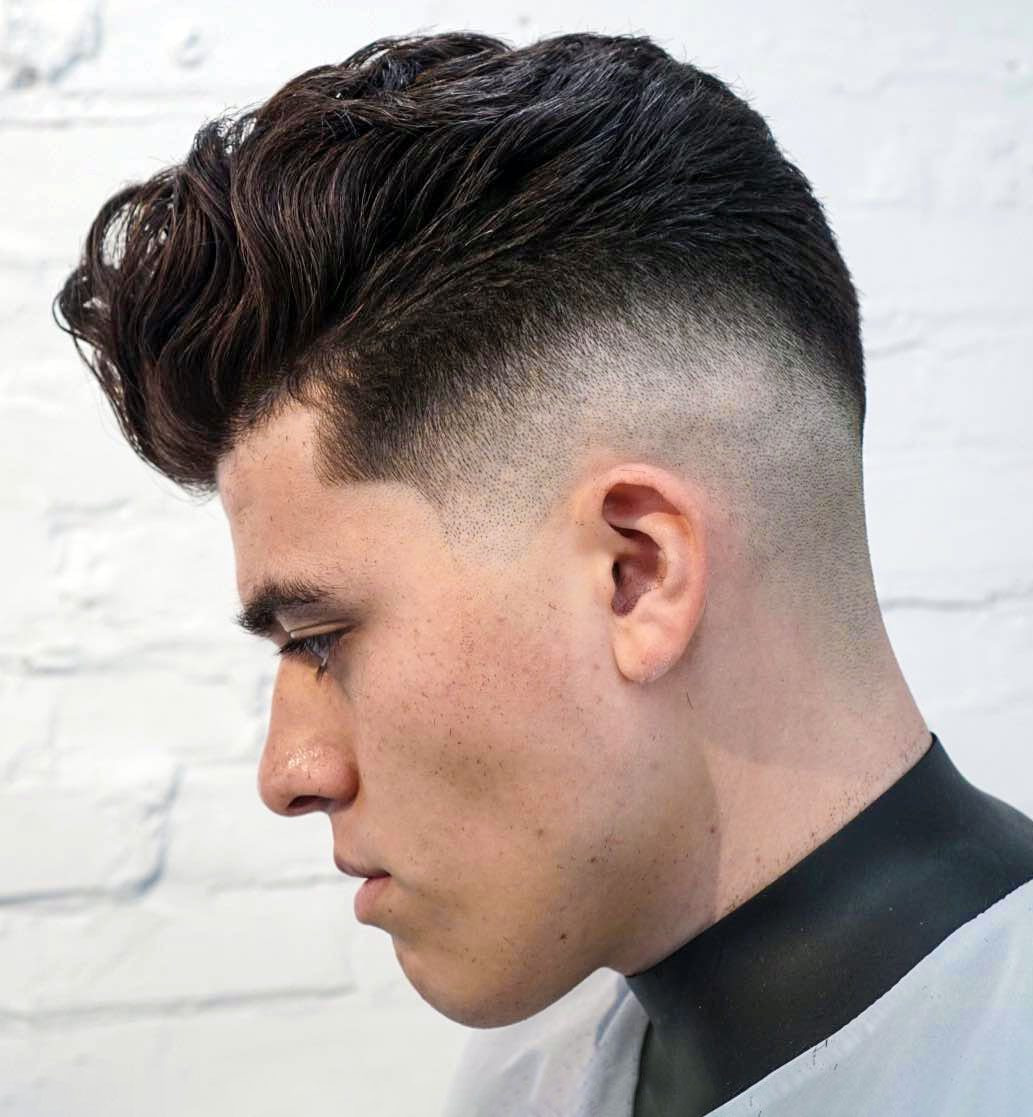
The drop fade with a full beard creates a rugged yet refined aesthetic. The fade transitions from the hair on top into the beard seamlessly, with the drop curve guiding the transition naturally toward the sideburns. The key to making this work is ensuring the barber blends the fade into the beard at the same gradient, creating a continuous flow from crown to chin.
- Best for: All hair types; requires full beard growth
- Styling difficulty: Low
- Maintenance: Trim every 2-3 weeks; beard trim every 2-3 weeks
- Ideal face shape: Oval, square, rectangle
- Barber request: “Drop fade blending into a full beard, take the fade down and blend it right into the beard, keep it natural.”
39. Drop Fade with Goatee
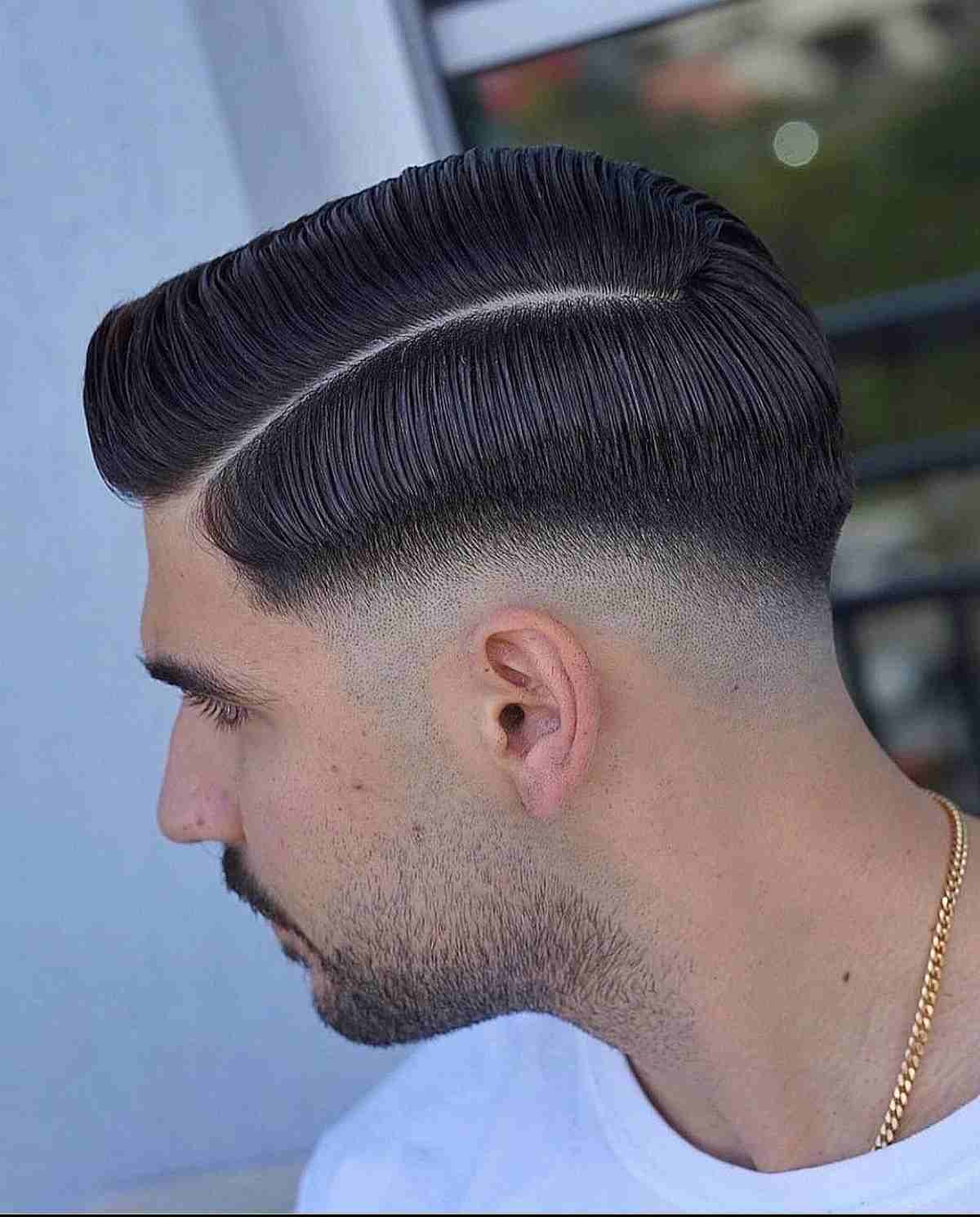
If a full beard is too much commitment, a drop fade with a goatee provides a similar sense of intentionality with less facial hair. The drop fade curves down toward the jawline, and the goatee picks up where the fade leaves off, creating a deliberate styling narrative. This combination works particularly well for men with strong jawlines who want to emphasize their facial structure.
- Best for: All hair types
- Styling difficulty: Low
- Maintenance: Trim every 2-3 weeks; goatee grooming weekly
- Ideal face shape: Square, oval, diamond
- Barber request: “Drop fade with a goatee, fade drops toward the jaw, keep the goatee sharp and well-defined.”
40. Drop Fade with Stubble
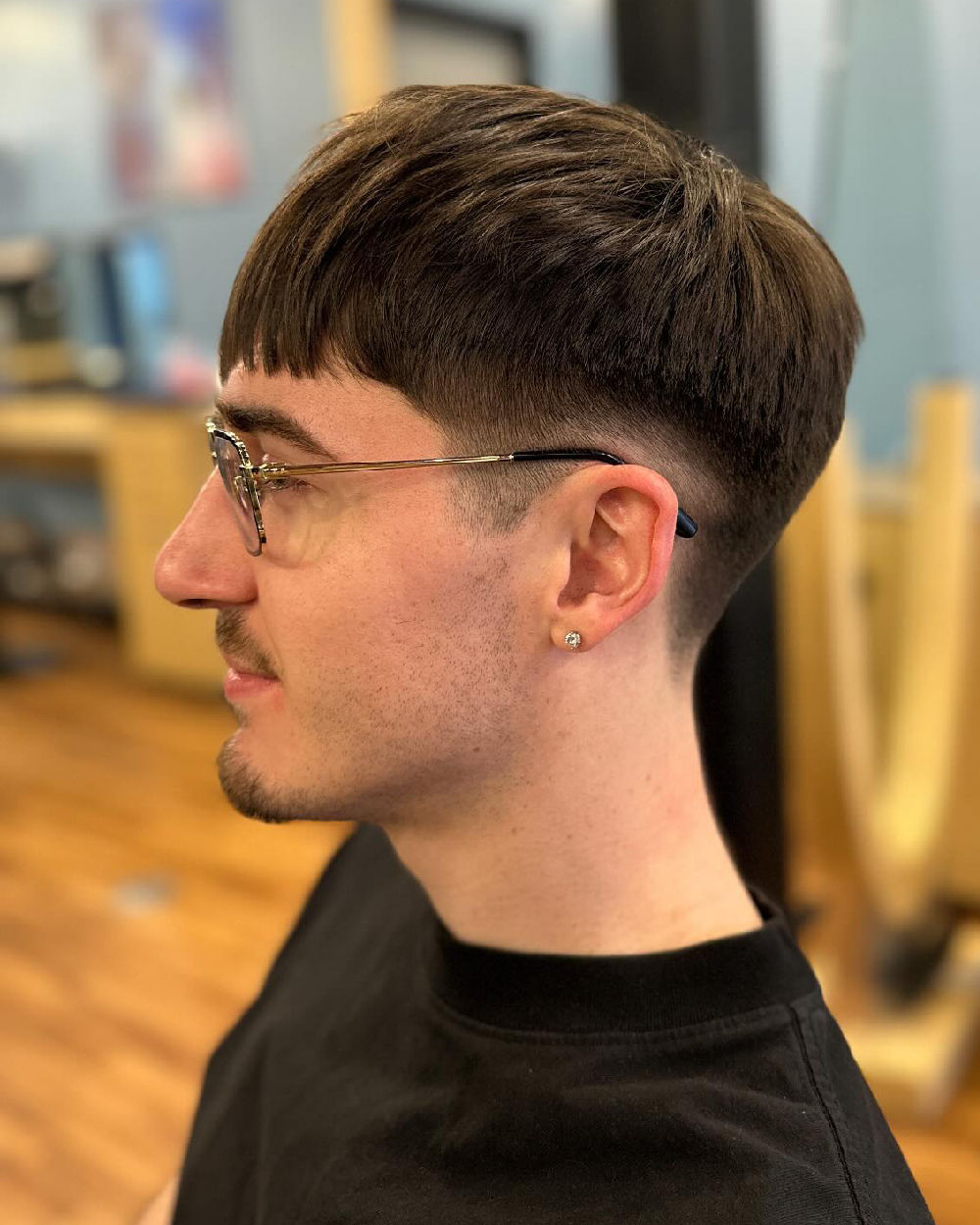
The drop fade with stubble is the most relaxed beard pairing. The fade on the sides transitions into a short, even stubble that requires minimal maintenance. This is a great option for men who want the polished look of a fade without the grooming commitment of a shaped beard. The stubble adds masculinity and balance to the clean fade without demanding daily attention.
- Best for: All hair types
- Styling difficulty: Very low
- Maintenance: Trim every 2-3 weeks; stubble trim every 3-5 days
- Ideal face shape: All face shapes
- Barber request: “Drop fade with stubble, fade the sides down to a short beard grade, keep it consistent all around.”
41. Textured Fringe Mid Drop Fade
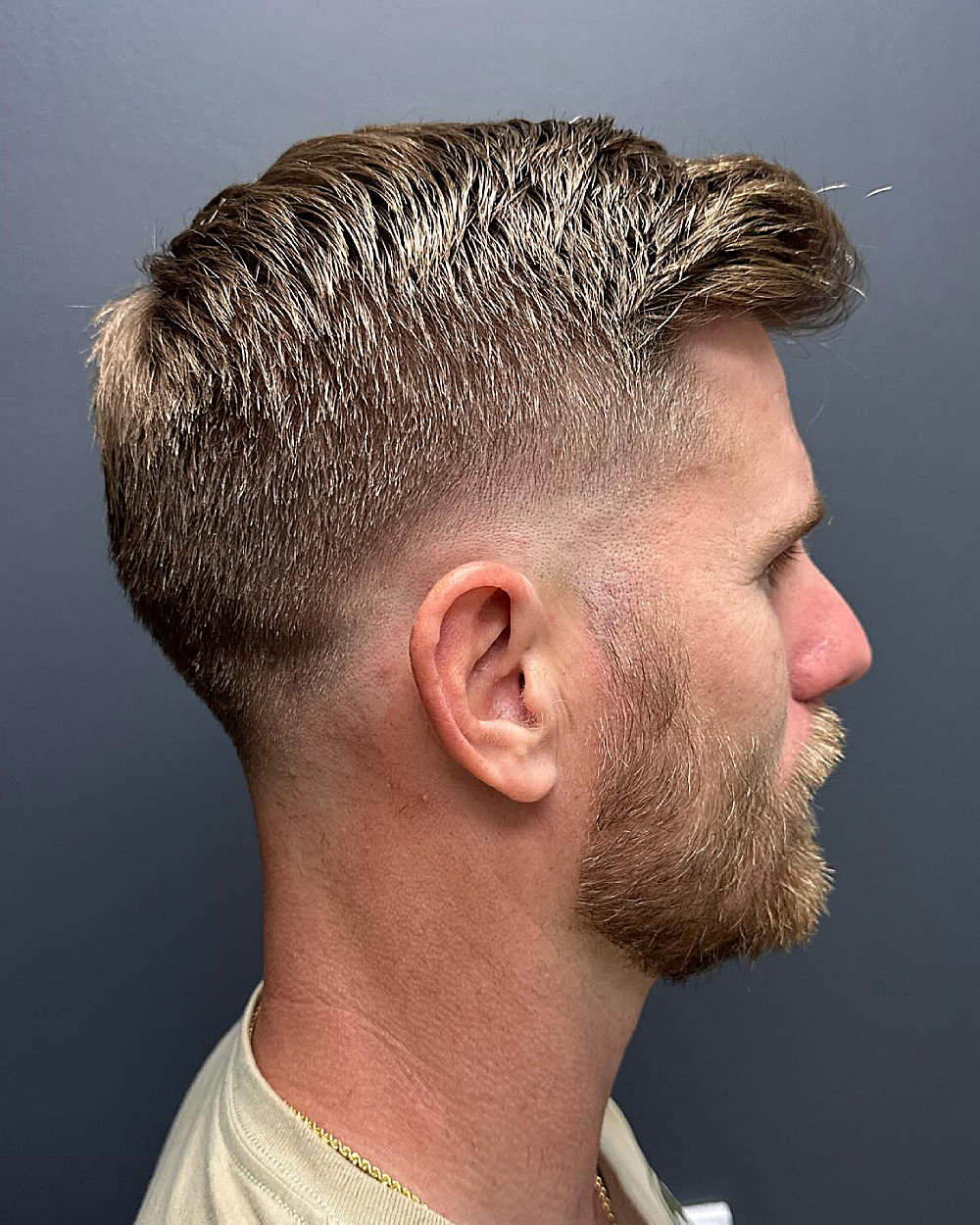
This specific variation places the textured fringe at the forefront with a mid-height drop fade supporting it. The fringe is cut with a razor or thinning shears for maximum texture, while the mid drop fade creates a balanced frame. The mid-height starting point is key because it provides enough contrast to make the fringe pop without the aggressive look of a high fade.
- Best for: Wavy and straight hair
- Styling difficulty: Medium
- Maintenance: Trim every 3-4 weeks; fringe needs regular trims
- Ideal face shape: Oval, square, diamond
- Barber request: “Textured fringe with a mid drop fade, razor-cut the fringe for texture, fade starts at the temples and drops.”
42. Curly Fringe Low Drop Fade
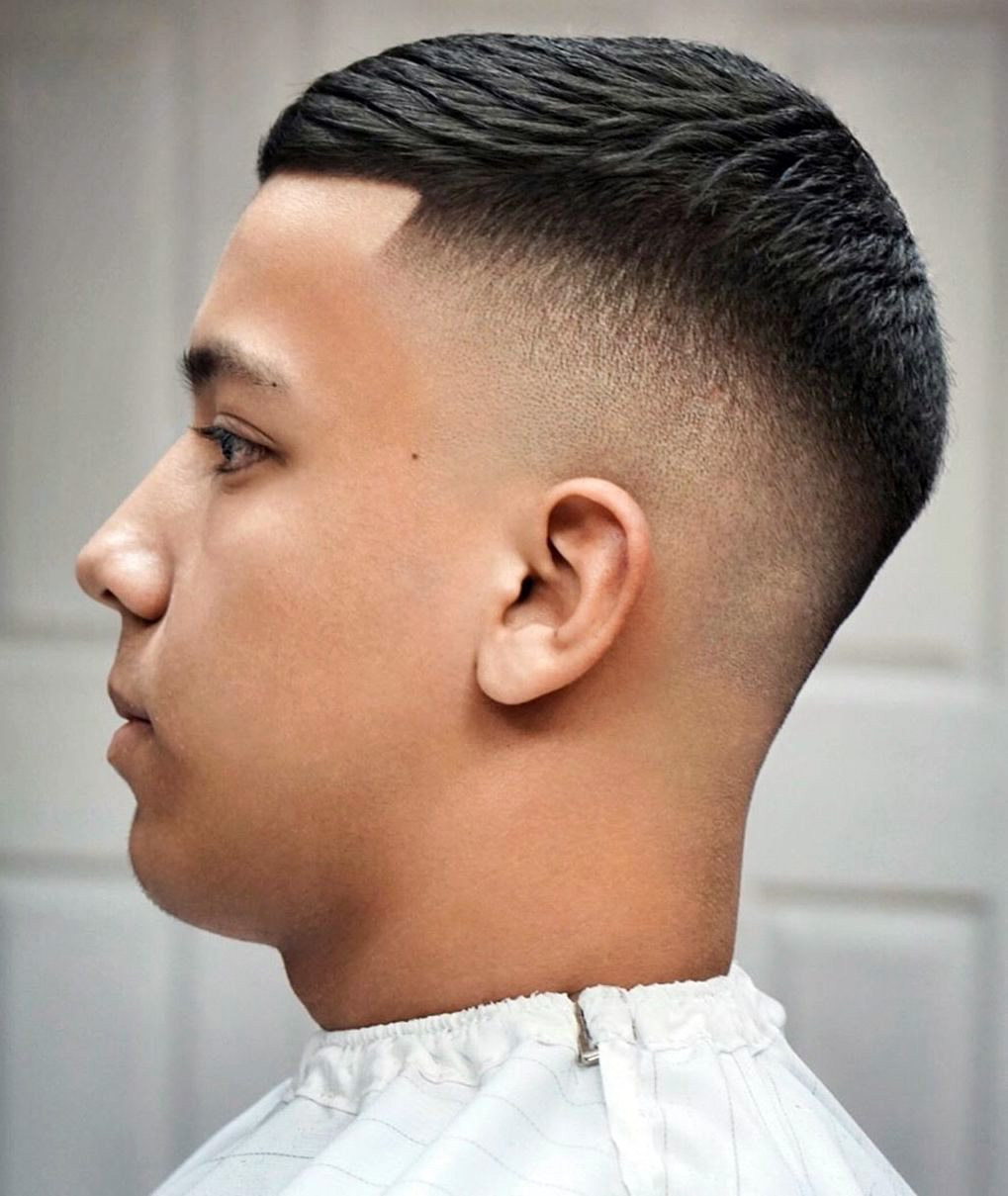
Curly fringes have become one of the most sought-after styles, and a low drop fade provides the perfect subtle frame. The curls fall forward naturally over the forehead, while the low drop fade keeps the sides tight without competing for attention. This is an excellent choice for men with type 3 curls who want a trendy but manageable style.
- Best for: Curly hair, type 3A-3C
- Styling difficulty: Low
- Maintenance: Trim every 3-4 weeks
- Ideal face shape: Oval, round, diamond
- Barber request: “Curly fringe with a low drop fade, let the curls fall forward, keep the fade low and subtle, drop it in the back.”
43. Drop Fade with Quiff
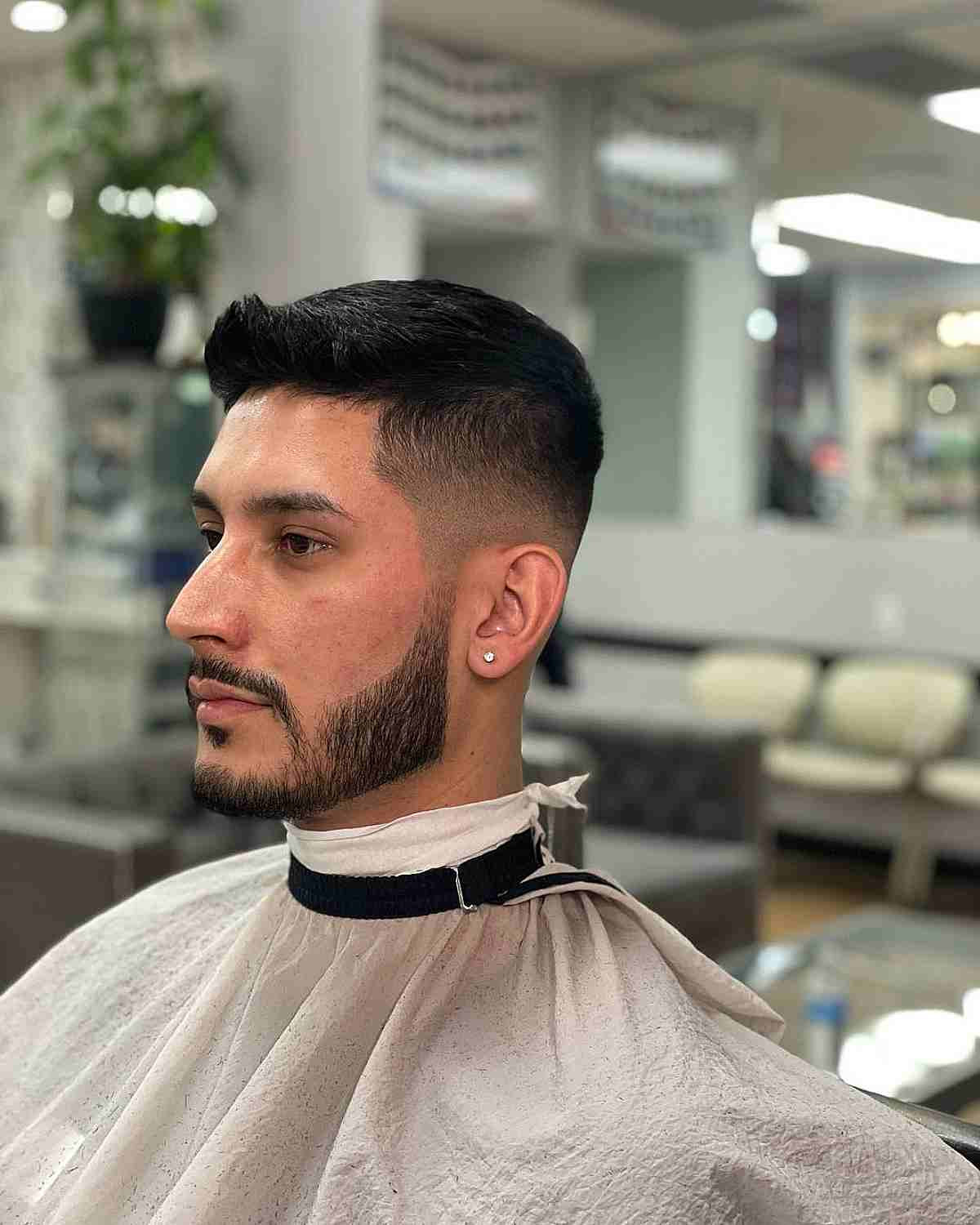
The quiff is similar to a pompadour but with more forward movement and less extreme height. Paired with a drop fade, the quiff gains a modern edge that updates the classic style. The drop fade keeps the sides clean while the quiff provides volume and direction at the front. This is a versatile style that works equally well with matte or shiny finishes.
- Best for: Straight to wavy hair with volume
- Styling difficulty: Medium
- Maintenance: Trim every 2-3 weeks; daily blow-drying
- Ideal face shape: Oval, square, rectangle
- Barber request: “Quiff with a drop fade, leave the front long enough for a forward sweep, fade the sides with a drop, style it up and forward.”
44. Drop Fade Caesar Cut
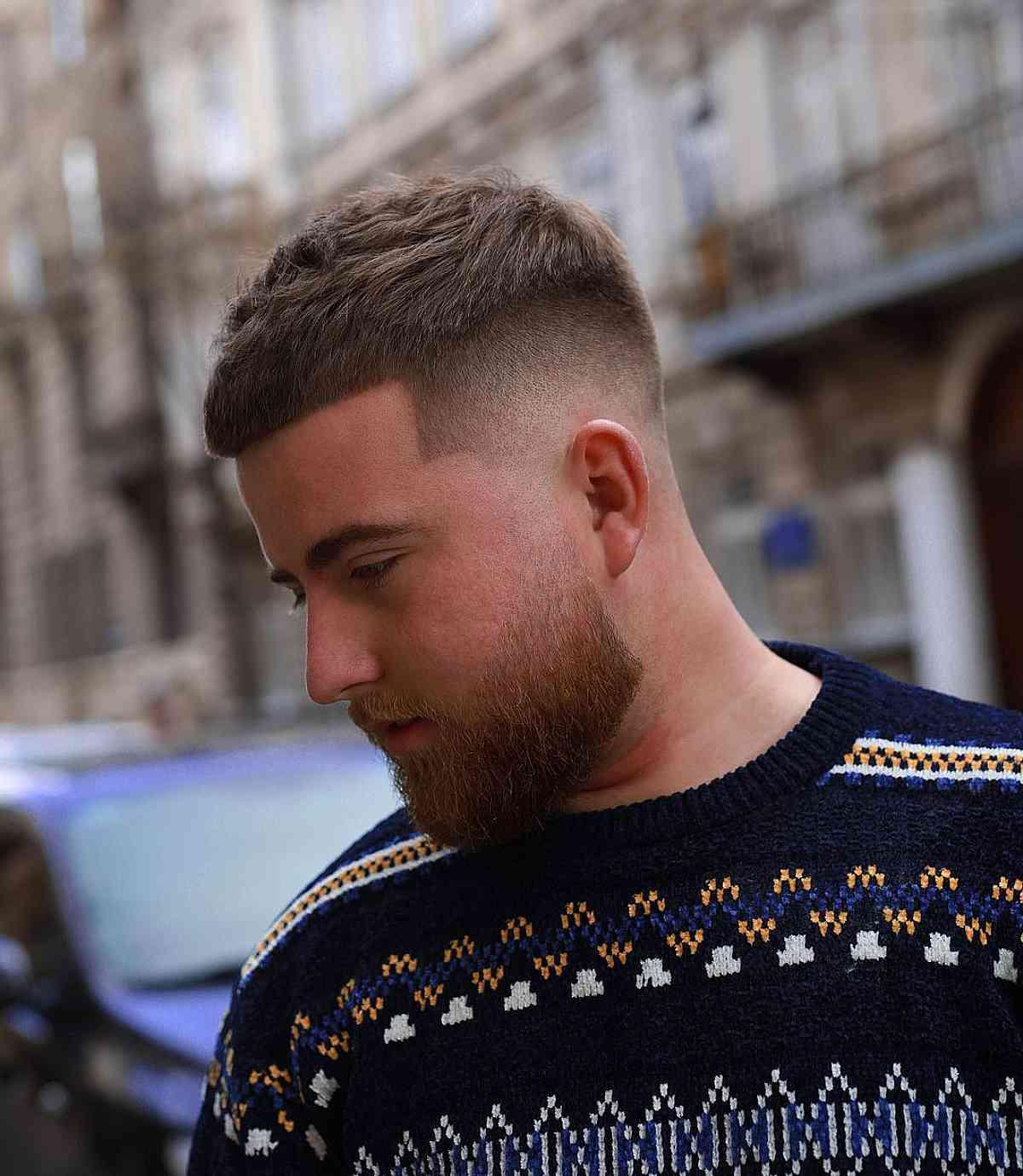
The Caesar cut features a short, horizontal fringe combed forward, and the drop fade adds a clean side profile. This combination creates a compact, structured look that is easy to style and maintain. The drop curve on the sides gives the otherwise simple Caesar cut an unexpected element of sophistication that sets it apart from the standard version.
- Best for: Straight to wavy hair
- Styling difficulty: Very low
- Maintenance: Trim every 3-4 weeks
- Ideal face shape: Oval, square, round
- Barber request: “Caesar cut with a drop fade, keep the fringe short and horizontal, fade the sides with a drop curve.”
45. Drop Fade with Asian Hair Texture
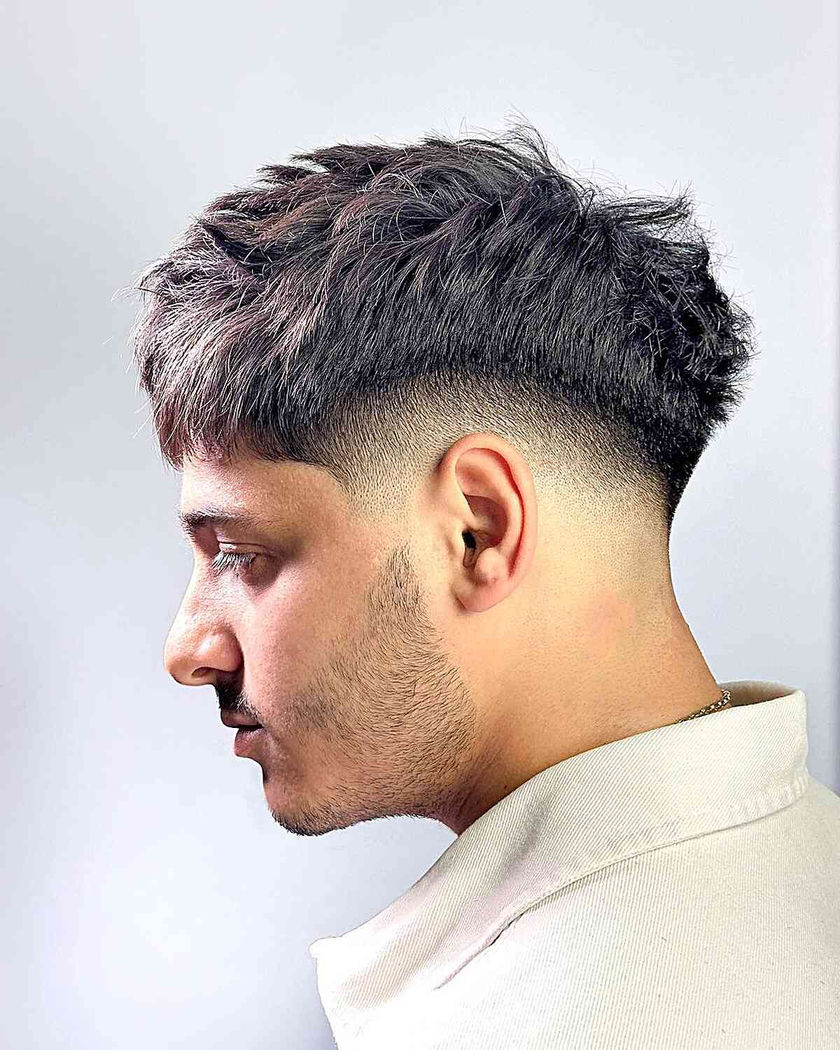
Asian hair has unique characteristics: it tends to be straight, thick, and coarse with a strong natural growth pattern. The drop fade works exceptionally well with this texture because the sides can be taken short while the top retains its natural density and direction. A mid drop fade with a textured top is one of the most requested styles for Asian men in modern barbershops.
- Best for: Asian hair texture, straight and thick
- Styling difficulty: Low to medium
- Maintenance: Trim every 2-3 weeks
- Ideal face shape: Oval, square, round
- Barber request: “Drop fade for Asian hair, mid-height, keep the top textured and natural, fade drops behind the ears, blend at the crown.”
Low vs Mid vs High Drop Fade: Which Is Right for You?
Choosing between a low, mid, and high drop fade is one of the most important decisions you will make at the barbershop. Each height creates a dramatically different look, and the right choice depends on your hair type, face shape, lifestyle, and personal style. Here is a detailed breakdown to help you decide.
Low Drop Fade
The low drop fade starts just above the ears and follows the natural hairline before dropping behind the ears. It is the most conservative and subtle option, making it ideal for professional environments, formal occasions, and men who prefer a clean but understated look. The low drop fade also grows out the most gracefully, meaning you can go longer between trims without the fade looking messy.
- Fade height: Starts just above the ears
- Visual impact: Subtle and professional
- Maintenance frequency: Every 3-4 weeks
- Best for: All hair types, especially fine and thinning hair
- Ideal setting: Conservative office settings, formal events
Mid Drop Fade
The mid drop fade starts at the temples, creating a balanced contrast between the top and the sides. It is the most versatile drop fade height because it provides enough visual interest to look modern without being as bold as a high fade. The mid drop fade works with almost every hairstyle and is the most commonly requested variation in barbershops.
- Fade height: Starts at the temples
- Visual impact: Balanced and versatile
- Maintenance frequency: Every 2-3 weeks
- Best for: All hair types, especially wavy and thick
- Ideal setting: Everyday wear, casual to smart-casual
High Drop Fade
The high drop fade starts well above the temples, creating the most dramatic contrast between the top and the sides. It is bold, eye-catching, and makes a strong style statement. The high drop fade works best for men with thick or curly hair on top who want to maximize the contrast. It requires the most frequent maintenance because any grow-out is immediately visible at the high starting point.
- Fade height: Starts well above the temples
- Visual impact: Bold and dramatic
- Maintenance frequency: Every 1-2 weeks
- Best for: Thick, curly, or coarse hair
- Ideal setting: Casual, creative, and fashion-forward environments
Drop Fade Comparison Table
| Feature | Low Drop Fade | Mid Drop Fade | High Drop Fade |
|---|---|---|---|
| Starting Point | Just above ears | At the temples | Above the temples |
| Contrast Level | Subtle | Moderate | Dramatic |
| Professional Look | Very office-friendly | Smart-casual | Bold/casual |
| Maintenance | Every 3-4 weeks | Every 2-3 weeks | Every 1-2 weeks |
| Best Hair Type | Fine, thinning, all types | Wavy, thick, all types | Curly, coarse, thick |
| Grow-Out Grace | Excellent | Good | Poor |
| Face Shape Fit | All shapes | All shapes | Oval, square, diamond |
Best Hair Types for Drop Fade Haircuts
One of the drop fade’s greatest strengths is its versatility across hair types. However, different textures benefit from different approaches. Understanding how your hair type interacts with the drop fade will help you choose the right variation and communicate more effectively with your barber.
Curly Hair
Curly hair and drop fades are a natural match. The curls on top provide volume, texture, and visual interest, while the drop fade on the sides creates a clean, contrasting canvas. Men with tight curls should consider a low to mid drop fade to preserve the natural shape of the curl pattern. Men with looser curls can go higher with the fade for more contrast. The key is to avoid cutting into the curl pattern on the sides; the fade should only affect the hair below the curl line.
Straight Hair
Straight hair with a drop fade creates a sleek, polished look that works well for professional and casual settings alike. The straight texture on top can be styled into a comb over, slick back, quiff, or textured crop. The drop fade provides the modern edge that elevates straight hair from ordinary to stylish. The global men’s grooming products market was valued at $298.94 billion in 2025 and is projected to reach $506.73 billion by 2033 at a CAGR of 6.7%, according to Grand View Research, and styling products for straight-hair fade cuts represent a growing share of that market.
Thick Hair
Thick hair benefits from the removal of bulk that a drop fade provides. A high drop fade is often the best choice for thick hair because it removes enough volume on the sides to balance the density on top. Without the fade, thick hair on the sides can make the entire head look wide and shapeless. The drop fade carves out a clean silhouette that lets the thickness on top become a design feature rather than a styling challenge.
Coarse Hair
Coarse hair holds its shape exceptionally well, which makes it ideal for drop fades. The natural stiffness of coarse hair means the top section stays structured without heavy product, and the faded sides maintain their clean appearance longer because coarse hair does not flop over the fade line. A mid drop fade with a textured top is the most popular combination for coarse-haired men.
Wavy Hair
Wavy hair offers the best of both worlds: enough texture for visual interest and enough smoothness for easy styling. A mid drop fade complements wavy hair by framing the natural wave pattern on top with clean, tapered sides. For men who want to enhance their waves, a sea salt spray applied to damp hair followed by air drying will bring out the best in this combination.
How to Ask Your Barber for a Drop Fade
Walking into a barbershop and simply asking for a “drop fade” can lead to unpredictable results. The more specific you are, the closer the outcome will match your vision. With approximately 85,300 projected annual openings for barbers, hairstylists, and cosmetologists according to the U.S. Bureau of Labor Statistics, skill levels vary widely, making clear communication essential.
Step 1: Specify the Fade Height
Tell your barber whether you want a low, mid, or high drop fade. If you are unsure, start with “mid drop fade” as a safe default. You can always go lower or higher on the next visit. Saying “start the fade at my temples” is more helpful than “mid fade,” because your definition of “mid” may differ from your barber’s.
Step 2: Describe the Drop Curve
Make sure your barber knows you want the fade to drop behind the ears, not stay level all the way around. You can say “I want the fade to curve down behind the ears and taper at the nape.” This is the defining characteristic of the drop fade, and some barbers default to a straight fade unless you specifically request the drop.
Step 3: Indicate the Top Style
The drop fade only describes the sides and back. You need to also specify what you want on top. Whether it is a textured fringe, comb over, buzz cut, or curly crop, describe the length, direction, and texture you want. Bringing a reference photo is always the most reliable method.
Step 4: Discuss the Fade Length
Do you want a skin fade (taken to the scalp with a razor), a zero fade (clipper with no guard but no razor), or a taper fade (leaving some length at the edges)? Each creates a different level of contrast. Skin fade gives the sharpest contrast, while a taper fade is the most subtle.
Step 5: Mention Beard Blending
If you have facial hair, let your barber know whether you want the fade to blend into your beard. Saying “blend the fade into the beard” or “keep the fade separate from the beard” gives your barber clear direction. A blended fade-to-beard transition is the most popular option and creates a cohesive, intentional look.
How to Maintain a Drop Fade
A drop fade looks its best for about two weeks after a fresh cut. After that, the grow-out becomes visible and the clean silhouette starts to blur. Here is how to extend the life of your fade and keep it looking sharp between barbershop visits.
Trimming Frequency
Most barbers recommend a trim every two to three weeks for a mid drop fade and every one to two weeks for a high drop fade. Low drop fades can go three to four weeks between trims. Research published by the National Institutes of Health found that males in the UK visit a barber every 2.5 weeks on average, which aligns with the maintenance schedule for most fade styles. If you want to extend the interval, ask your barber for a slightly longer fade that will grow out more gracefully.
At-Home Touch-Up Tools
Investing in a quality pair of clippers allows you to maintain the fade line between professional cuts. Use a mirror setup that lets you see the sides and back of your head. Guards number 1 through 3 are most useful for touching up the faded section. Never attempt to re-create the drop curve yourself; simply clean up the visible growth below the fade line.
Styling Products
The right styling product depends on your hair type and the top style you are pairing with the fade. Here is a quick guide:
- Matte clay: Provides strong hold with a natural, non-shiny finish. Best for textured crops, messy tops, and faux hawks. Works on all hair types.
- Pomade: Offers medium to strong hold with a shiny finish. Best for slick backs, pompadours, and classic comb overs. Works best on straight to wavy hair.
- Sea salt spray: Adds texture and volume without hold. Best applied to damp hair before blow-drying. Ideal for wavy and curly hair that needs definition.
- Styling cream: Light hold with natural movement. Best for curly and wavy styles that need frizz control without stiffness.
- Texture powder: Adds volume and grip at the root with zero shine. Best for fine and thinning hair that needs a density boost.
Beard Maintenance with a Drop Fade
If your drop fade blends into a beard, the beard needs regular attention to maintain the seamless transition. Trim the sideburns to match the fade gradient: shorter at the top where they meet the fade, gradually longer toward the jawline. Use a beard oil daily to keep the hair soft and the skin underneath moisturized. A good beard balm will help shape the beard and keep stray hairs in place without looking greasy.
Choosing the Right Drop Fade for Your Face Shape
Your face shape should influence the drop fade variation you choose. The right fade height and top style can enhance your best features and create balance where needed.
Oval Face Shape
Oval faces are the most versatile and can wear virtually any drop fade variation. The balanced proportions of an oval face mean you do not need to compensate for length or width. A mid drop fade with a textured fringe or comb over is a reliable choice, but feel free to experiment with higher fades or bolder top styles.
Round Face Shape
Round faces benefit from styles that add height and create the illusion of length. A mid to high drop fade paired with a voluminous top style (pompadour, quiff, or messy textured top) will elongate the face visually. Avoid styles that add width, such as wide afros or side-swept fringes that extend beyond the temples.
Square Face Shape
Square faces have strong jawlines and angular features that pair well with clean, structured haircuts. A low to mid drop fade with a textured crop or short comb over complements the natural masculinity of a square jaw. The drop fade’s curved line also softens the angularity of the face slightly, creating a balanced look.
Diamond Face Shape
Diamond faces are widest at the cheekbones and narrower at the forehead and jaw. A mid drop fade with a fringe or textured top adds width at the forehead, creating the appearance of a more balanced upper face. Avoid styles that are too short on top, as they can make the cheekbones appear even more prominent.
Professional vs Edgy Drop Fade Looks
The drop fade is unique because it can be styled for both conservative office environments and bold, fashion-forward settings. The difference comes down to fade height, top style, and the presence of design elements.
Office-Friendly Drop Fades
For professional settings, stick with low to mid drop fades. Pair them with clean top styles like a side part, comb over, or short textured crop. Avoid skin fades, hard parts, and design elements, as these can read as too casual for traditional offices. A taper drop fade (where the fade does not go to skin) is the most conservative option and is universally acceptable in corporate environments. The Bureau of Labor Statistics reports that 651,200 people were employed as barbers, hairstylists, and cosmetologists in 2024, and the profession is projected to grow 5% through 2034, reflecting sustained demand for professional grooming services.
Bold Modern Drop Fades
For creative or casual settings, the sky is the limit. High drop fades, skin fades, hard parts, designs, and dramatic top styles like the faux hawk or mullet all work. The key is confidence: bold styles only look good when they are worn with intention. If you are going for an edgy look, commit fully rather than trying to make it conservative.
Seasonal Drop Fade Trends
While the drop fade is a year-round style, certain variations are better suited to different seasons. Adapting your fade to the weather ensures both comfort and style.
Summer Fade Haircuts
Summer calls for shorter, cooler cuts. A skin drop fade with a buzz cut or short textured crop keeps you cool while looking sharp. The skin fade provides maximum ventilation on the sides, and the short top requires minimal styling in the heat. High drop fades are especially popular in summer because they remove the most hair from the sides.
Low-Maintenance Winter Cuts
In winter, you might prefer a slightly longer look. A low drop fade with a medium-length top gives you coverage and warmth while maintaining a clean silhouette. Taper drop fades are ideal for winter because the slightly longer sides provide some insulation. The grow-out period between trims is also more forgiving in winter when you are wearing hats and beanies regularly.
Frequently Asked Questions
Is a drop fade good for curly hair?
Yes, the drop fade is excellent for curly hair. The curved fade line complements the natural roundness of curl patterns, and the contrast between the curls on top and the clean sides creates a striking visual effect. Low to mid drop fades work best for tight curls, while looser curls can accommodate mid to high drop fades.
What is the difference between a drop fade and a taper fade?
A drop fade curves downward behind the ears, following the natural contour of the head. It can go all the way to the skin. A taper fade is a more gradual length reduction that typically leaves some hair at the edges and never goes to bare skin. The drop fade is more dramatic and modern, while the taper fade is more subtle and traditional.
How long does a drop fade last?
A fresh drop fade looks its best for about two weeks. After that, the grow-out becomes noticeable. High drop fades need trimming every one to two weeks, mid drop fades every two to three weeks, and low drop fades every three to four weeks. You can extend the life of your fade with at-home touch-ups using clippers. On average, a man visits a barbershop or salon 5.84 times per year, according to BLS consumer expenditure data analyzed by Statista, though fade wearers typically exceed that average due to more frequent maintenance needs.
Is a drop fade professional?
A low to mid drop fade with a taper (not going to skin) is universally acceptable in professional environments. Avoid skin fades, hard parts, and designs for traditional office settings. If you work in a creative or tech environment, a mid drop fade with a clean top style is generally appropriate.
Which drop fade is best for straight hair?
Straight hair works well with a mid drop fade paired with a textured top, comb over, or slick back. The mid-height fade provides balanced contrast, and the straight texture on top allows for clean, structured styling. A skin drop fade creates the sharpest contrast, while a taper drop fade offers a more subtle look.
Does a drop fade work with a beard?
Yes, the drop fade blends naturally into a beard. The drop curve guides the fade line toward the sideburns, making the transition from hair to beard intuitive and seamless. Ask your barber to blend the fade into the beard at the same gradient for the most cohesive look. More than 78% of urban male consumers aged 20 to 45 actively purchase grooming products monthly, according to Market Growth Reports, and beard-care products are among the fastest-growing segments driving that spending.
Final Thoughts
The drop fade has earned its place as one of the most versatile and sought-after men’s haircuts for good reason. Its signature curved silhouette flatters nearly every face shape, works with every hair texture, and pairs seamlessly with beards. Whether you choose a subtle low drop fade for the office or a bold high skin drop fade with a design for the weekend, there is a variation that fits your style and lifestyle.
The key to a great drop fade is communication. Use the barber request phrases in this guide, bring reference photos, and be specific about fade height, fade length, and top style. The U.S. men’s grooming products market was valued at $50.23 billion in 2024 and is projected to reach $82.78 billion by 2030, growing at an 8.6% CAGR per Research and Markets, indicating that men are investing more than ever in getting their cuts right.
Between visits, maintain your fade with regular touch-ups, the right styling products, and consistent beard care if you wear facial hair. A well-maintained drop fade looks sharp for two to three weeks, and with the proper care routine, you can extend that window even further.
If you are new to the drop fade, start with a mid drop fade and a textured top. It is the most versatile combination and gives you a baseline for understanding how the fade works with your hair. From there, you can experiment with different heights, top styles, and add-on features until you find the exact combination that makes you look and feel your best.
