
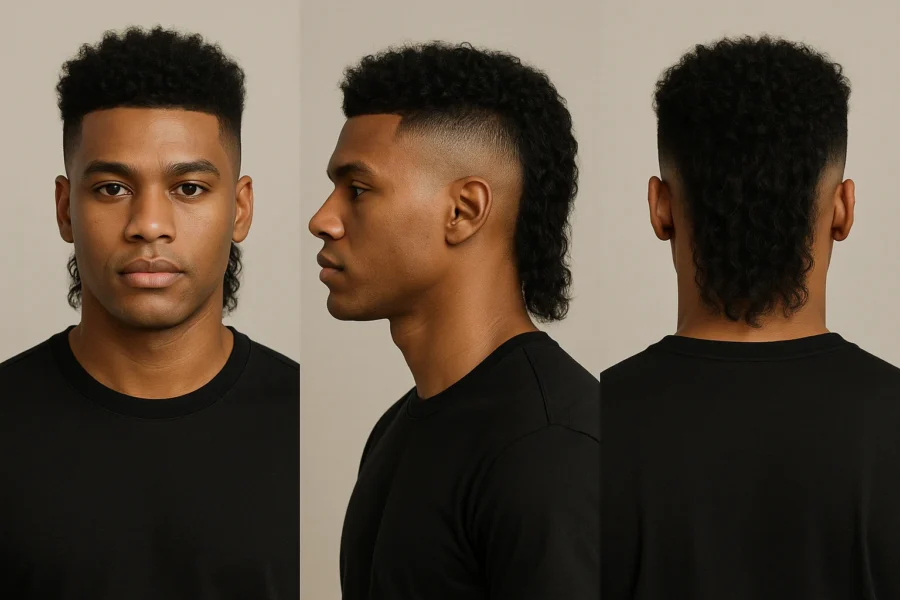
The skin fade mullet has become one of the most requested men’s haircuts in barbershops across the globe. It fuses the bold, business-in-the-front-party-in-the-back attitude of the classic mullet with the razor-sharp precision of a zero fade on the sides. The contrast between bare skin and flowing length creates a silhouette that turns heads for all the right reasons. Whether your hair is curly, straight, thick, or fine, there is a version of this cut built for you.
What is a Skin Fade Mullet?
A skin fade mullet combines two distinct techniques into one statement haircut. The sides and nape are faded down to bare skin using clipper guards that graduate from longer lengths at the top to zero at the baseline. The top and back are left with significant length, typically 3 to 6 inches, creating the signature mullet shape where the front appears shorter and the back flows freely.
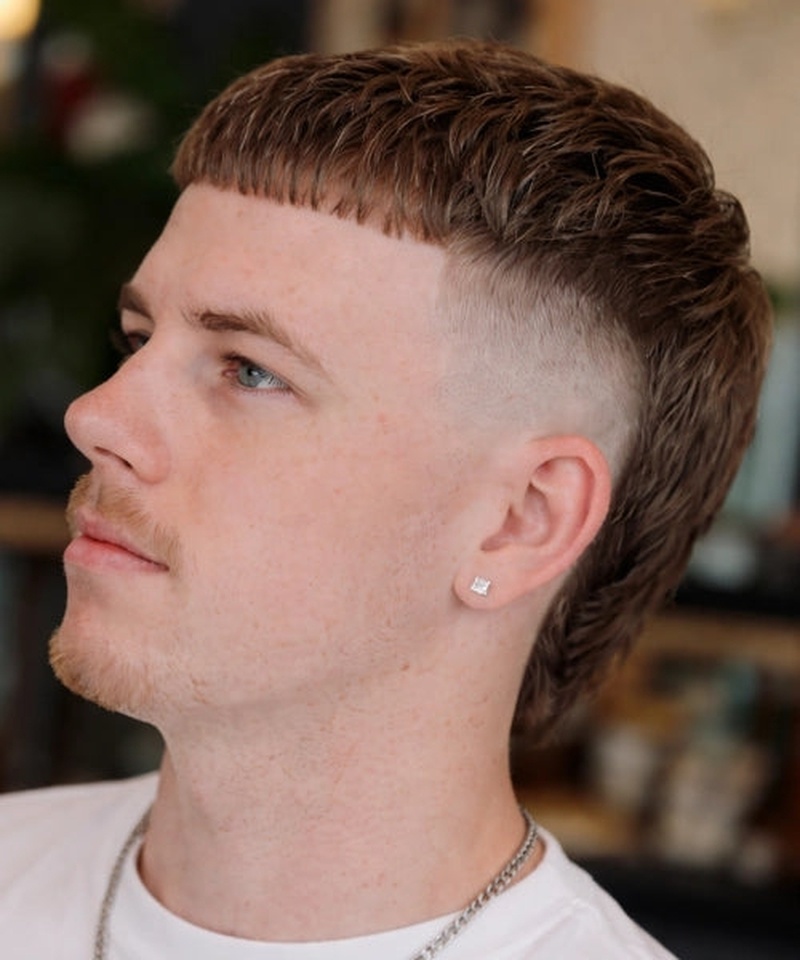
A classic skin fade mullet showing the clean transition from shaved sides to longer top and back
The magic of this cut lies in the transition zone near the occipital bone, the curved ridge at the back of the skull. According to professional barbers, leaving enough weight at this point is what bridges the clean fade into the longer flow at the back without creating an awkward shelf. When executed properly, the fade appears to melt seamlessly into the length.
Unlike a taper fade mullet, which leaves some hair visible at its shortest point, the skin fade goes all the way to the scalp. This creates maximum contrast and a sharper, more dramatic look that stands out in any setting.
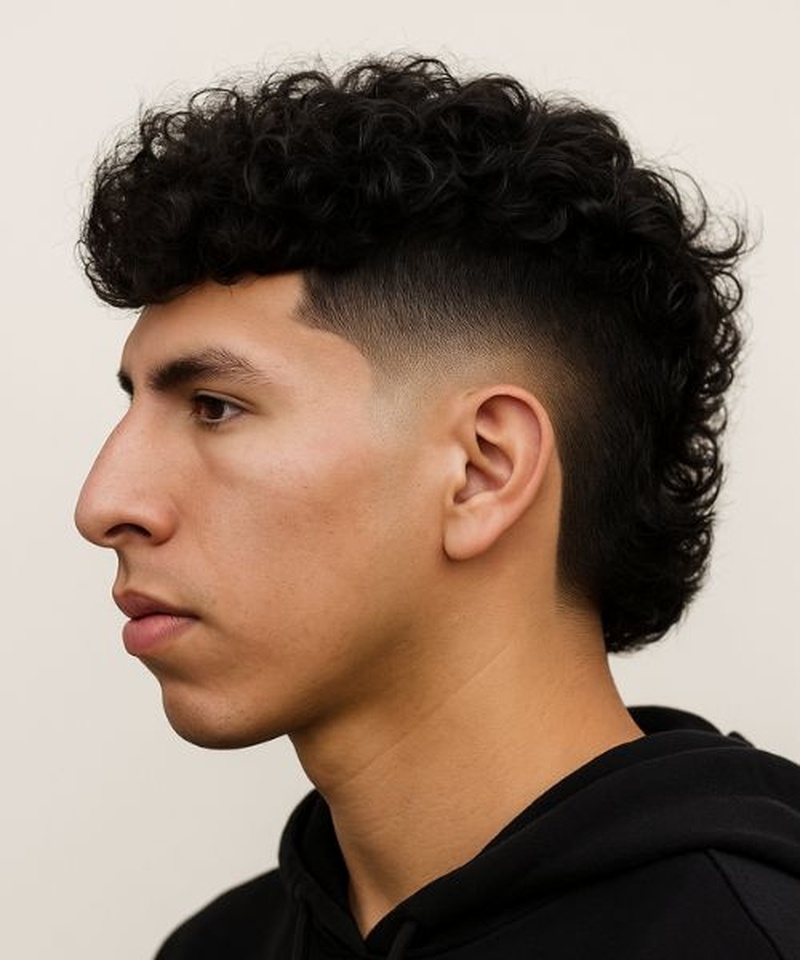
A modern mullet fade with voluminous curls and clean skin fade sides
Top 5 Skin Fade Mullet Variations to Try in 2026
The Curly Skin Fade Mullet
Curly hair and the skin fade mullet are a natural pairing. The tight curls on top add volume and visual texture that contrasts dramatically with the clean-shaven sides. This variation works best when the curls are left at 3 to 5 inches on top and slightly longer at the back, where they can form natural ringlets or a loose coil pattern.
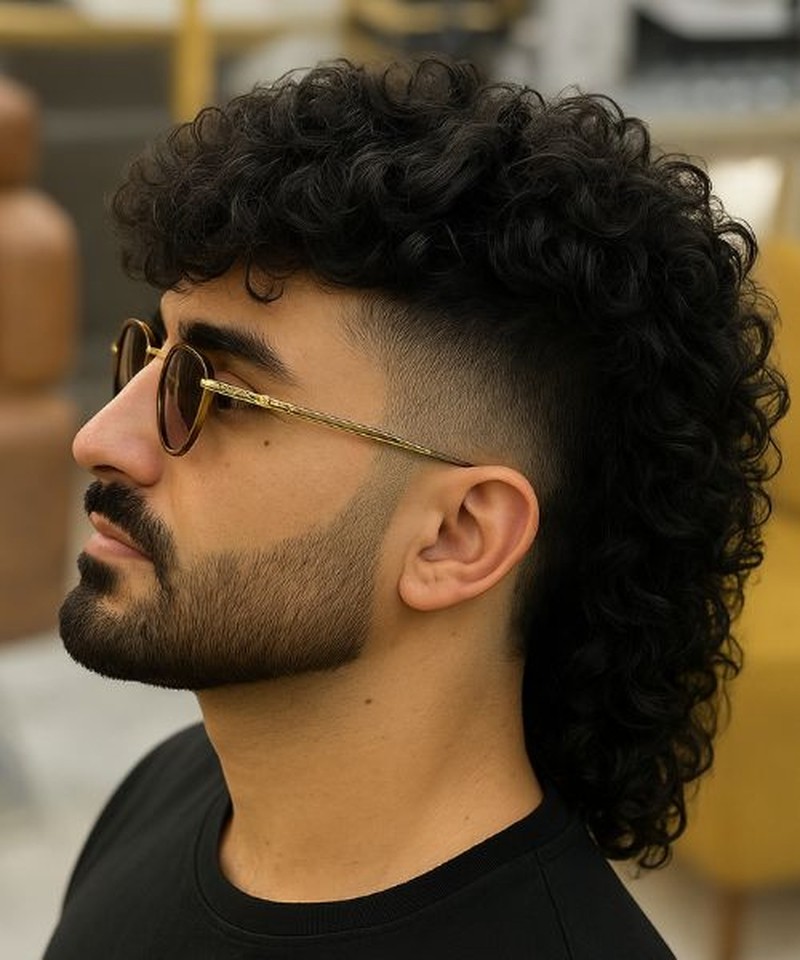
A curly skin fade mullet with tightly coiled hair on top and clean bald fade on the sides
Barbers recommend a low to mid fade for tight curls, as a high fade can make the top appear disconnected. A lightweight curl cream or leave-in conditioner keeps the curls defined without weighing them down.
The Burst Fade Mullet
The burst fade mullet features a semicircular fade that wraps around the ear in an arc shape, leaving length behind the ear and at the nape. Unlike a full skin fade that goes straight down the sides, the burst creates a sunburst effect that gives the cut a distinctly edgy, almost mohawk-like appearance from the front.
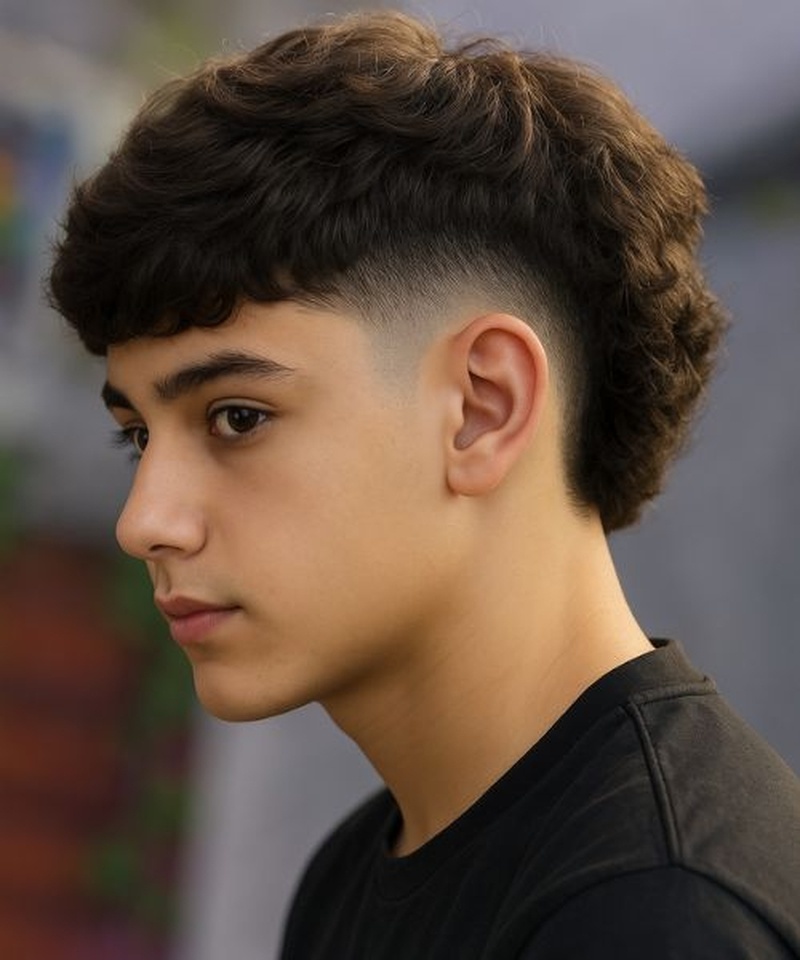
A burst fade mullet with semicircular fade wrapping around the ear and tousled curls on top
This style works well for men who want the mullet silhouette without a full side shave. The burst fade leaves enough hair behind the ear for a smoother transition into the longer back section. It is a strong choice for straight and wavy hair.
The Straight Hair Short Mullet
Not every mullet needs to flow past the collar. The short mullet with a skin fade keeps the back at 2 to 3 inches and the top slightly longer, creating a compact but unmistakably mullet shape. For straight hair, this variation is low-maintenance and easy to style with matte paste or styling powder.
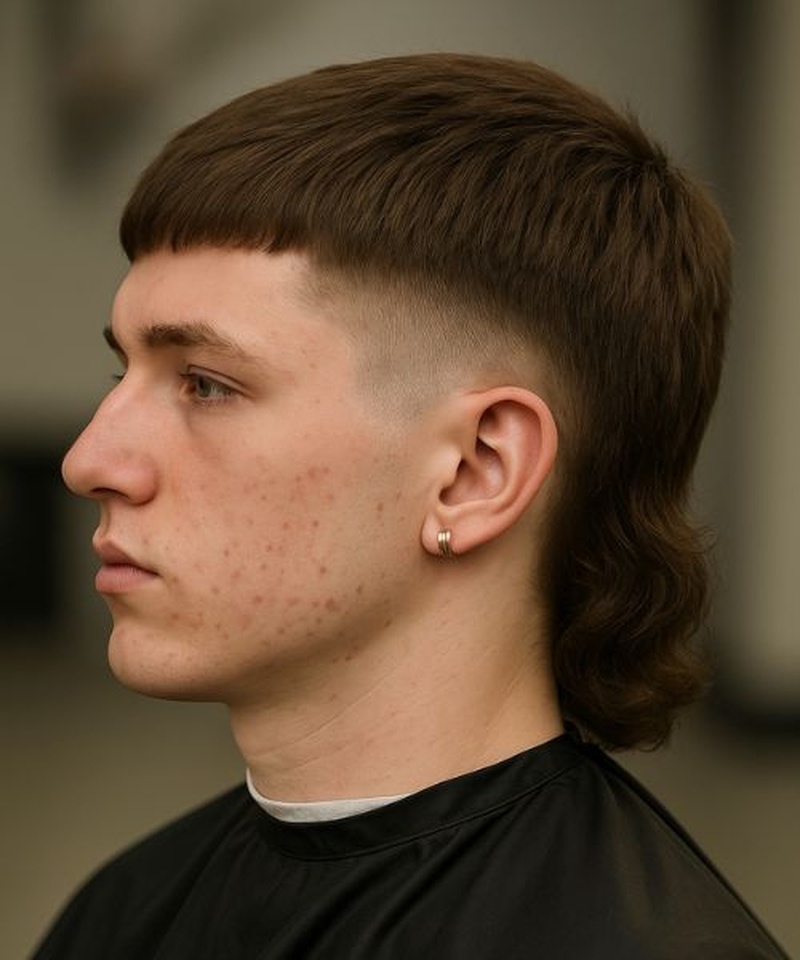
A straight hair short mullet with a sharp high skin fade and blunt fringe
The key is texture. Without natural wave, straight hair can look flat. Ask your barber to point-cut the ends and use texturizing shears through the top to build movement and prevent the cut from hanging lifeless.
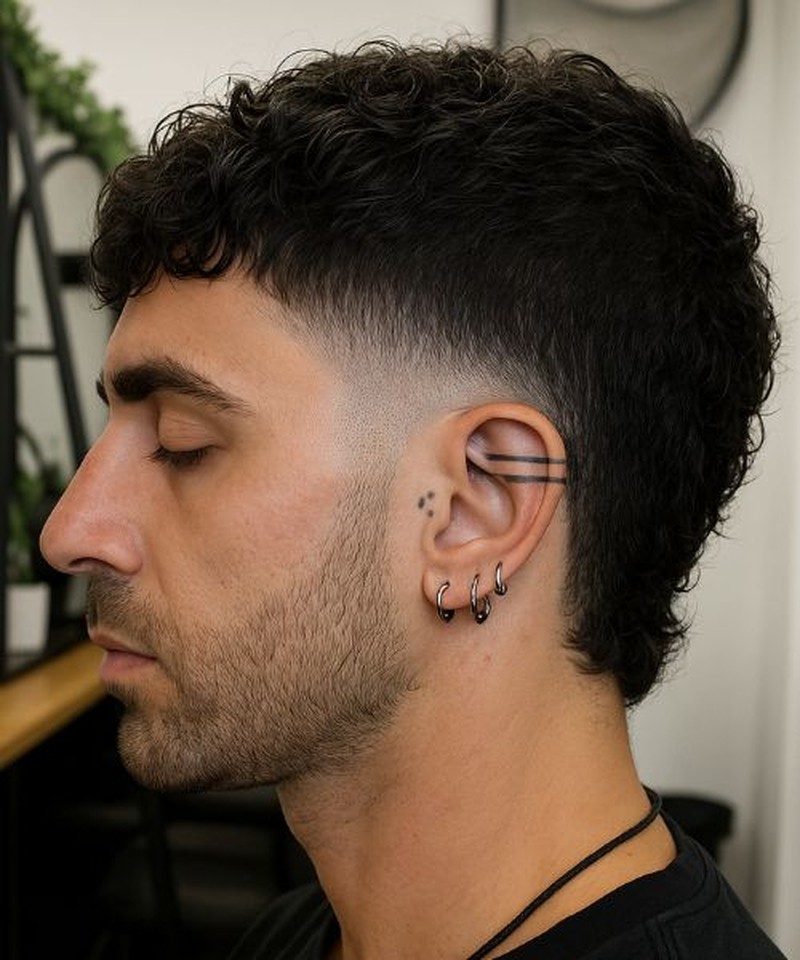
A short curly mullet with a sharp skin fade showing the compact silhouette
The Textured Fringe Mullet
The textured fringe mullet pairs a choppy, piecey fringe at the front with a skin fade on the sides and length through the back. The fringe sits somewhere between a French crop and a curtain bang, falling forward across the forehead with visible separation between sections.
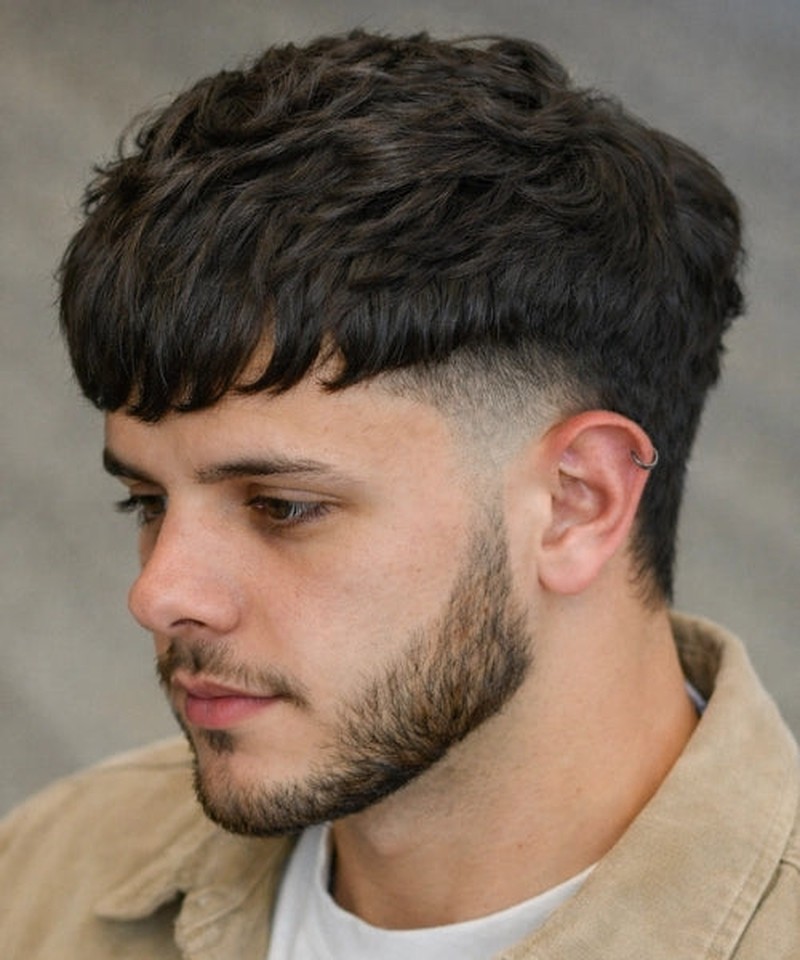
A textured fringe mullet with a low fade and tousled wavy top hair
This variation is one of the most popular mullet styles in 2026 because it adds structure to the front of the cut. The fringe gives the style a polished, intentional look that works in both casual and dressed-up environments. Styling powder is the go-to product here, applied at the roots of the fringe to lift it and keep it from collapsing flat against the forehead.
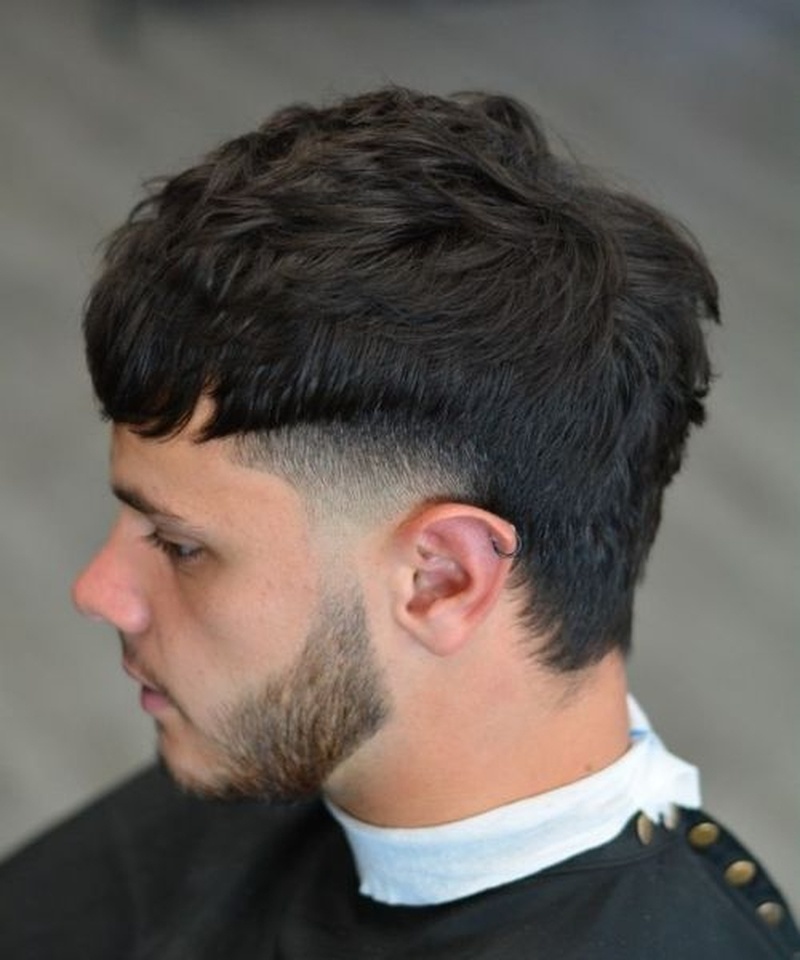
A fringe mullet with thick tousled top hair and a sharp low fade
The Euro Fade Mullet with Blunt Fringe
The Euro fade mullet takes the skin fade up high on the sides and pairs it with a sharp, blunt-cut fringe that sits straight across the forehead. The back is left long and typically cut to one even length rather than layered. This creates a clean, geometric silhouette that has been trending heavily in European barbershops.
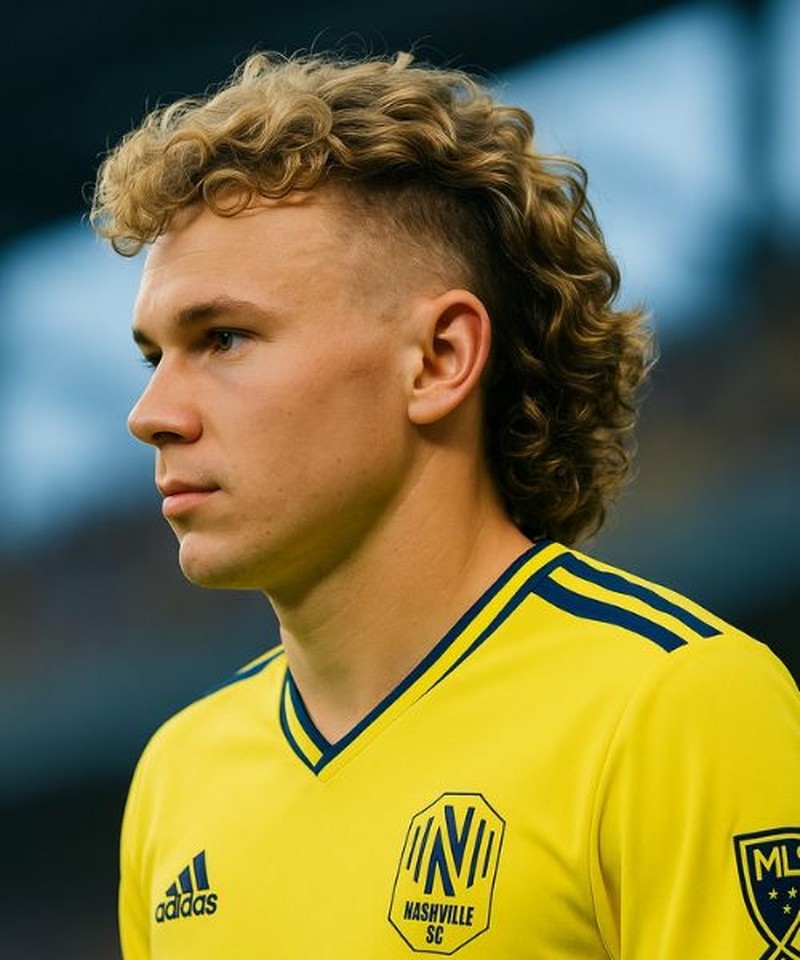
A Euro fade mullet with defined curls and a sharp high skin fade on the sides
This variation suits men with thicker hair who can support a solid fringe. It requires precise barbering, so bring a clear reference photo and choose a barber experienced with European cutting techniques.
Does a Skin Fade Mullet Suit Your Face Shape?
The skin fade mullet is versatile, but not every variation flatters every face shape.
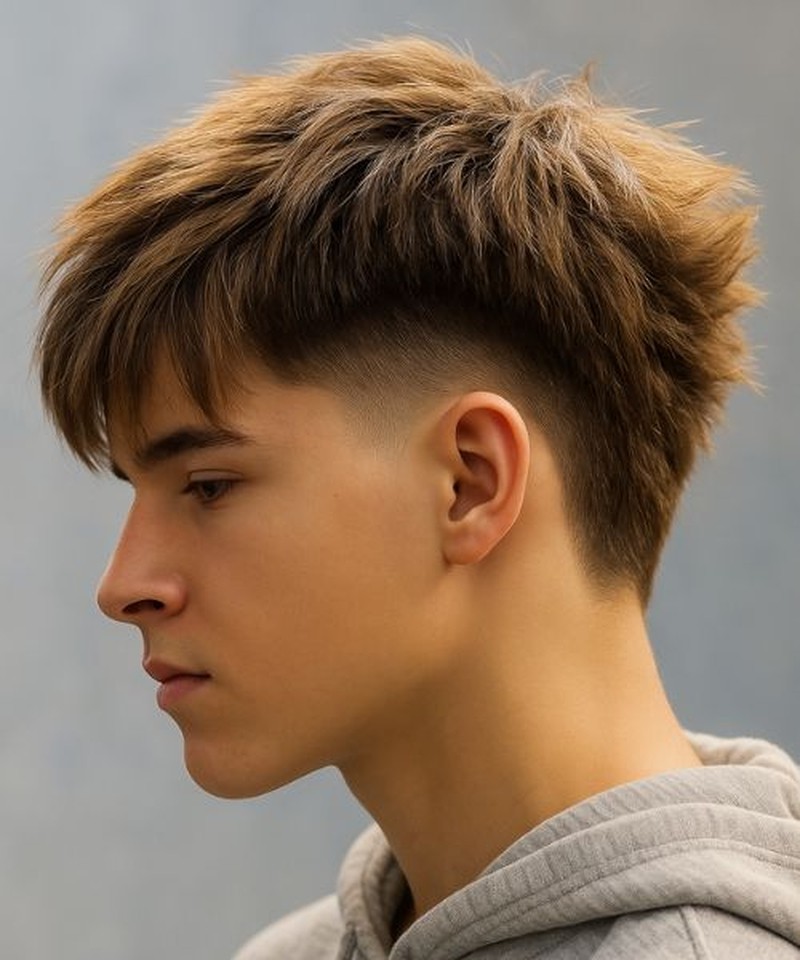
A medium-length mullet fade with voluminous layered hair and low skin fade
Oval faces can pull off almost any mullet variation. The balanced proportions give you freedom to go longer, shorter, or more dramatic. A mid skin fade with a textured top is a strong starting point.
Square faces benefit from the softness that length at the back provides. The mullet balances a strong jawline by adding visual weight above and behind the face. Avoid a blunt fringe, which can make the face appear boxier.
Round faces need volume on top and height to elongate the face. A high skin fade mullet with a lifted top creates vertical lines that a round face lacks. Keep the back proportional rather than excessively long.
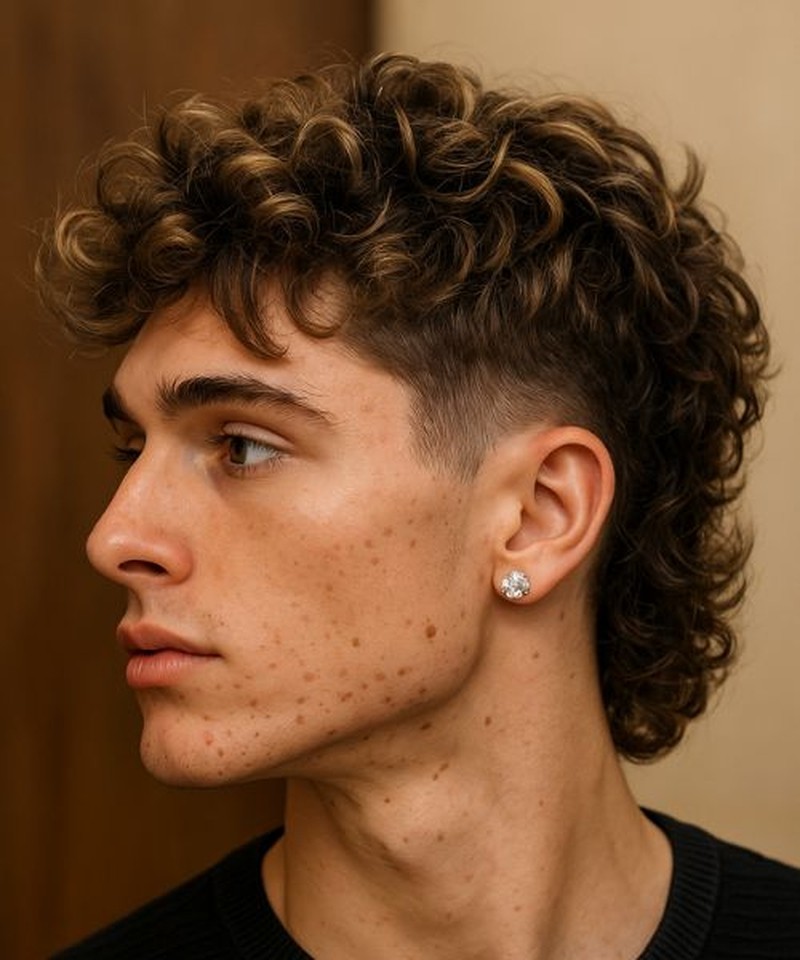
A wavy mullet with low fade, suitable for round face shapes needing balanced proportions
Heart-shaped and diamond faces benefit from the width the mullet adds at the back. The longer length balances a narrower chin and draws the eye downward. A low to mid fade with a softer fringe works best.
How to Ask Your Barber for a Skin Fade Mullet
Walking into a barbershop and simply saying “give me a mullet” is a recipe for disappointment. Being specific about what you want ensures you leave the chair happy.
First, bring reference photos. Show your barber at least two angles: a side profile and a back view. This gives them a clear picture of the fade height, the back length, and the overall shape you are after.
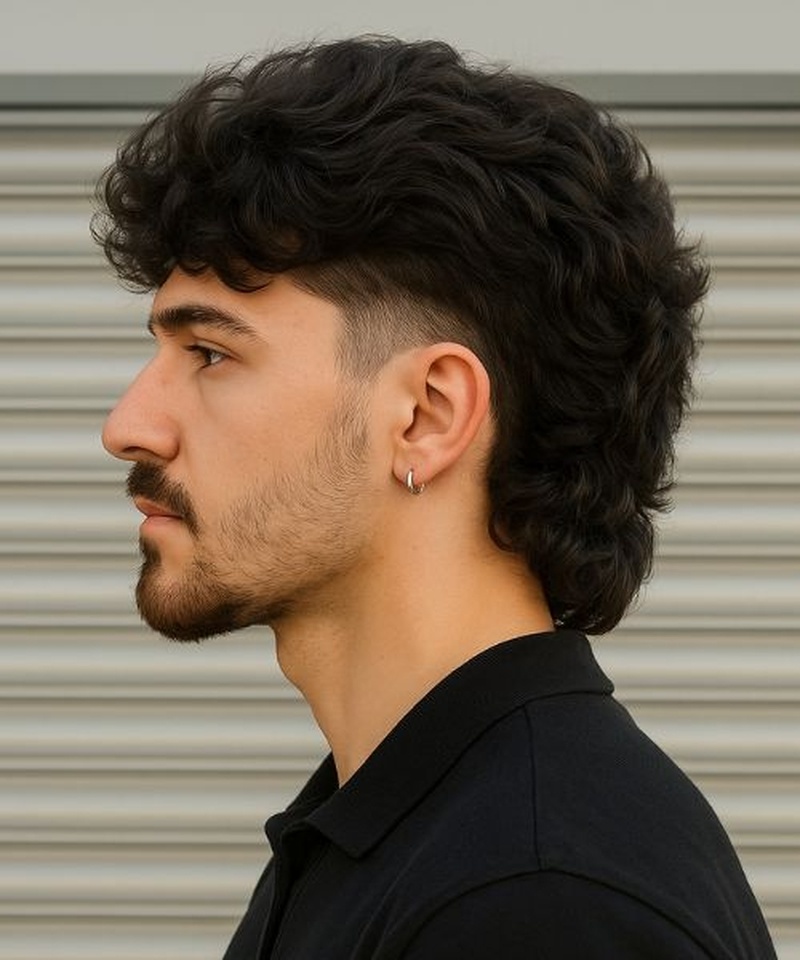
A taper fade mullet showing clear terminology to discuss with your barber
Use these key terms when describing the cut:
- Skin fade or zero fade to specify that the sides should go down to bare skin
- Low, mid, or high fade to indicate where the fade should start on the sides
- Length at the back in inches (3 to 4 inches for a short mullet, 5 to 6 inches for a longer flow)
- Textured top or choppy layers to avoid a blocky, heavy look
- Occipital bone transition if you want the fade to blend smoothly into the back length
Professional hair stylist Martin Nepton advises that you should decide how long you want the back to be before sitting in the chair. If you are unsure, start longer. You can always take more off, but you cannot put it back.
How to Style and Maintain Your Mullet at Home
A great cut is only half the equation. How you style and care for your mullet between barber visits determines whether it looks sharp or sloppy.
Best Hair Products for Mullets
Sea salt spray adds grit and natural-looking texture, especially on wavy and straight hair. Spray it into damp hair, scrunch, and let it air dry or use a diffuser. It gives that lived-in, beachy finish that makes the mullet look effortless rather than over-styled.
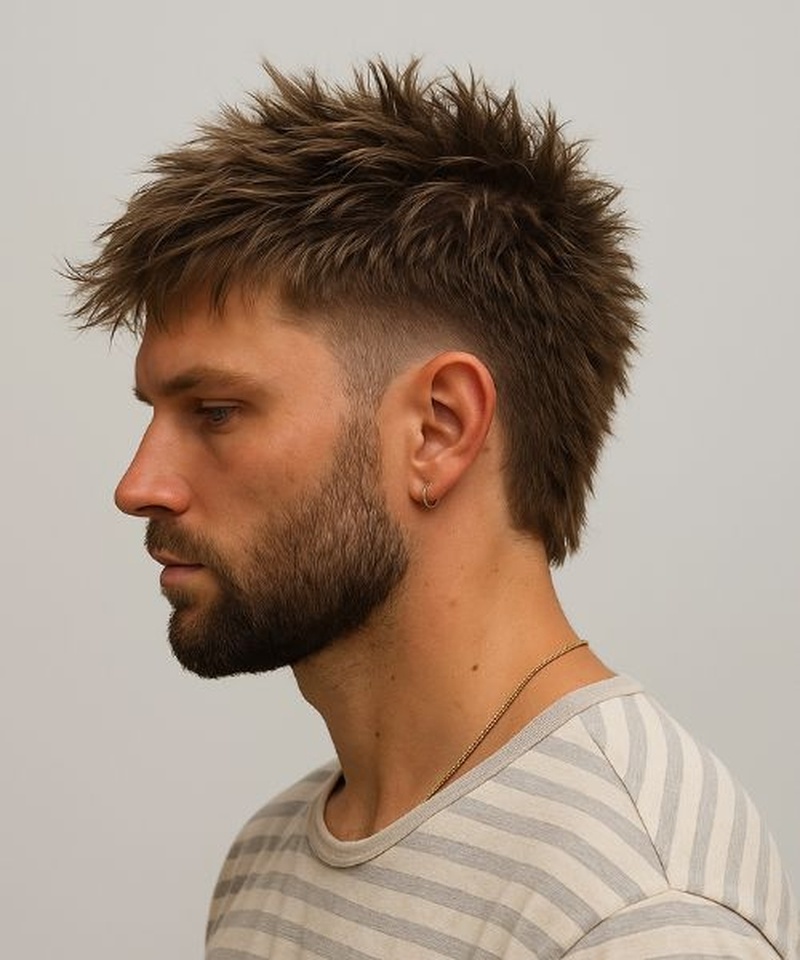
A textured mullet styled with styling powder for volume and matte finish
Styling powder is the single most recommended product for mullets in 2026. A small amount shaken directly onto the roots of the top and fringe creates instant volume and a matte finish without the wet look of gels or pomades. It also adds grip that helps the style hold all day.
Matte pomade or clay works best for controlling the back section and taming flyaways. Apply a pea-sized amount to your fingertips and work it through the ends of the back, pulling it down and slightly outward to shape the flow. Avoid heavy, shine-based pomades, which make the mullet look greasy.
Daily Styling Routine
Start with towel-dried hair. Apply sea salt spray for texture or styling powder at the roots for volume. Use a blow dryer on medium heat, lifting the top upward to build height. For the back, pull the hair down and slightly outward while drying to set the direction of the flow. Finish with a light application of matte clay on the ends.
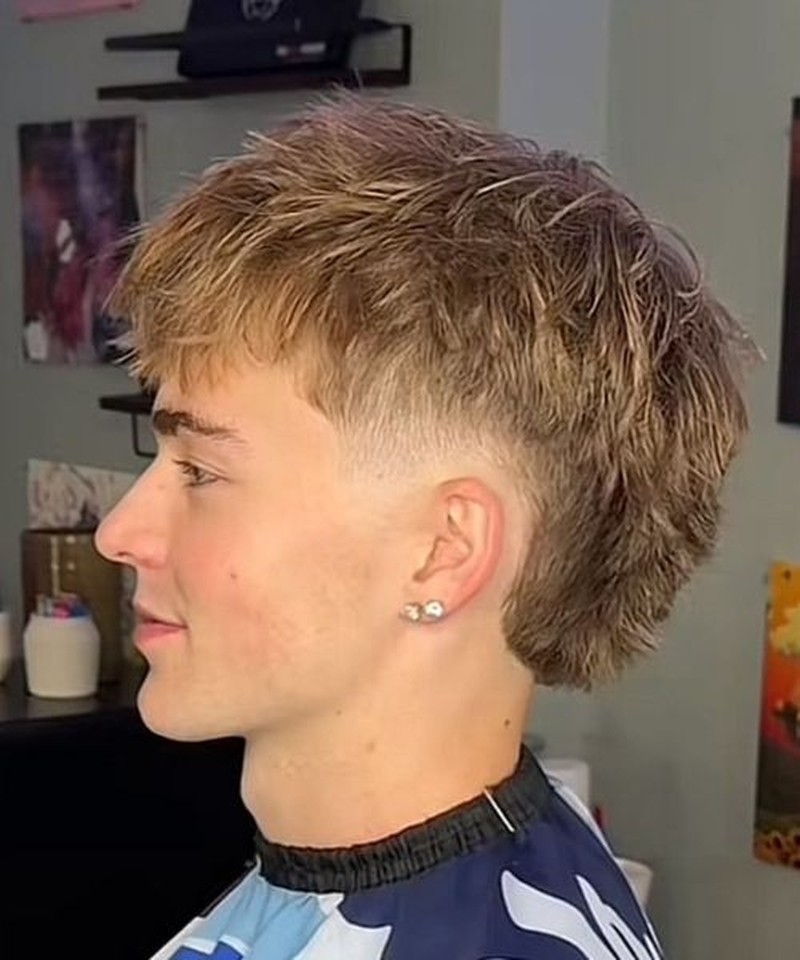
A mid taper mullet showing the daily styling routine results with natural texture
Between washes, styling powder at the roots can refresh volume without rewetting. Most barbers recommend washing two to three times per week to avoid stripping natural oils from the longer sections.
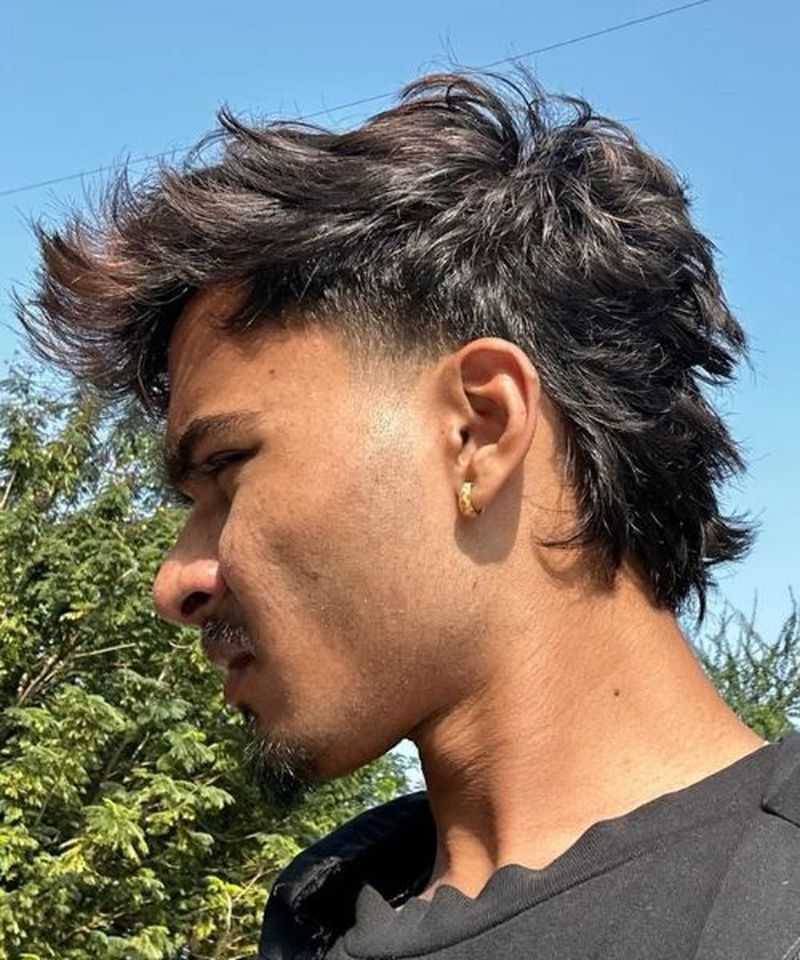
A modern mullet with low skin fade demonstrating proper product use and styling
FAQ
How long does it take to grow a mullet?
Hair grows at an average rate of half an inch per month. You need at least 3 to 4 inches of length at the back to achieve a visible mullet shape. That translates to roughly 6 to 8 months of growth from a short starting point. If you already have medium-length hair, expect 3 to 4 months.
What is the difference between a burst fade and a skin fade mullet?
A burst fade wraps around the ear in a semicircular arc, leaving length behind the ear and at the nape. A skin fade mullet fades the entire side down to the scalp in a straight vertical line. The burst fade creates a more tapered, subtle look, while the skin fade delivers maximum contrast.
Can you get a mullet with straight hair?
Yes. Straight hair works well for the mullet, especially in shorter or medium-length variations. The key is adding texture through point cutting and using styling powder or sea salt spray to create movement and volume that straight hair naturally lacks.
How often should I get a skin fade mullet trimmed?
The skin fade needs a touch-up every 2 to 3 weeks to stay sharp. The longer top and back sections can go 4 to 6 weeks between trims. Many men visit the barber every 2 weeks for a fade refresh and every second visit for a full reshape.
Is the skin fade mullet a professional haircut?
It depends on your workplace. The skin fade mullet reads as bold and fashion-forward. In creative industries, tech, and casual offices, it is widely accepted. In conservative or corporate environments, a taper fade mullet with slightly more length on the sides may be a better fit.
