
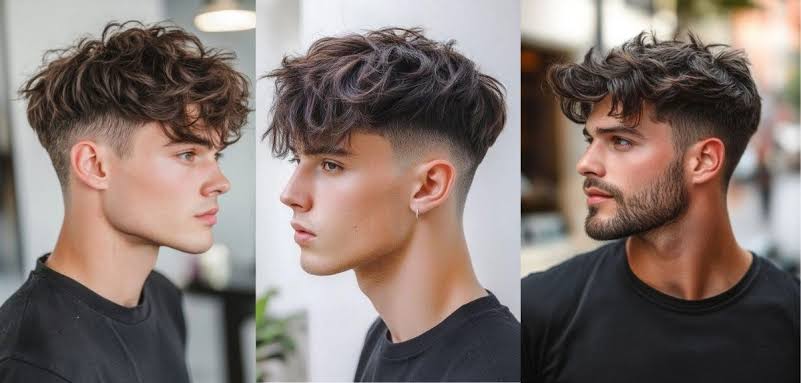
The best fluffy haircuts for boys—such as the mid-taper fade blowout, textured wolf cut, and broccoli haircut—are dominating modern men’s grooming. According to The Hair Pride Survey, 90% of Gen Z men consider their hair their top personal asset, outpaceing Millennials (83%) and Gen X (63%) in prioritizing hair volume, body, and root lift. This consumer shift has completely replaced flat, limp hair with specialized, high-volume styles that require precise cutting and styling.
The immense market demand for fluffy hair volume is backed by clear consumer data. The survey notes that 84% of Gen Z men would do almost anything to improve their hair texture, outpacing Gen Z women (78%). Retail market insights show households with teenagers spend 26% more than average on grooming, completely shifting shopping carts away from 2-in-1 shampoos toward sea salt sprays, matte texture powders, and heat protectants.
Let us break down the exact cuts, tool metrics, and home routines required to achieve perfect, long-lasting volume.
22 Best Fluffy Haircuts Breakdown
Achieving elite fluffiness requires the right architectural cut. Here are the 22 best fluffy haircuts for boys, grouped by their core styling family, to give you the exact blueprint your barber needs.
1. The Modern Broccoli Fade
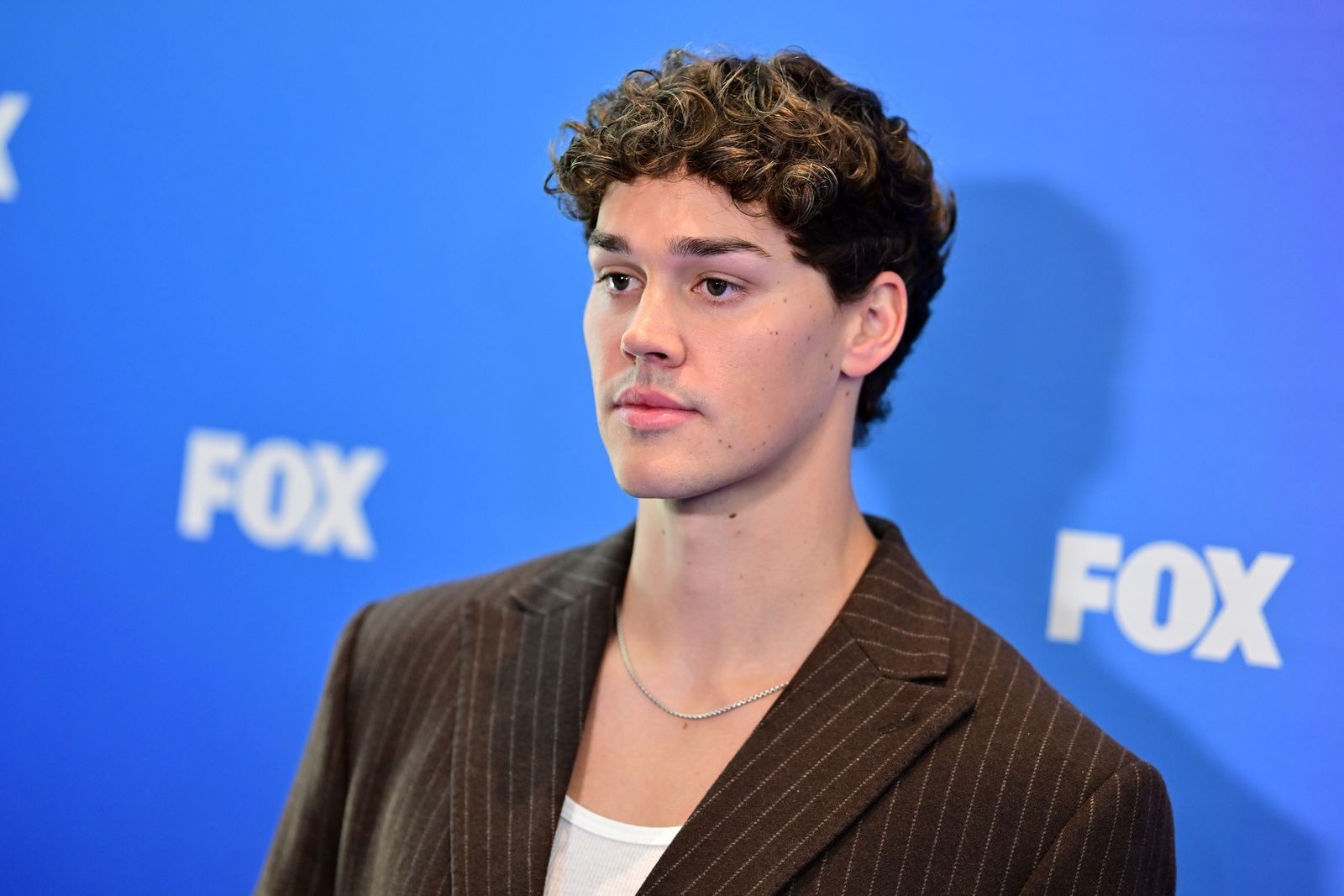
This style utilizes a #1 or #2 guard on the sides and back, creating a stark contrast against a heavily texturized, long top. Popularly dubbed the “Broccoli Haircut” or “Alpaca Hair”, this high-volume look has driven an unprecedented surge in modern perms, with salons reporting massive lines of teenage boys utilizing texturizing perms to artificially create this messy wave look from flat hair.
Styling requires scrunching sea salt sprays into damp hair and air drying to maintain the natural, bouncy curl pattern. To keep the sides tight and the top elevated, avoid touching the hair while it dries, as friction disrupts the cuticle and causes premature frizz that ruins the fluffiness.
2. The Soft Textured Crop
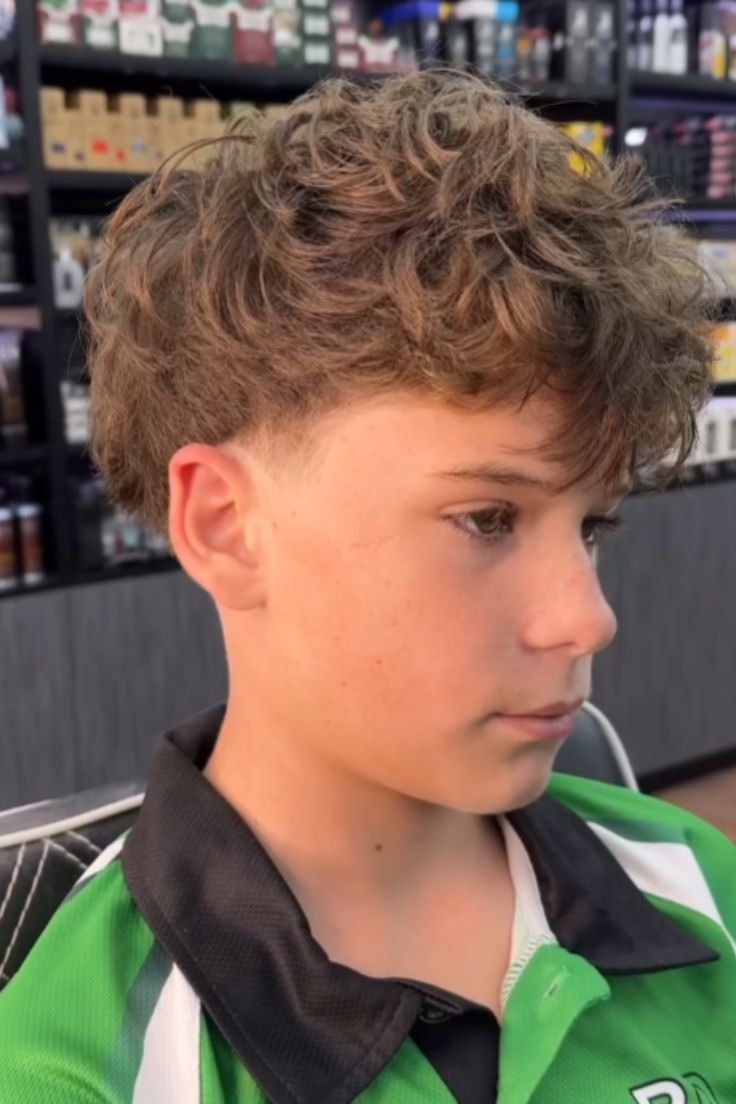
This cut features a fringe cut straight across using texturizing shears—scissors with notched blades that remove bulk without shortening the length—to create a soft, choppy edge. The sides are faded with a #2 guard transitioning to a #0 at the temples to push all visual weight upward.
Apply a dime-sized amount of matte styling powders to the fringe to keep it light, airy, and full of life. Avoid heavy gels entirely, as they will clump the textured pieces together and completely defeat the purpose of the shears’ de-bulking work.
3. The Fluffy Caesar Fade
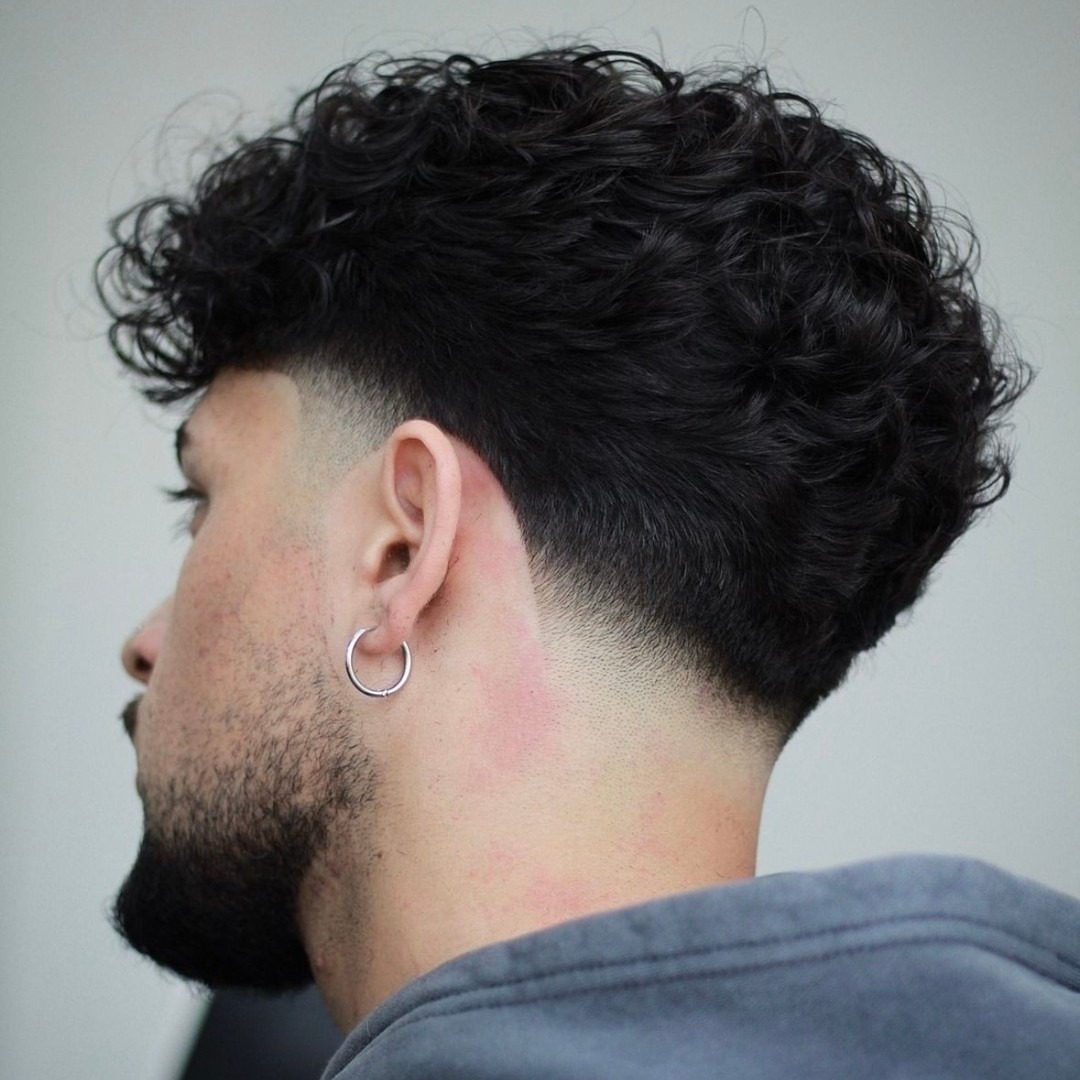
It elevates the classic Caesar by leaving the top fuller and heavily point-cut (cutting upward into the hair at an angle to soften the line) for maximum movement. A tight #0 skin fade on the sides pushes all the visual weight upward, creating the illusion of extra height and volume.
This cut relies on a lightweight volumizing mousse applied to the roots before blow-drying upward. The point-cutting technique is critical, as blunt lines on a full top create a heavy, flat shelf that falls straight down onto the forehead.
4. The Blowout Taper
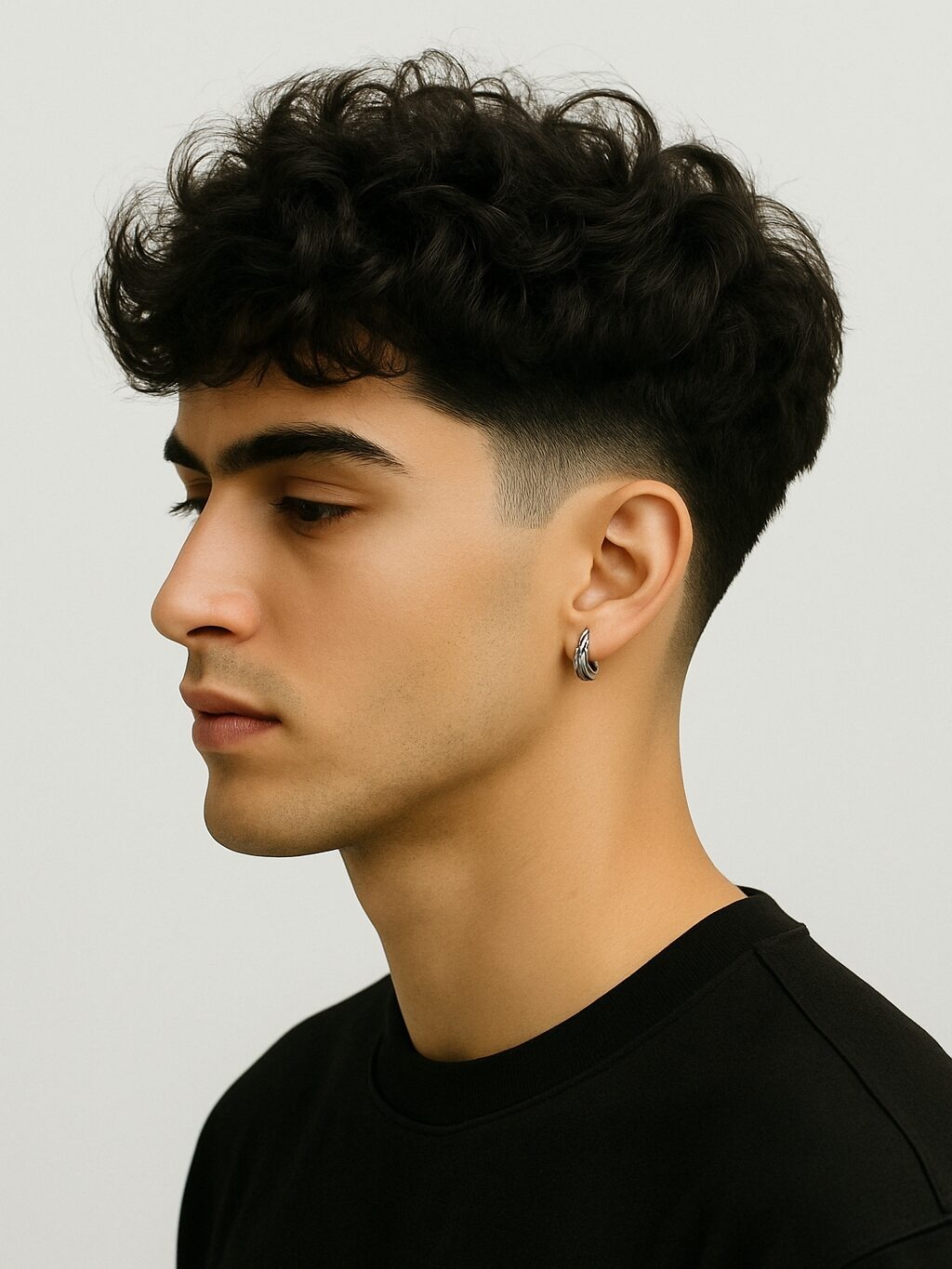
It blends the sides down naturally using a #3 to #1 taper, avoiding the harsh line of a skin fade, while the top remains long enough to curl up and away from the head. This creates a seamless, organic transition that emphasizes the natural lift of the hair rather than the scalp underneath.
“If you have natural waves, don’t fight them with heavy gels,” advises Vernon François, Global Consultant and Texture Expert. “Use a curl-defining cream on damp hair, then shake it out for a soft, touchable finish.” This shaking technique separates the waves, doubling the perceived volume of the style.
5. The Short Mohawk Fade
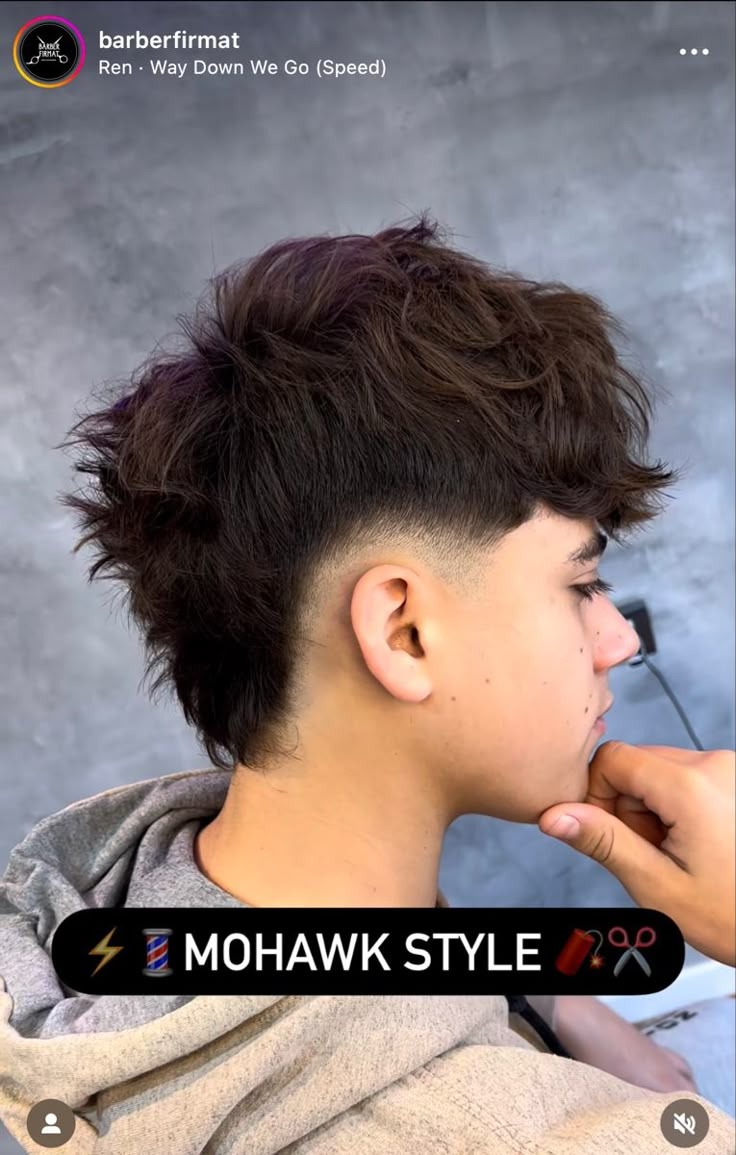
This style keeps the center strip of hair elevated and fluffy, faded tightly on the sides with a #1 guard. The parietal ridge (the boniest part of the skull where the top meets the sides) is the focal point, requiring the hair to be left at least 2 inches long to stand upright.
Use a blow dryer with hair dryer diffuser attachments—a bowl-like attachment that disperses air evenly to reduce frizz—to lift the center without disrupting the natural texture. Direct the air upward at the roots to lock in the elevated shape before the hair cools down.
6. The Wispy Fringe Fade
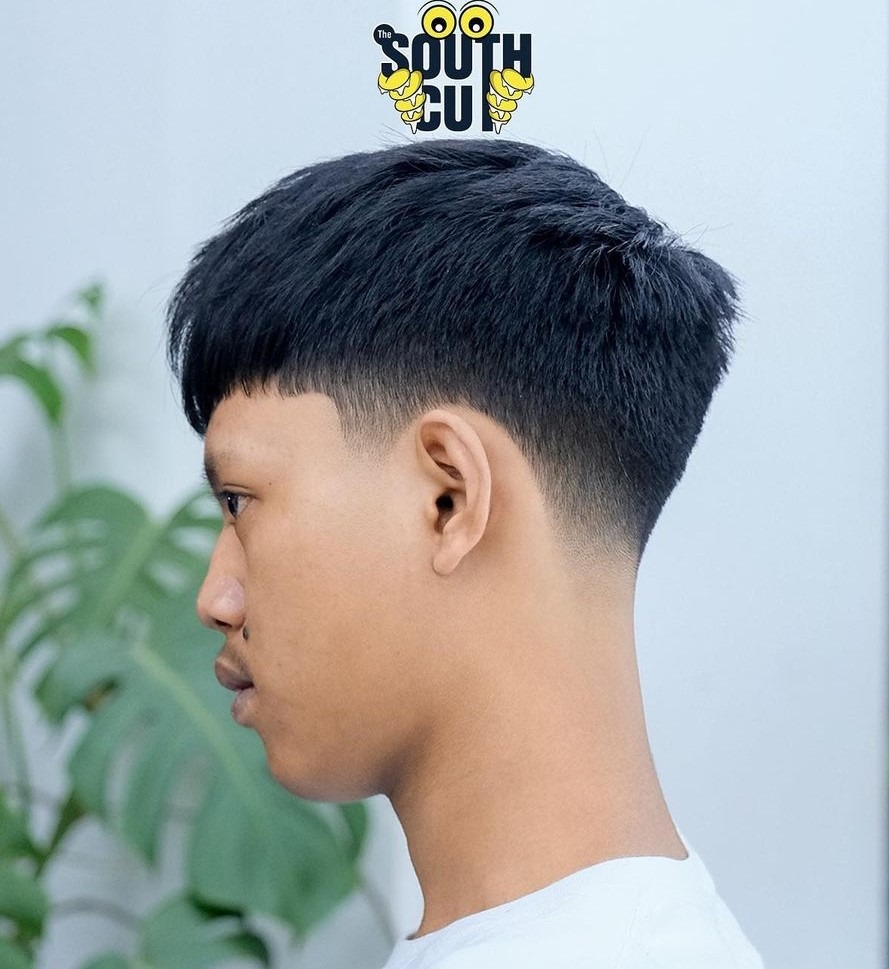
It relies on extreme layering at the front, with the lengths gradually getting shorter toward the crown. The back and sides feature a #2 fade, ensuring all the weight and density sits right at the hairline to create a floating, wispy effect.
“For boys with naturally straight hair, a textured fringe is the ultimate way to cheat volume,” notes Jen Atkin, Founder of OUAI and Celebrity Stylist. “It creates movement exactly where the eye lands.” A light paste provides hold without weighing down the fine front pieces that frame the face.
7. The Ivy League Blowout
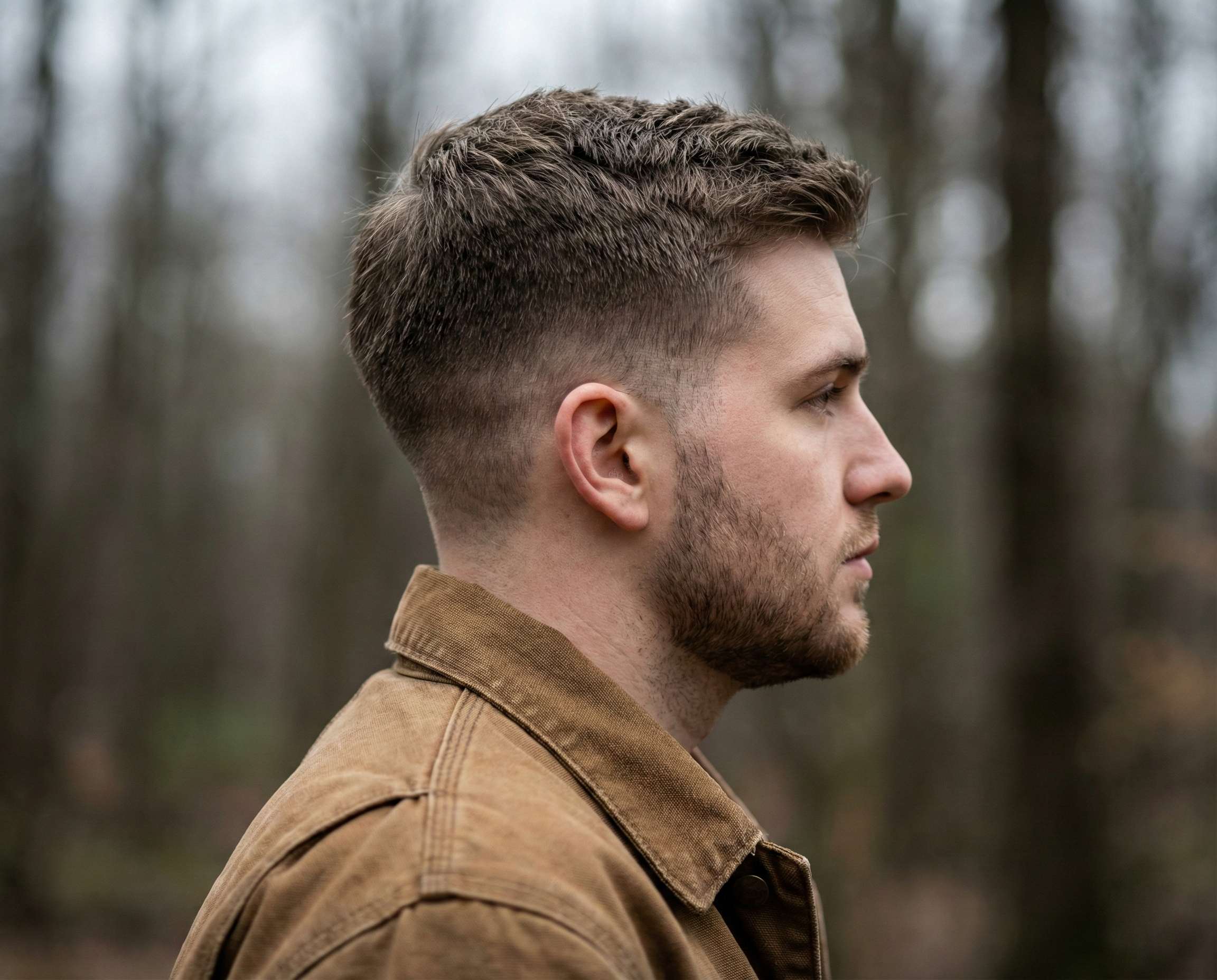
A longer, grown-out version of the crew cut, faded with a #4 guard on the sides to maintain shape while the top is styled forward and up. The extra length on top provides enough leverage to create dramatic lift at the front hairline using a round brush.
It requires a blow dryer and a round brush to direct the hair up and over at the front. Always apply a pre-styling protectants before introducing heat to safeguard the cuticle from thermal damage that causes breakage and thinning.
8. The Fluffy Buzz Crop
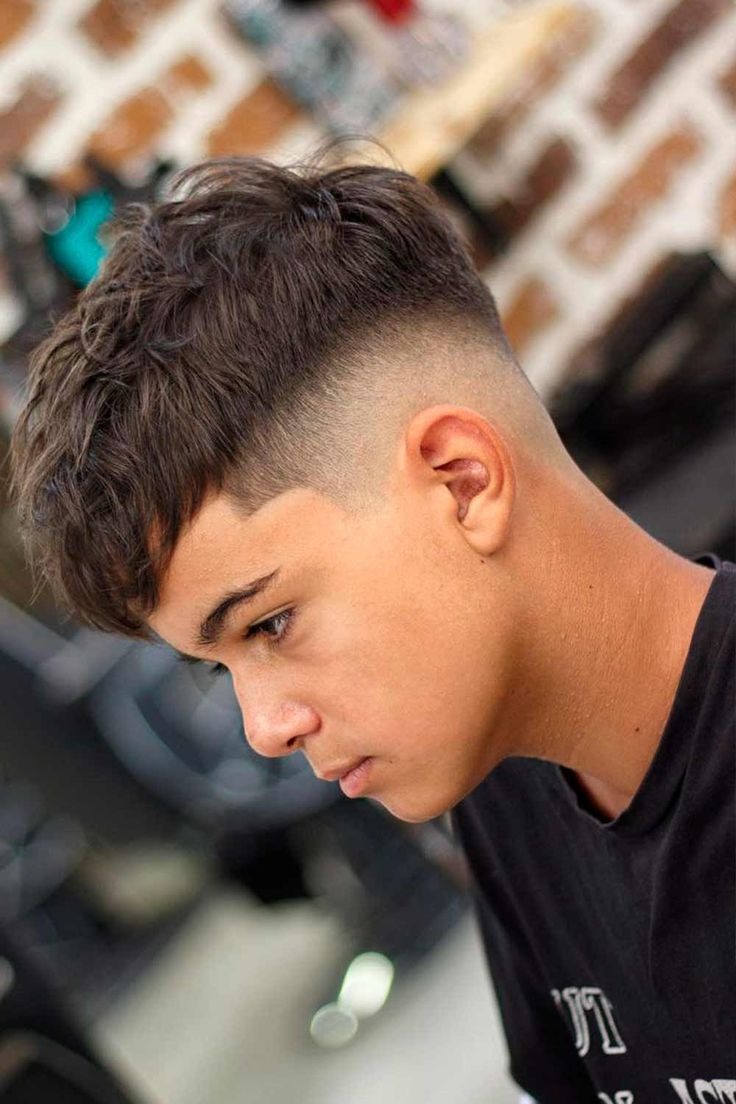
The lowest-maintenance fluffy option, using a #3 guard all over but leaving the front slightly longer to create a soft, forward-falling tuft. It offers the clean look of a buzzcut but with just enough length at the fringe to show texture and movement.
It doesn’t require styling tools, only a high-quality leave-in conditioner to keep the hair shafts hydrated, bouncy, and separated rather than flat and matted. This hydration prevents the short hair from clumping together, which is the fastest way to lose the illusion of volume.
9. The Modern Wolf Cut
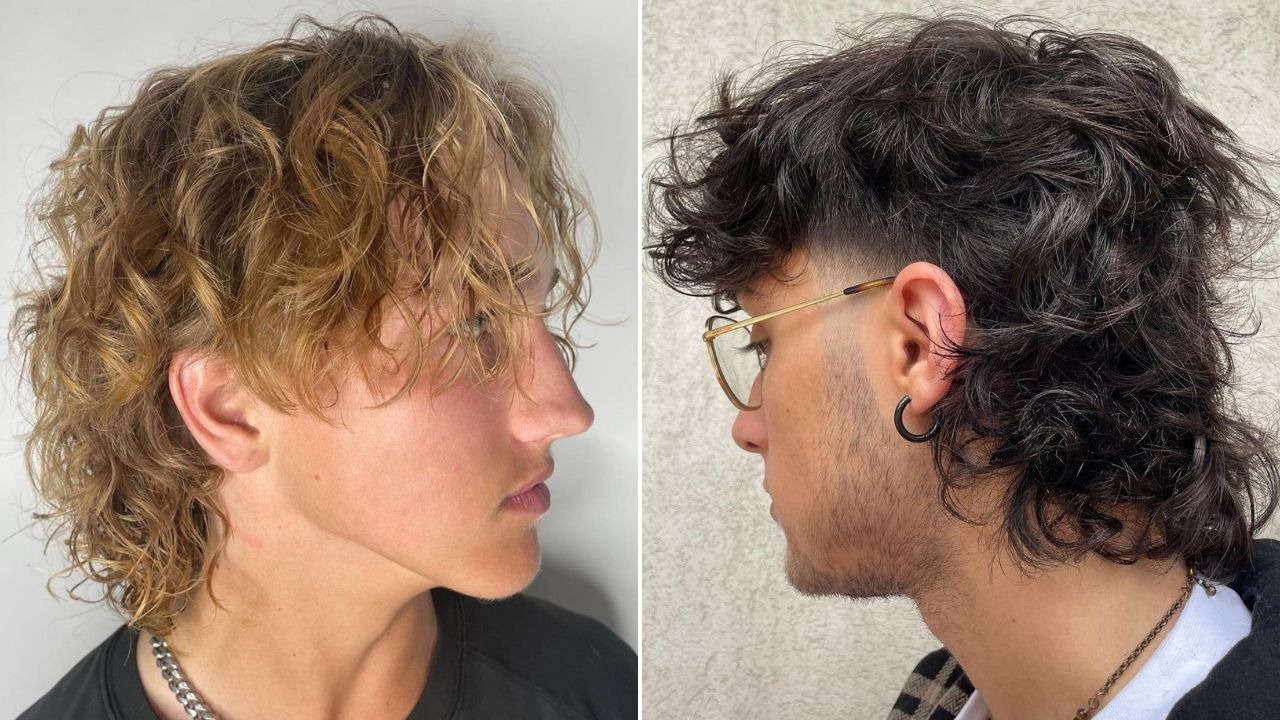
It features heavy shaggy layers throughout the top and sides, extending into a longer, textured back. The aggressive layering removes internal weight, allowing the remaining hair to swing freely and fluff outward rather than collapsing under its own density.
“A fluffy wolf cut bridges the gap between retro grunge and modern K-pop style,” says Anh Co Tran, Celebrity Stylist and Educator. “It relies entirely on perimeter framing to flatter the jawline.” The sides are point-cut to the cheekbones, while the back falls past the nape for maximum contrast.
10. The Soft Shag Mullet
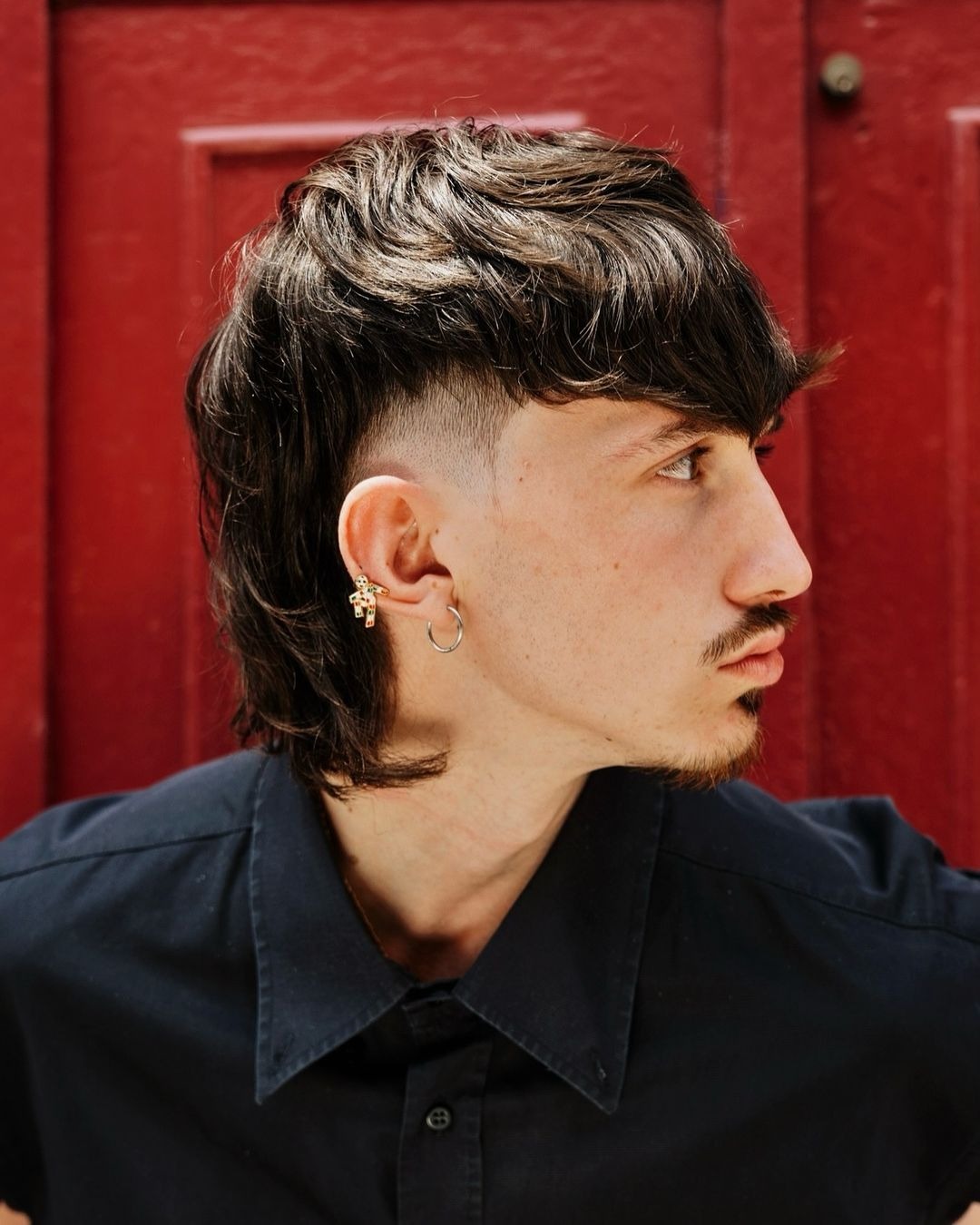
It utilizes a #4 guard to taper the sides slightly, while the top and back are heavily layered with a razor for a feathery, broken texture. The razor cutting technique removes weight from the ends, allowing the hair to flick out naturally when dried.
Style with a lightweight sea salt spray to enhance the separated, grunge aesthetic. The razor’s soft edge ensures the hair never looks blocky or heavy, which is the kiss of death for any shag-style mullet aiming for a fluffy finish.
11. The Curly Mullet Drop
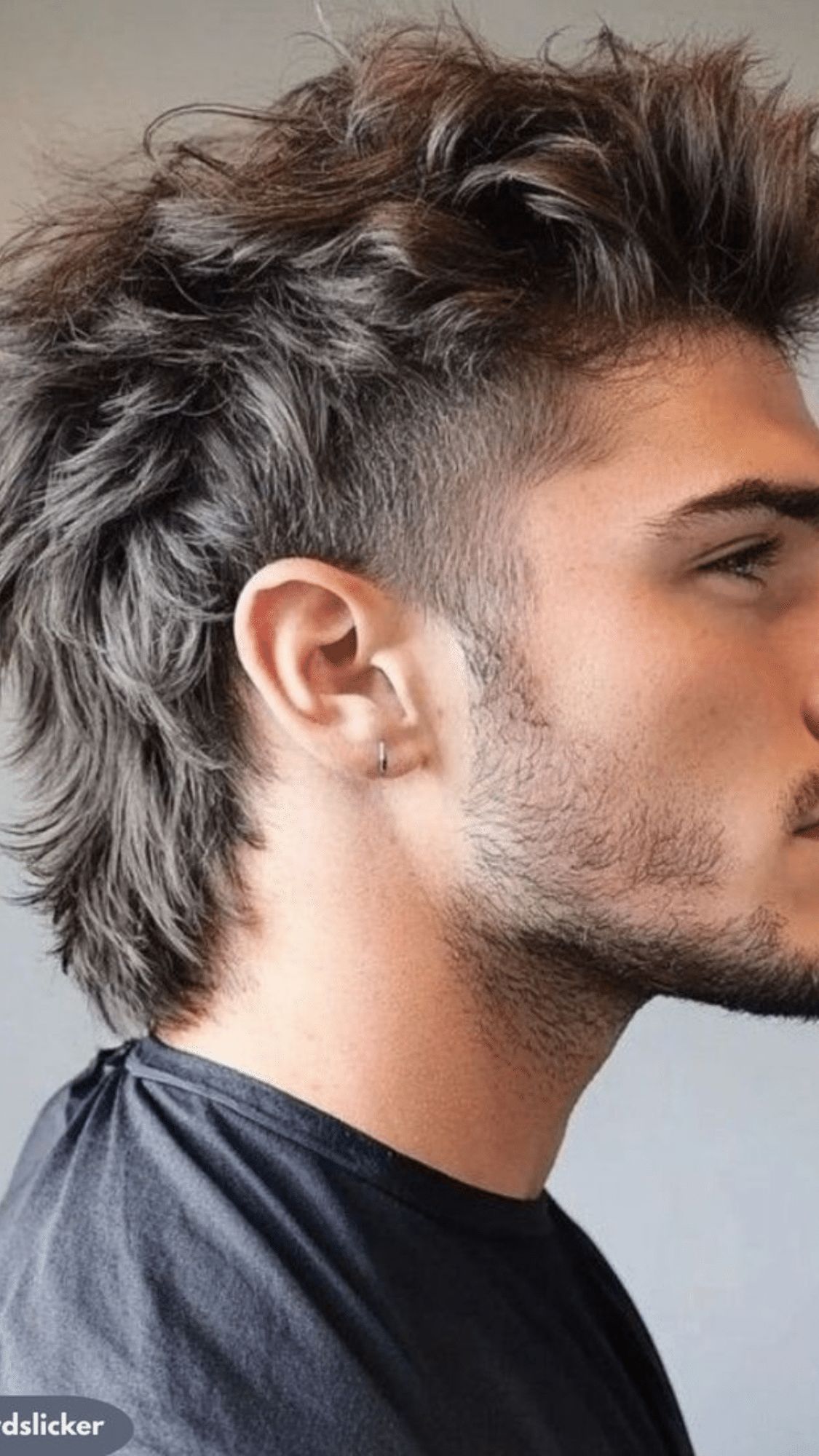
This cut embraces natural coils, keeping the sides tight with a #1 fade while letting the curls cascade freely down the back. The abrupt drop in length from the tight sides to the long back creates a striking, high-contrast silhouette that maximizes the visual impact of the curls.
The biggest risk is frizz, which destroys the fluffy silhouette. Use a diffuser attachment on low heat to dry the curls without blowing them apart, locking in the soft, structured bounce that makes this cut so visually commanding.
12. The Choppy Camero Mullet
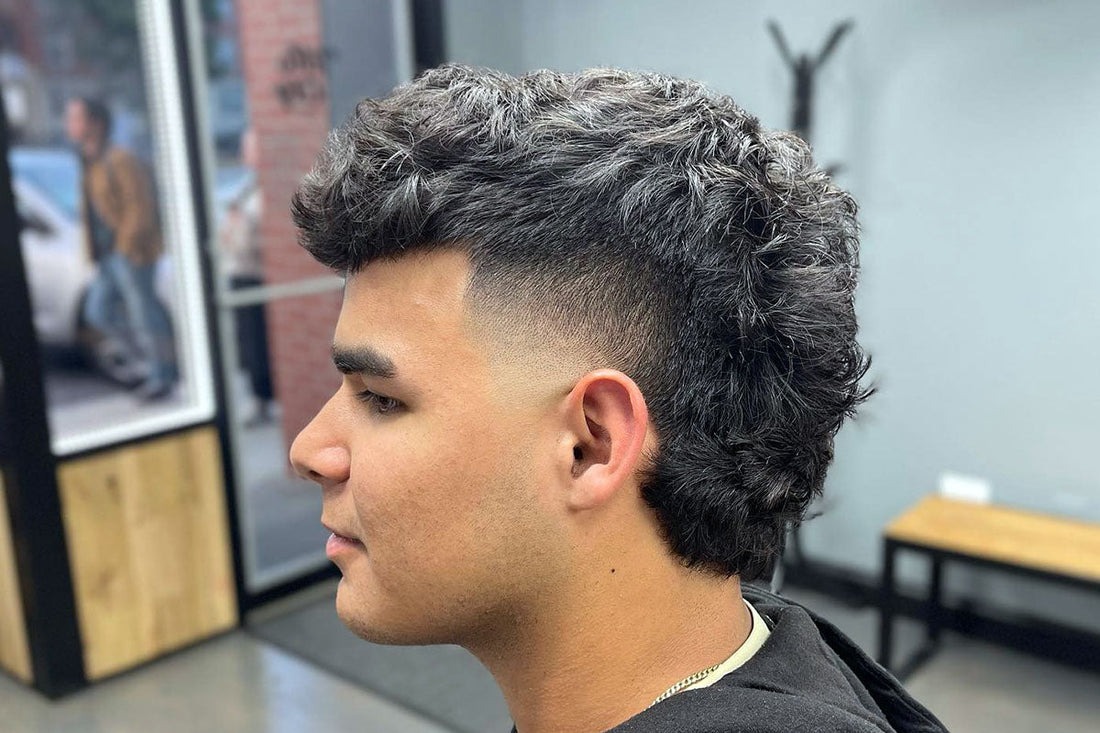
It brings aggressive texture to the front, with the top cut to 3 inches and heavily notched with texturizing shears. The back is left long and piece-y, creating a highly animated, restless look that captures attention through sheer volume and movement.
Applying matte styling powders directly to the top and crown gives it an aggressive, gravity-defying lift that gels simply cannot replicate. The powder creates friction between the hair strands, forcing them to stand apart and multiply the visual density of the style.
13. The Textured Bowl Mullet
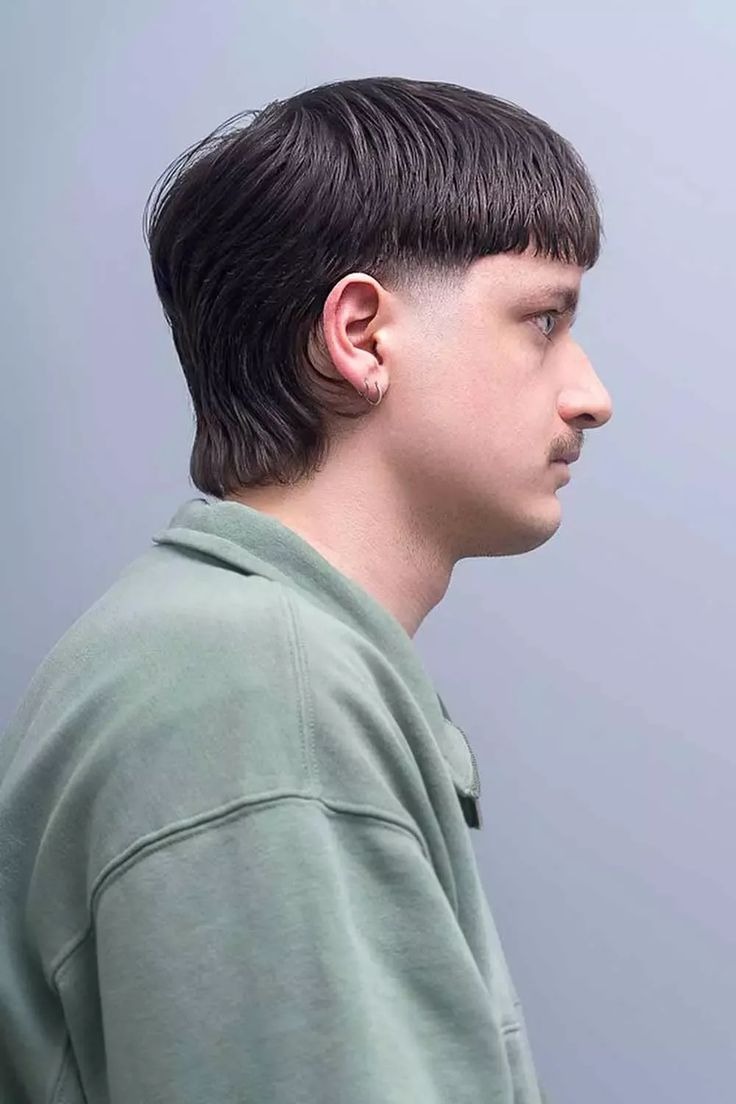
It combines the blunt, arc-like line of a bowl cut at the fringe with an unexpected, shaggy tail at the back. The blending happens right at the occipital bone (the bump at the back of the skull), allowing the top to sit like a soft, fluffy cap over the longer rear sections.
The bowl line must be point-cut heavily so it floats rather than falls flat against the forehead. Without this internal texturizing, the blunt line becomes a heavy, solid mass that ruins the airy, high-volume aesthetic of the cut.
14. The Wavy Butterfly Cut

It features long, face-framing layers that start at the cheekbone and cascade down the back, creating a “wing” effect when the hair is fluffed. The layers are graduated shorter at the top to build internal lift, transitioning into longer, weighted ends that swing naturally.
This cut requires length—at least 5 inches on top—and a dedicated routine of scrunching sea salt spray into damp hair to activate the wave pattern. The activated waves push against each other, creating maximum width and the highly sought-after butterfly flare.
15. The Natural Wave Swept
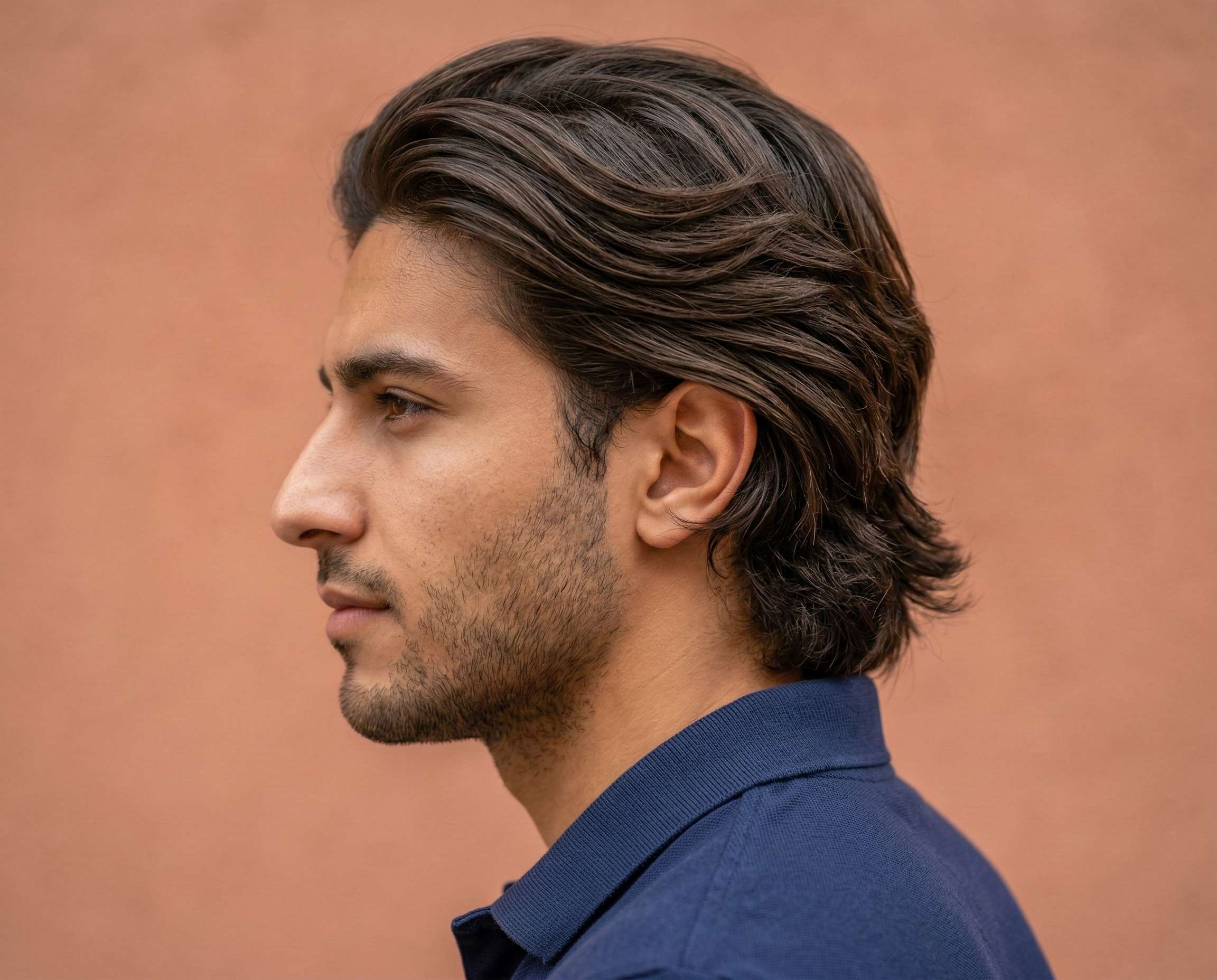
A medium-length cut (roughly 3 to 4 inches all over) faded with a #3 guard on the sides, designed to let natural waves flow freely without heavy sculpting. It embraces the hair’s natural growth patterns, requiring minimal manipulation to achieve a high-volume, relaxed finish.
“Fluffy hair isn’t just a cut; it’s an attitude,” says Sally Hershberger, Editorial Stylist and Salon Owner. “Combining textured layers with a lightweight sea salt spray gives that effortless, wind-blown look boys want today.” The key is working with the natural wave, not forcing it against its grain.
16. The Beachy Wave Flow
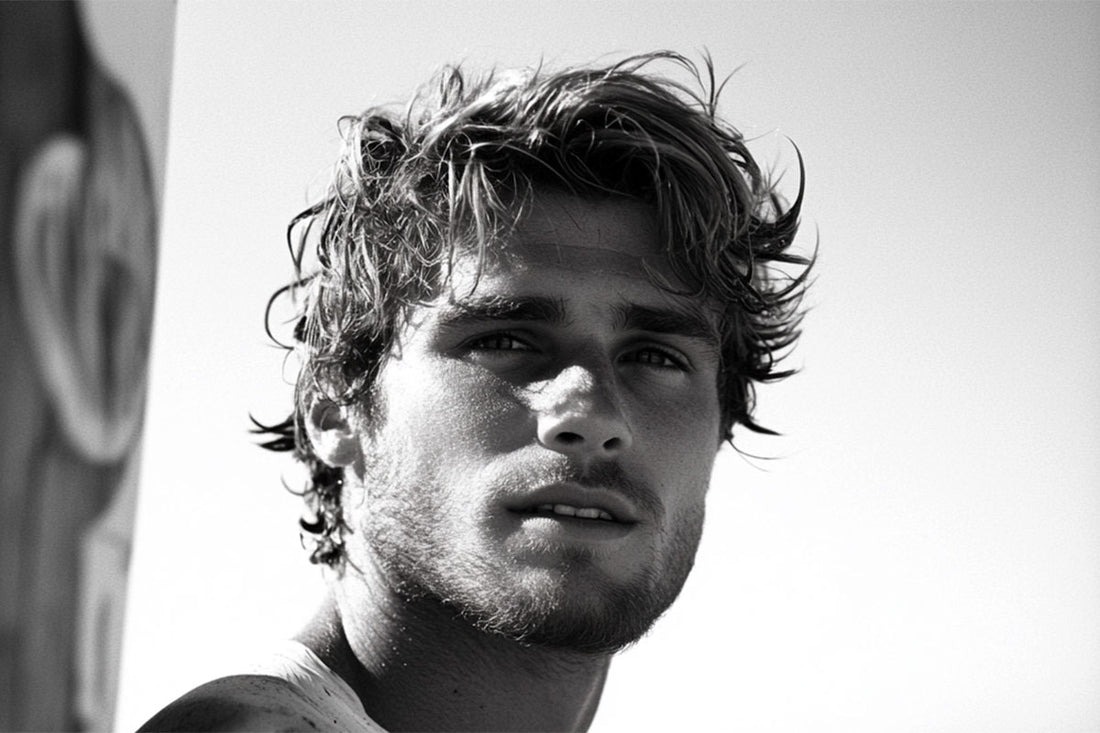
Completely blended—no harsh fades—sitting at a consistent #4 to #5 guard length all around to encourage a natural, unstructured droop with volume. The uniform length allows the hair to move as a single, cohesive mass of waves without any architectural interruptions.
This requires a curl-enhancing cream applied to soaking wet hair, followed by air drying or gentle diffusing to set the wave memory without crispiness. The cream locks in the moisture needed for the hair to swell slightly, creating that thick, beachy fluffiness.
17. The Short Wavy Fringe

It keeps the top at a manageable 2 inches, with the front falling right into the eyes, faded tightly on the sides with a #1 guard. The tight sides push all the visual focus to the wavy, undulating fringe that sits heavily but softly across the forehead.
The wave pattern is enhanced by twisting small sections of hair while blow-drying, creating an organized, fluffy ripple rather than chaotic frizz. This directional styling trains the hair to fall in uniform, clumped waves that hold their volume all day.
18. The Zoomer Perm
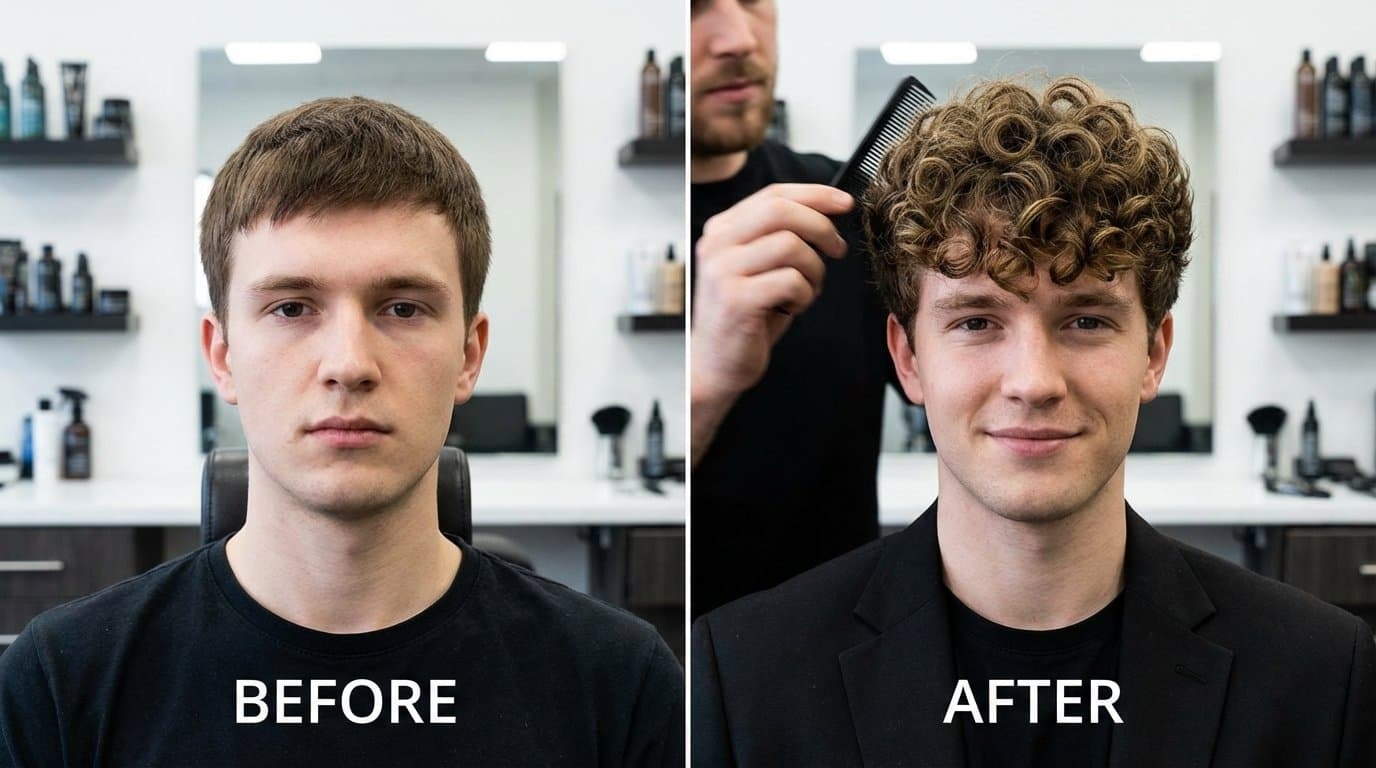
The ultimate cheat code for straight-haired boys seeking that viral fluffy wave. Rather than daily heat styling, a modern texturizing perm alters the hair’s internal bonds to create permanent, soft waves for 3 to 6 months, giving endless root-level volume.
It requires strict adherence to sulfate-free aftercare to maintain the integrity of the newly formed curls. Sulfates strip the hair of the moisture that perms desperately need to stay bouncy and soft rather than drying out into a frizzy, damaged mess.
19. The Classic Round Brush Blowout
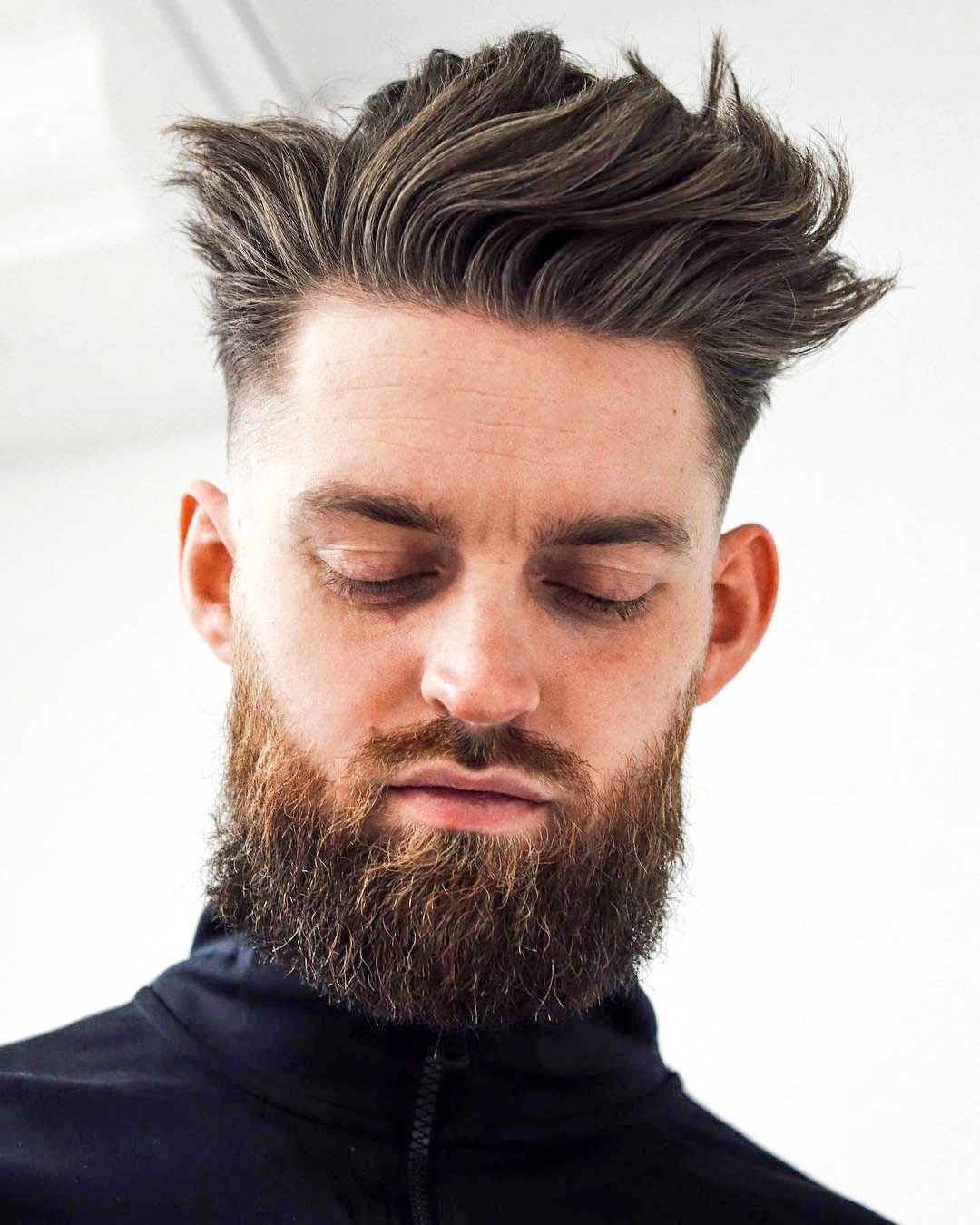
The quintessential volume cut, with the sides faded (#2 to #1) and the top left 3 to 4 inches long to allow for maximum upward styling. The extended length on top is mandatory; anything shorter will not have the leverage required to wrap around a round brush and lift at the root.
“The modern blowout requires a round brush and a heat protectant,” advises Ted Gibson, Celebrity Hair Guru. “You want to lift the roots upward to lock in that gravity-defying shape.” The heat moldes the hair upward, and the cool shot from the dryer sets it permanently in place.
20. The Messy Root Blowout
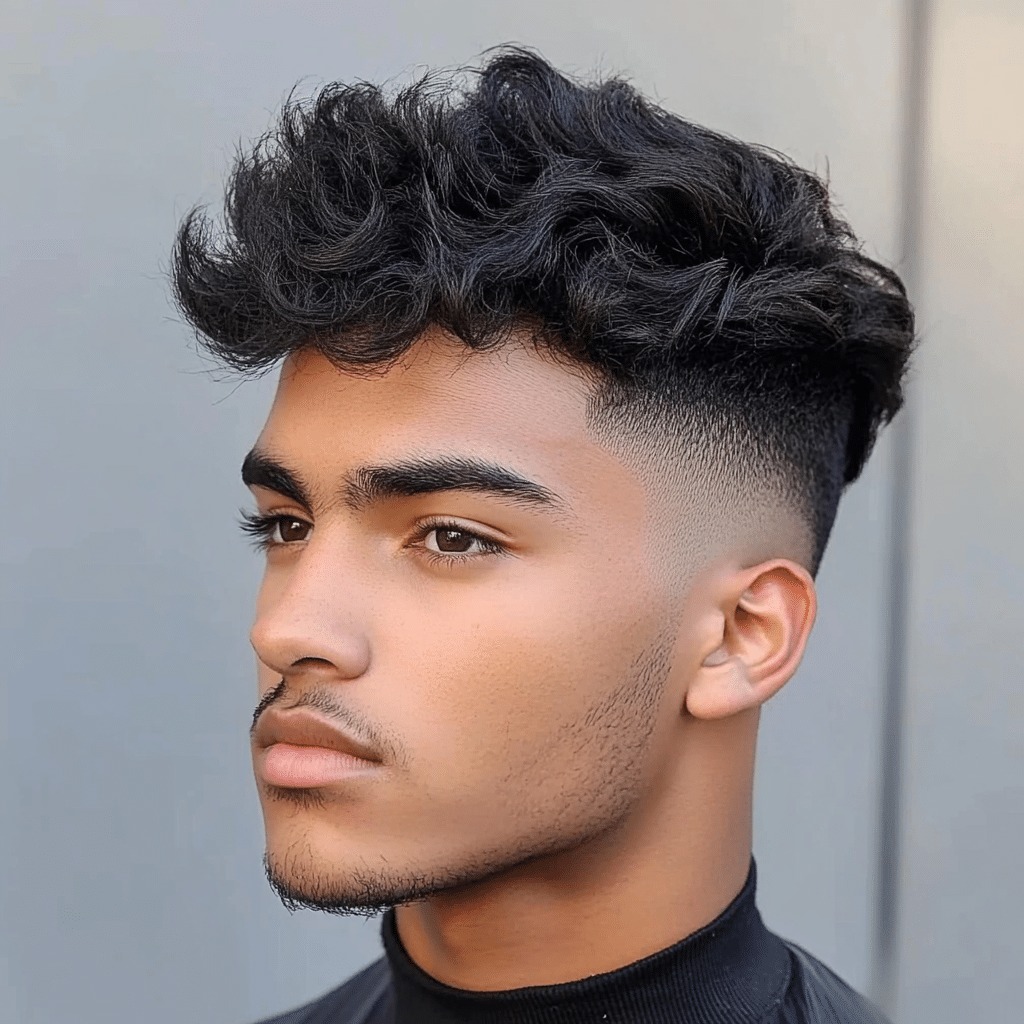
This style focuses all the volume at the crown and front hairline, with the mid-lengths and ends falling forward naturally. The sides are faded with a #3 guard, creating a clean canvas that makes the messy, elevated roots look intentional rather than accidental.
The secret is applying a root-boosting powder directly to the scalp at the crown, then using a blow dryer to push the hair straight up before letting it fall naturally. This opposing-force technique forces the roots to stand on end, creating maximum lift exactly where hair usually lies flat.
21. The Side-Parted Volume Blowout
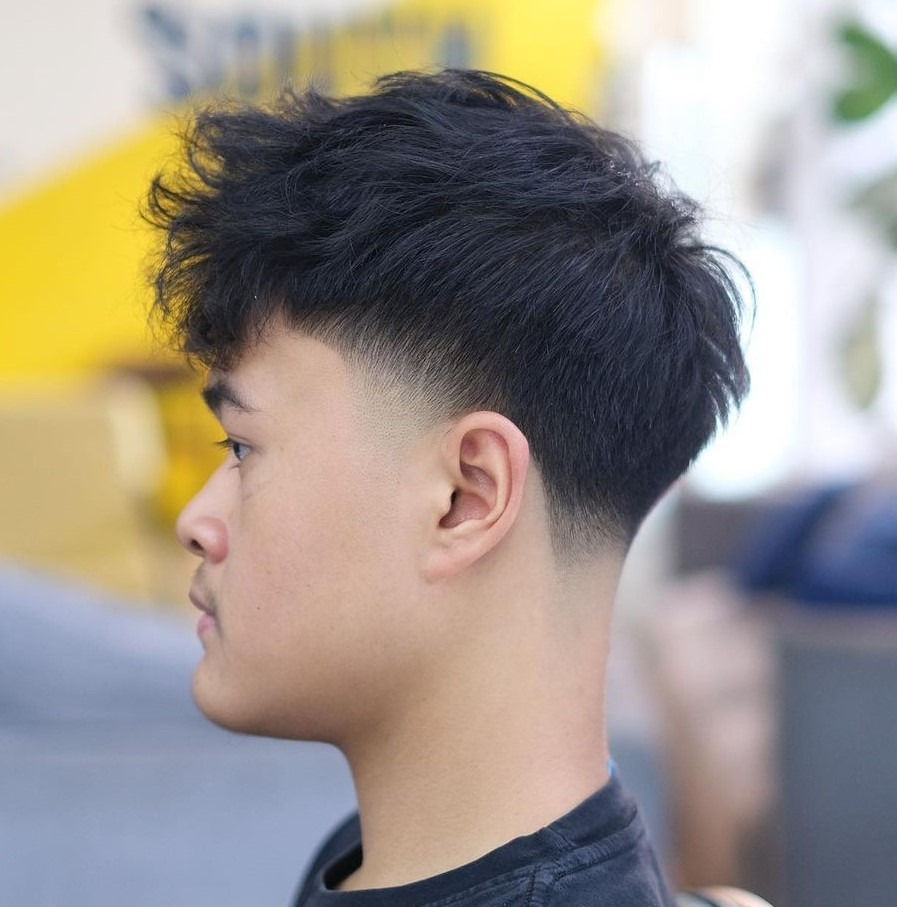
It introduces a hard part (a shaved line using a #0 guard) on one side, with the longer top swept over in a dramatic, fluffy arc. The hard part creates a sharp, undeniable dividing line that makes the thick, swept-over top look even more dense and voluminous by contrast.
The blow-drying technique here is crucial: you must over-direct the hair (pulling it across the head in the opposite direction of its final fall) to create maximum lift at the roots. Over-direction stretches the hair out of its natural growth pattern, guaranteeing extreme volume once released.
22. The Brush-Up Blowout
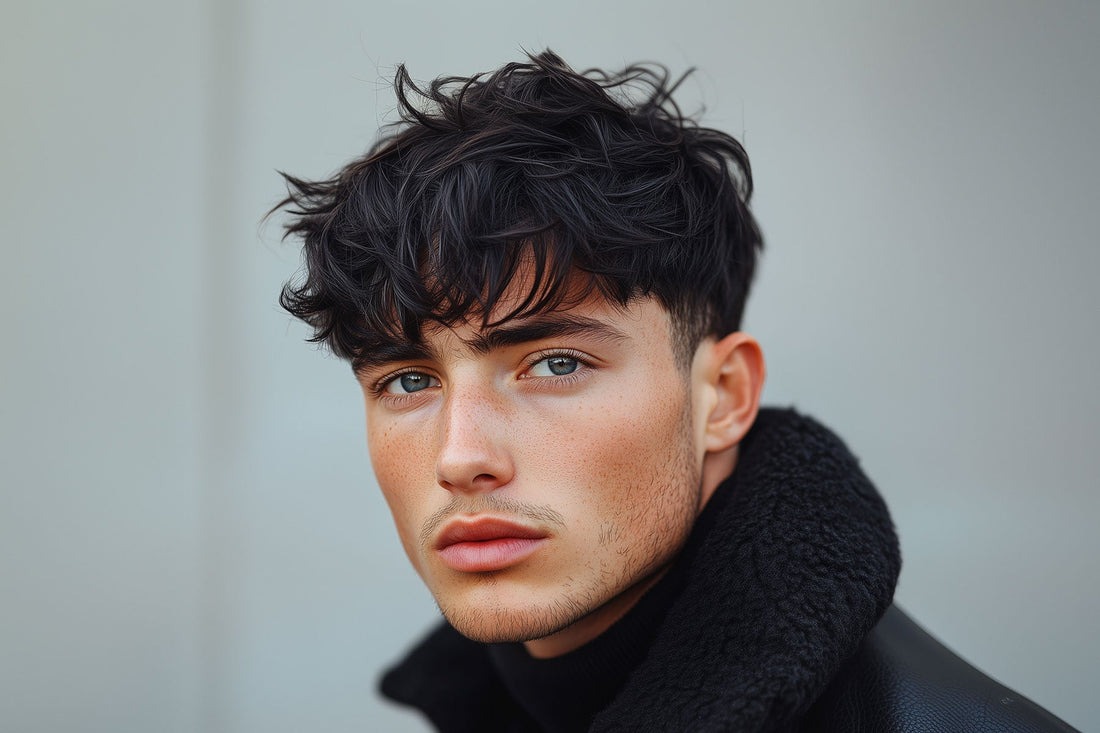
It pushes all the hair up and away from the face without a distinct part, creating a soft, cloud-like silhouette. The back and sides are faded with a #2 guard, keeping the lower half tight so the vertical sweep of the top appears dramatically thicker and taller.
“A great fluffy cut looks best when it moves,” says Guido Palau, Global Styling Director. “Always choose flexible-hold hairsprays over maximum-hold formulas to avoid that stiff, frozen look.” Movement is the ultimate indicator of true fluffiness; frozen hair reads as flat and heavy.
The Flat-Hair Problem: Core Styling Obstacles
Before adding volume, you must understand why hair falls flat in the first place. The primary culprit is sebum buildup—the natural oils your scalp produces that weigh down the roots and collapse your style within hours. When sebum coats the hair shaft, it acts like a heavy grease, making separation and lift nearly impossible.
Another massive obstacle is improper hair porosity management. If your hair cuticle is tightly closed (low porosity), moisture and styling products simply sit on top of the hair shaft rather than absorbing into it. This creates a slick, lifeless appearance rather than a bouncy, airy finish that holds its shape throughout the day.
Structural issues also play a massive role in defeating volume. “The secret to a great fluffy haircut is hidden internal layering,” says Chris Appleton, Celebrity Hairstylist. “It removes bulk while allowing the hair to naturally bounce and stack.” Without these internal layers, thick hair turns into a heavy helmet, and fine hair lacks the foundational scaffolding required to hold lift at the roots.
Finally, using the wrong mechanical tools destroys volume before you even leave the house. Heavy brushes and flat-pressing motions literally train the hair to lay flat against the scalp. Overcoming the flat-hair problem requires specific structural cuts, intentional layering, and a complete overhaul of how you treat your roots during the drying process.
Common Fluffy Hair Myths Busted
Myths surrounding high-volume hair prevent countless boys from achieving the fluffiness they want. Let’s dismantle the most pervasive misconceptions with factual salon evidence and structural logic.
Myth 1: Pin-straight hair cannot hold volume
This is entirely false. While straight hair lacks natural wave memory, it excels at holding a thermally-altered shape. Using the right pre-styling protectants and a round brush, straight hair can be lifted at the root and cooled into a locked, elevated position that lasts all day.
Straight hair actually maintains a blowout longer than curly hair because it lacks the internal tension that causes curl reversion. The key is altering the hydrogen bonds with heat and setting them with cool air, creating permanent lift until the next wash.
Myth 2: You must wash fluffy hair daily to keep it light
Over-washing strips the scalp of natural oils, prompting it to overproduce sebum, which actually weighs the hair down faster. This vicious cycle creates greasy roots that collapse the volume you worked so hard to build in the morning.
“Do not over-wash fluffy haircuts,” warns Sam Villa, Redken Global Artistic Ambassador. “Natural oils are what give the hair its grip and texture; washing every three days is the sweet spot.” This grip is essential for sea salt sprays and powders to latch onto the hair shaft.
Myth 3: Thick hair is automatically fluffy hair
Untamed thick hair is often heavy and bulky, resembling a dense pyramid rather than a soft cloud. True fluffiness requires strategic weight removal through internal layering and texturizing shears to transform dense bulk into airy bounce.
Without debulking, thick hair collapses under its own weight, creating a wide, shapeless mass that flattens at the crown. Fluffiness is a product of movement and separation, which can only exist when the internal weight is surgically removed by a professional.
Myth 4: Sea salt sprays work instantly on dry hair
Salt sprays require water to activate the chemical reaction that swells the hair cuticle. Spraying them on dry hair just leaves a crusty, flaky residue that looks like dandruff and does absolutely nothing for volume or texture.
They must be applied to damp, towel-dried hair and then air-dried or diffused to lock in the texturized shape. The water acts as a vehicle to distribute the salt evenly through the shaft, ensuring consistent swelling and a natural, beachy finish.
Myth 5: Volume means sacrificing a clean look
Fluffy does not mean messy, unwashed, or neglected. Modern fluffy cuts utilize sharp fades, crisp tapers, and precise perimeter lines to keep the style looking intentional and highly groomed from the ears down.
The fluffiness is controlled volume, not chaotic neglect. Pairing a tight #1 fade with a perfectly rounded, fluffy top creates a striking duality that looks incredibly sharp. The contrast is what makes the style fashion-forward rather than sloppy.
Common Mistakes When Cutting & Styling Fluffy Hair
Attempting to achieve fluffy hair at home often leads to disaster. Avoid these critical, data-driven mistakes to save your hair from structural ruin and permanent volume loss.
Mistake 1: Using the wrong clipper guards for blending
A common at-home error is jumping from a #1 guard directly to a #4 guard on the sides. This creates a harsh “shelf” that destroys the seamless transition needed for a fluffy top to stand out naturally.
You must use every guard in between (#2, #3) to create a smooth, gradual taper that pushes visual weight upward. Skipping guards disrupts the optical illusion required to make the top appear dramatically thicker than the sides.
Mistake 2: Loading up on heavy pomades and gels
“Heavy pomades are the enemy of fluffy hair,” states Matty Conrad, Master Barber and Founder of Victory Barber & Brand. “Switch to matte clays or volumizing powders to keep the hair light, airy, and full of life.”
Greasy products collapse the roots and ruin the cloud-like effect entirely by clumping the individual strands together. When strands clump, the hair appears flat and sparse, which is the exact opposite of the separated, dense look required for fluffiness.
Mistake 3: Excessive heat styling without protection
A study notes that because Gen Z views hair as a massive part of their personality, they are facing earlier concerns about hair thinning due to the heavy usage of chemicals, bleaching, and excessive heat styling. Blasting wet hair with maximum heat on a blow dryer fries the cuticle, leading to breakage that permanently destroys volume.
Always use a thermal protectant and medium heat to preserve the hair’s structural integrity. Broken, fried hairs cannot hold a shape or stand upright, making heat protection the most critical step in any long-term volume routine.
Mistake 4: Point-cutting with standard shears
Trying to create texture by cutting upward into the hair with blunt, standard scissors usually results in choppy, jagged lines. These harsh cuts look like split ends rather than seamless, natural layers.
Texturizing shears are mandatory for safely removing internal bulk without altering the visible length of the hair. Standard scissors can only make blunt lines, which destroy the soft, feathery edge required for hair to bounce and separate.
Mistake 5: Ignoring scalp health
Fluffy hair begins at the roots, and roots are anchored in the scalp. If your scalp is covered in dead skin and sebum buildup, the hair cannot stand upright, no matter how much product you apply.
Failing to exfoliate or massage the scalp restricts blood flow and anchors the hair in grease, making any volumizing product useless. A healthy scalp provides the literal foundation for hair to grow thick, strong, and capable of holding extreme volume.
Actionable Guide: The 4-Step Home Volume Routine
Building the perfect fluffy haircut requires a precise daily routine. Follow this 4-step salon-standard protocol to achieve maximum lift and texture safely without causing long-term damage.
Step 1: The Wash & Prep Phase
Stop using heavy, sulfate-loaded 2-in-1 shampoos that strip moisture and leave a waxy residue. Retail studies show that 63% of young male consumers prefer sulfate-free products, matching the search for clean sea-salt sprays and talc-free volumizing powders.
Wash every 2-3 days with a sulfate-free shampoo, focusing on the scalp to clear sebum buildup. Follow with a lightweight conditioner applied only to the mid-lengths and ends to avoid weighing down the roots.
Step 2: The Protect & Prime Phase
Never apply heat to wet hair without a shield. Spray a pre-styling protectants evenly over the damp hair to create a thermal barrier against cuticle damage that causes breakage and thinning.
Industry trend forecasting highlights that young men are increasingly treating hair styling as a baseline gateway to overall scalp health. Introducing root protection and gentle detangling aligns perfectly with this behavioral shift. Comb the protectant through to ensure even distribution before any heat touches the hair.
Step 3: The Diffuse & Lift Phase
Research found that younger generations are abandoning traditional flat hair-straighteners. Instead, they are driving massive sales in hair dryer diffuser attachments, which are explicitly designed to dry hair quickly, reduce frizz, and volumise roots—the structural foundation of a perfect blowout or wavy shag.
Attach your diffuser, flip your head upside down, and dry the roots on medium heat. “Blow-drying upside down is the oldest and best trick in the book for maximum fluffiness,” notes Oribe Canales, Legendary Editorial Hairstylist. “It instantly forces the roots away from the scalp.”
Once the roots are 80% dry, flip your head up and use your fingers or a round brush to direct the hair into its final shape. According to research, while boys are chasing maximum fluffiness, they are highly aware of heat damage; devices utilizing high airflow and cool-shot tech are seeing heavy adoption from young men aiming to lift hair roots safely. Hit the hair with a blast of cool air to lock the elevated shape into place.
Step 4: The Product & Finish Phase
Finish your routine by applying a volume-boosting styler to completely dry hair—never wet hair, as water dilutes the holding polymers. Tap a small amount of matte styling powders into your palms and aggressively work it into the roots at the crown and fringe.
Finish by misting a flexible-hold hairspray from 10 inches away to maintain the cloud-like shape without freezing it. Scrunch the ends with a tiny drop of sea salt spray to revive the piece-y texture and ensure the hair moves naturally in the wind.
Key Takeaways & Conclusion
Mastering the fluffy haircut is no longer a guessing game—it is a precise science of layering, tools, and products. The viral surge in high-volume styles is backed by undeniable data, proving that young men are more invested than ever in their hair’s health, texture, and structural appearance.
Remember the core fundamentals: Fluffiness requires hidden internal layering, not just length on top. Heavy pomades are your enemy; rely on matte styling powders, sea salt sprays, and hair dryer diffuser attachments to build structural volume from the root upward.
Never underestimate the importance of scalp care and thermal protection. Clearing sebum buildup and using pre-styling protectants ensures your hair remains lightweight and lift-ready, while also protecting against the early thinning concerns plaguing heat-heavy Gen Z stylists.
Whether you are rocking a Modern Broccoli Fade, a grunge-inspired Wolf Cut, or a gravity-defying Round Brush Blowout, the principles remain identical. Cut the internal weight, protect the cuticle, lift the roots with a diffuser, and finish with lightweight, moveable hold. Step into the salon with confidence, ask your barber for point-cut layers and a seamless taper, and enjoy the high-volume, fluffy hair you deserve.
Table 1: The Ultimate Fluffy Hair Matrix
| Style Category | Specific Cut | Best Hair Texture | Essential Styler |
|---|---|---|---|
| Fades | Modern Broccoli Fade | Straight to Wavy | Sea Salt Spray |
| Fades | Soft Textured Crop | Thick & Straight | Matte Styling Powder |
| Fades | Fluffy Caesar Fade | Fine to Medium | Volumizing Mousse |
| Fades | Blowout Taper | Wavy to Curly | Curl-Defining Cream |
| Fades | Short Mohawk Fade | Coarse & Thick | Flexible Hold Clay |
| Fades | Wispy Fringe Fade | Fine & Straight | Lighthold Paste |
| Fades | Ivy League Blowout | Wavy | Pre-styling Protectant |
| Fades | Fluffy Buzz Crop | Any (Low Maintenance) | Leave-in Conditioner |
| Mullets | Modern Wolf Cut | Wavy to Curly | Lightweight Serum |
| Mullets | Soft Shag Mullet | Thick & Straight | Matte Clay |
| Mullets | Curly Mullet Drop | Curly | Diffuser & Cream |
| Mullets | Choppy Camero Mullet | Medium to Thick | Texturizing Powder |
| Mullets | Textured Bowl Mullet | Straight | Shine Pomade (Roots only) |
| Mullets | Wavy Butterfly Cut | Wavy & Dense | Sea Salt Spray |
| Waves | Natural Wave Swept | Natural Waves | Curl Cream |
| Waves | Beachy Wave Flow | Wavy to Straight | Sea Salt Spray |
| Waves | Short Wavy Fringe | Wavy | Light Paste |
| Waves | The Zoomer Perm | Pin-Straight | Perm-Safe Conditioner |
| Blowouts | Classic Round Brush Blowout | Medium & Wavy | Heat Protectant & Mousse |
| Blowouts | Messy Root Blowout | Fine to Thick | Root Booster |
| Blowouts | Side-Parted Volume | Medium | Volumizing Powder |
| Blowouts | The Brush-Up Blowout | Any (Add Volume) | Flexible Hairspray |
