
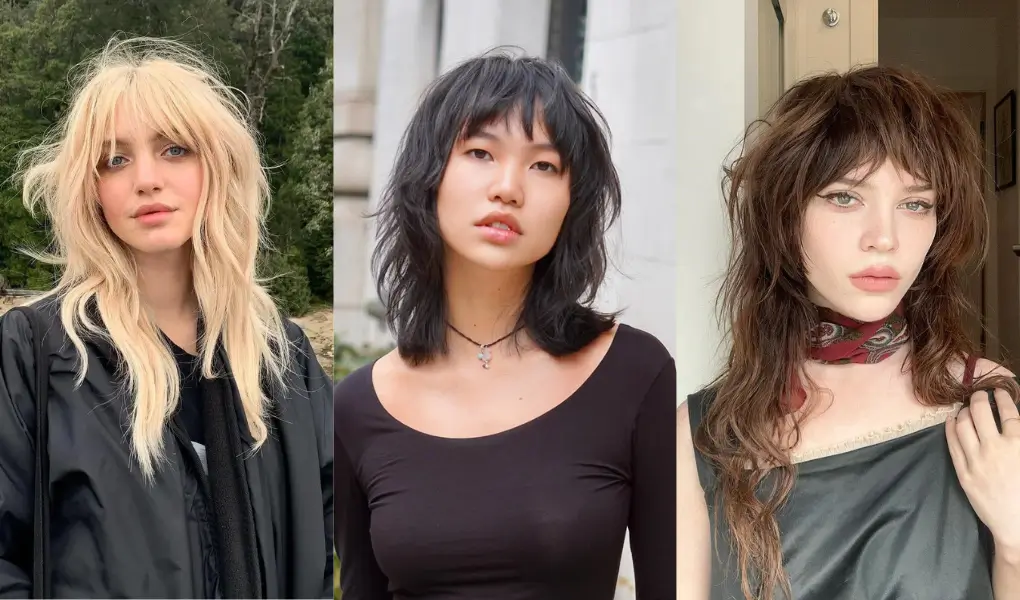
Have you ever stared into the mirror, wondering whether a wolf cut would completely transform your look—or leave you regretting the decision? It’s a common concern. A haircut this bold can feel exciting, but it also raises one important question: Does a wolf cut suit your face shape?
The answer is yes. A wolf cut can suit almost every face shape when its layers, bangs, and volume are customized to complement your facial proportions. While your face shape is an important factor, your jawline, forehead width, cheekbones, hair texture, and head shape also influence how flattering the final result will be.
That’s why professional stylists don’t ask whether a wolf cut suits someone, they ask how to tailor the wolf cut to suit that person’s unique features.
Let’s explore the visual science behind this trending haircut and discover which version works best for your face shape.
Quick Answer: Which Face Shape Is Best for a Wolf Cut?
If you’re looking for the short answer, here’s the good news:
- Oval face: Almost every wolf cut variation works beautifully.
- Round face: Extra crown volume and longer face-framing layers create a slimmer appearance.
- Square face: Soft, wispy layers help balance strong jawlines.
- Heart face: Jaw-length layers add fullness to the lower face.
- Long (Oblong) face: Fuller sides and curtain bangs help reduce visual length.
- Diamond face: Balanced layers soften prominent cheekbones while maintaining facial harmony.
The biggest myth about wolf cuts is that they only suit one type of face. In reality, the best wolf cut for your face shape depends on where your stylist places volume, texture, and layers—not on your facial structure alone.
Now let’s understand why this haircut is so adaptable.
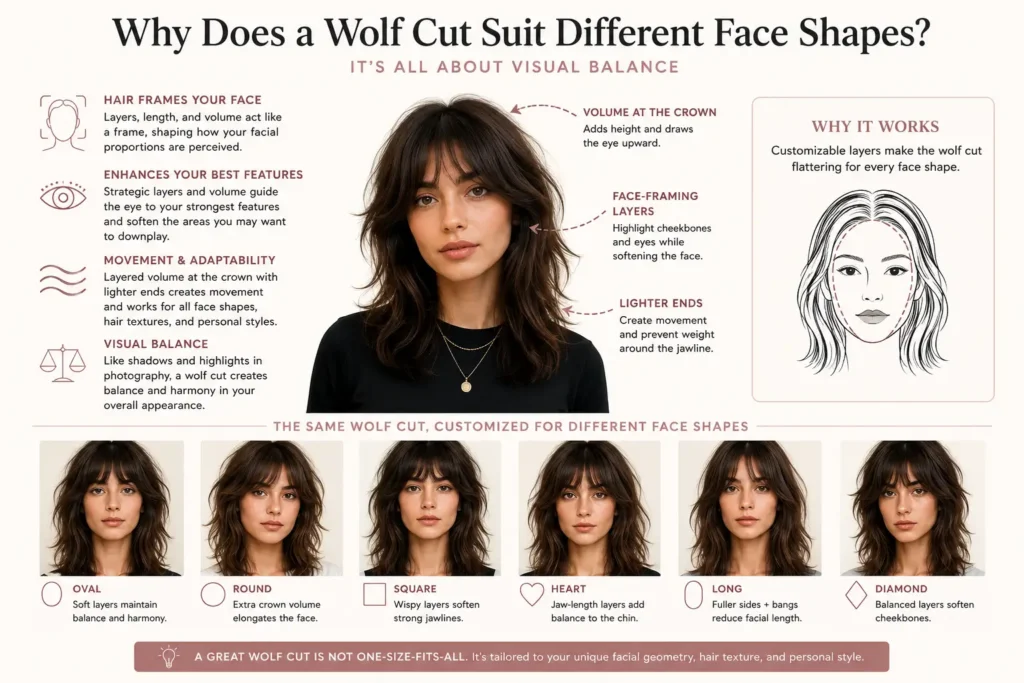
Why Does a Wolf Cut Suit Different Face Shapes?
The popularity of the wolf cut hairstyle isn’t just about fashion trends. It comes down to one simple principle: visual balance.
Hair acts like a frame around your face. Changing the length, layers, and volume changes how people perceive your facial proportions. A skilled stylist uses these optical effects to enhance your strongest features while minimizing areas you may want to soften.
Unlike blunt hairstyles that create one fixed silhouette, a wolf cut combines layered volume at the crown with lighter ends. This creates movement and allows the haircut to be adjusted for different face shapes, hair textures, and personal styles.
Think of it as using shadows and highlights in photography. The haircut guides the eye toward your best features while creating a more balanced overall appearance.
That’s why the same wolf cut can look dramatically different on two people—it has been customized to suit each individual’s facial geometry.
How a Wolf Cut Changes Facial Proportions
Before choosing the best wolf cut for your face shape, it’s helpful to understand how hairstylists use visual geometry.
Every face has four major proportions:
- Forehead width
- Cheekbone width
- Jawline width
- Face length
A wolf cut adjusts how these proportions appear by strategically placing layers and volume.
For example:
- Extra volume at the crown makes a round face appear longer.
- Layers around the jawline create balance for heart-shaped faces.
- Soft texture around the cheeks reduces the appearance of a strong square jaw.
- Fuller sides help long faces appear wider and more proportional.
This is why two people with identical hair can receive completely different wolf cuts. The goal isn’t to copy a celebrity hairstyle—it’s to create visual harmony.
Once you understand this principle, choosing the right wolf cut becomes much easier.
Best Wolf Cut for Every Face Shape
Every face shape has unique strengths. The right wolf cut doesn’t hide those features—it enhances them.
Best Wolf Cut for Oval Face
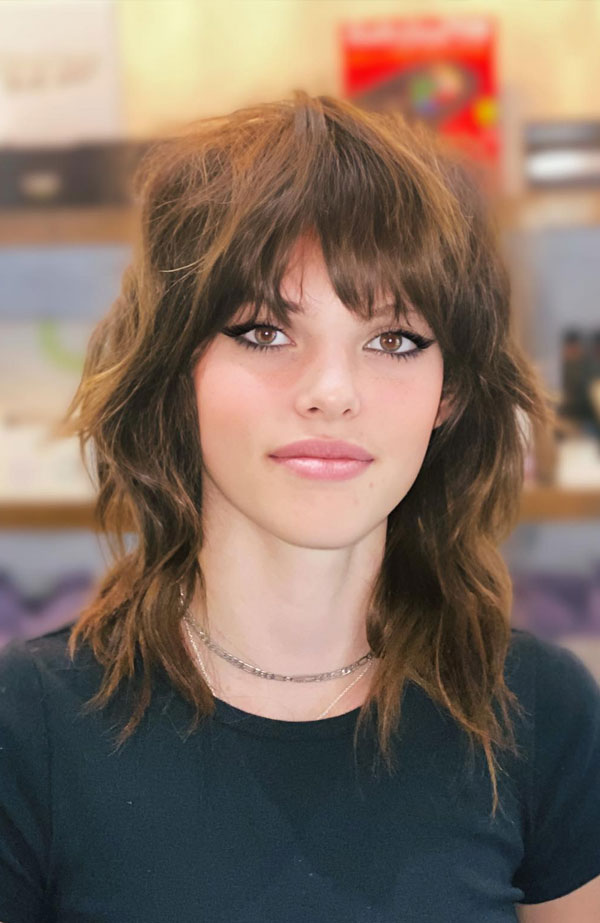
An oval face is often considered the easiest face shape for a wolf cut because its proportions are naturally balanced.
Almost every variation works well, whether you prefer a short wolf cut, medium-length layers, or longer textured styles. The key is maintaining that balance rather than adding unnecessary height.
Face-framing curtain bangs blend beautifully into cheekbone-length layers, creating effortless movement without overwhelming your features.
Avoid excessive volume at the crown, as it can make an already long face appear even longer.
Best Wolf Cut for Round Face
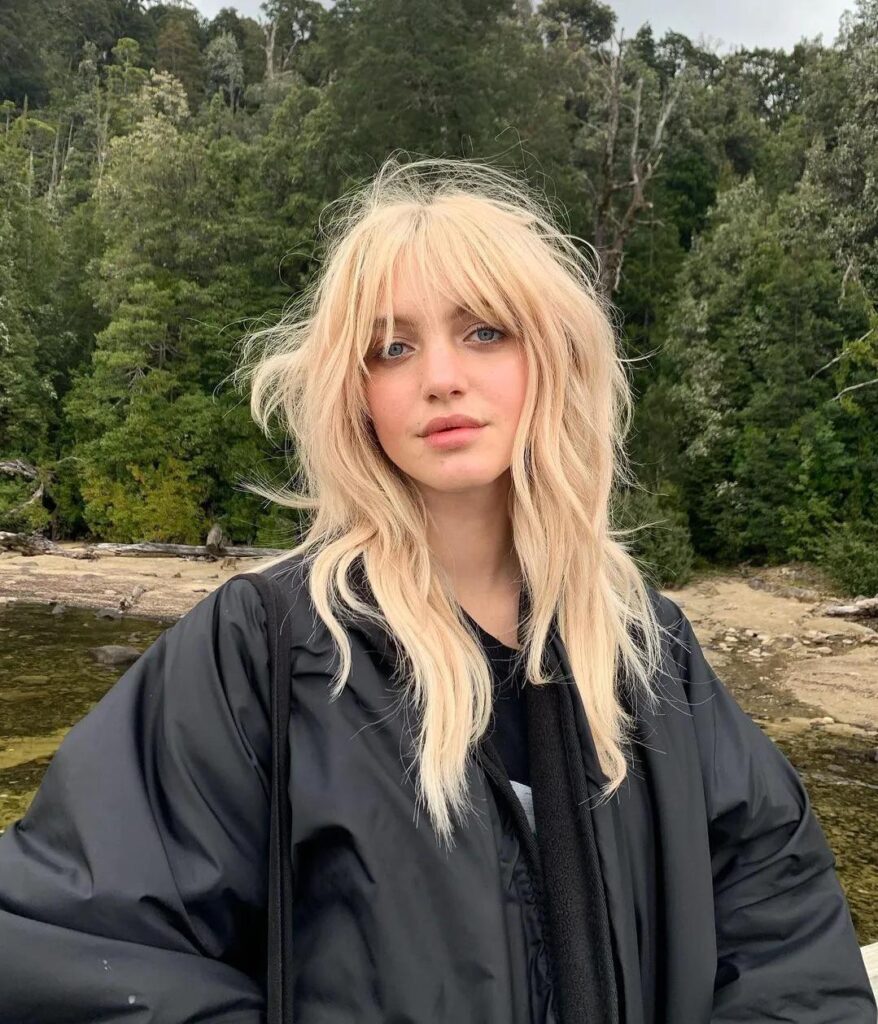
If you have a round face, your goal isn’t to hide its softness—it’s to create the illusion of more length and definition.
The best wolf cut for a round face uses layered volume at the crown while keeping the front pieces longer and lighter. This naturally draws the eye upward, making the face appear slimmer.
Long curtain bangs, textured layers, and collarbone-length hair all work exceptionally well. At the same time, avoid thick jaw-length layers that add extra width around the cheeks.
Small adjustments in layer placement often make a dramatic difference, proving that customization matters far more than following haircut trends.
Best Wolf Cut for Square Face
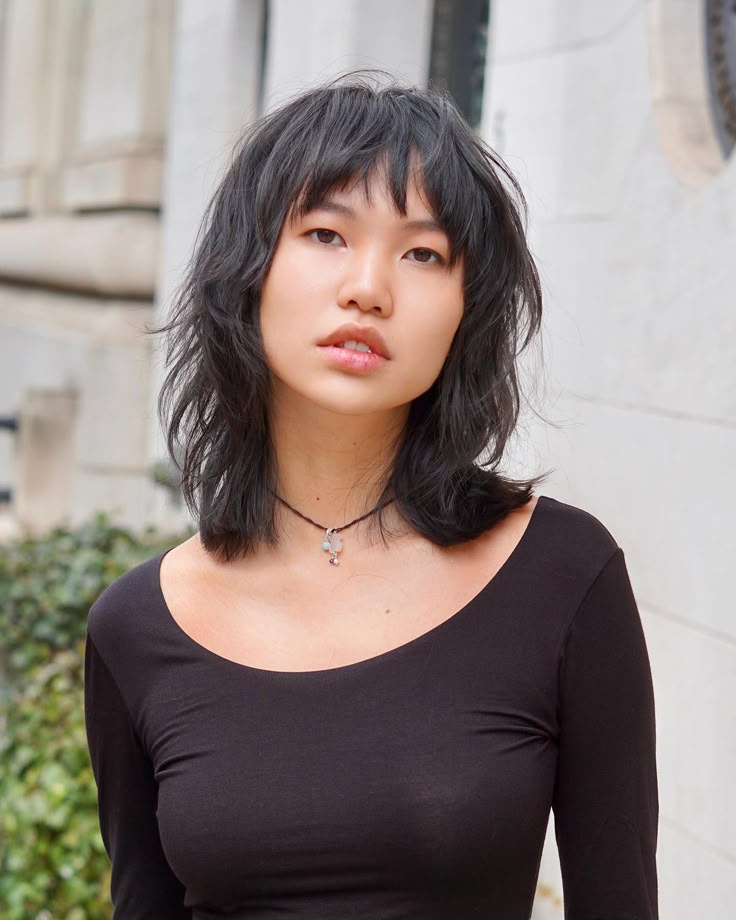
A square face is defined by a broad forehead and a strong jawline. Rather than hiding these features, the best wolf cut softens them with movement and texture.
Wispy layers beginning around the cheekbones help reduce visual heaviness while creating a more balanced silhouette. Curtain bangs also soften the upper face without covering your natural bone structure.
Many stylists recommend a softer wolf cut with razor-cut texture because it removes bulk while allowing the hair to move naturally.
Instead of fighting strong facial features, this approach complements them, creating a hairstyle that looks effortless rather than overly structured.
Best Wolf Cut for Heart-Shaped Face

A heart-shaped face typically features a wider forehead, defined cheekbones, and a narrower chin. The best wolf cut for this face shape creates visual balance by adding fullness around the jawline instead of emphasizing the upper face.
Choose jaw-length or collarbone-grazing layers that build volume near the chin. Pair them with curtain bangs or soft, wispy fringe to reduce the visual width of the forehead while naturally drawing attention toward your eyes.
Avoid excessive height at the crown if your forehead is already the widest part of your face. A balanced silhouette always looks more flattering than adding unnecessary volume.
Best Wolf Cut for Long (Oblong) Face

If you have a long face, the goal is to reduce vertical length while creating the illusion of width.
The best wolf cut for a long face places volume along the sides instead of the crown. Face-framing layers around the cheekbones help widen the face visually, while curtain bangs or a full fringe shorten the appearance of the forehead.
Long hair can absolutely work with a wolf cut, but extremely long, flat layers may elongate the face further. Keeping the sides textured and full creates a much more balanced result.
Best Wolf Cut for Diamond Face

A diamond face is characterized by prominent cheekbones, a narrower forehead, and a narrower chin. The objective isn’t to hide these striking features but to create harmony between the upper and lower portions of the face.
Medium-length layers combined with soft curtain bangs work exceptionally well because they add subtle width around the forehead while preventing the cheekbones from becoming the dominant focal point.
Avoid placing excessive volume directly at cheekbone level, as this can exaggerate facial width. Instead, distribute volume evenly throughout the haircut for a softer, more balanced appearance.
Best Wolf Cut for Different Hair Types
Your face shape determines where layers should be placed, but your hair texture determines how the haircut behaves. Understanding both is essential for choosing the right wolf cut.
Wolf Cut for Straight Hair
Straight hair showcases every layer clearly, making precision especially important.
Adding textured layers and point-cutting creates movement while preventing the haircut from looking heavy or boxy. A texturizing finish also helps achieve the signature effortless appearance that defines a modern wolf cut.
Wolf Cut for Wavy Hair
Naturally wavy hair is often considered ideal for a wolf cut.
The waves enhance the layered silhouette without requiring extensive styling. Volume develops naturally around the crown while the textured ends create the relaxed, lived-in finish that makes this haircut so popular.
Wolf Cut for Curly Hair
Curly hair can produce a stunning wolf cut when cut correctly.
Instead of removing excessive length, experienced stylists focus on controlling bulk through carefully placed internal layers. This prevents the classic pyramid effect while allowing curls to frame the face beautifully.
Since curls shrink after drying, always discuss your natural curl pattern before deciding on the final length.
Wolf Cut for Thick Hair
Thick hair provides incredible volume, but it also requires strategic weight removal.
A stylist will usually incorporate point cutting, texturizing, or razor techniques to reduce bulk while preserving the signature layered shape. Removing weight allows the hairstyle to move naturally rather than appearing overly dense.
Wolf Cut for Thin or Fine Hair
Many people believe a wolf cut won’t work on fine hair—but that’s simply a myth.
The secret is controlled layering. Too many short layers can make fine hair appear thinner, while softer, longer layers maintain fullness and create natural movement. A shorter wolf cut often provides the best balance between texture and volume.
Common Wolf Cut Myths Debunked
The internet is full of misconceptions about this hairstyle. Let’s separate fact from fiction.
Myth: Only Certain Face Shapes Can Pull Off a Wolf Cut
False.
Every face shape can wear a wolf cut when the layers, fringe, and volume are customized to suit individual facial proportions.
Myth: Thick Hair Is Required
Not true.
Straight, wavy, curly, thick, and fine hair can all suit a wolf cut with the appropriate cutting technique. The hairstyle should always be adapted to your hair density rather than copied from someone else.
Myth: Wolf Cuts Are Only for Teenagers
Age has very little to do with whether a wolf cut looks good.
A softer, more polished variation works beautifully on adults of all ages because the haircut can be customized to complement both facial features and lifestyle.
Myth: The Wolf Cut Is Impossible to Maintain
While the wolf cut benefits from regular trims, daily styling doesn’t have to be complicated.
Most people achieve excellent results using a blow dryer, lightweight styling cream, or texturizing spray. Those with naturally wavy hair often require even less effort.
How to Ask Your Stylist for the Perfect Wolf Cut
Walking into the salon with only the words “I want a wolf cut” can lead to very different results.
Instead, explain:
- Your face shape.
- Your natural hair texture.
- How much daily styling you’re willing to do.
- Whether you prefer subtle layers or dramatic texture.
- If you want curtain bangs, wispy fringe, or no bangs at all.
Reference photos are helpful, but explaining why you like a particular haircut gives your stylist much better guidance.
Most importantly, ask how they plan to customize the haircut for your facial proportions. That conversation often makes the difference between an average haircut and one that feels personally designed for you.
How to Find Your Face Shape Before Getting a Wolf Cut
Before booking your salon appointment, spend a few minutes identifying your face shape. It’s one of the easiest ways to determine which wolf cut will flatter your features.
You don’t need professional tools—just a mirror, a flexible measuring tape, and good lighting.
Step 1: Pull Your Hair Back
Tie your hair away from your face so your natural hairline, forehead, jawline, and cheekbones are fully visible. Avoid letting loose strands change the outline of your face.
Step 2: Measure Your Forehead
Measure the widest part of your forehead, usually halfway between your eyebrows and hairline.
This helps determine whether your forehead is wider than your jawline, an important characteristic of heart-shaped and diamond-shaped faces.
Step 3: Measure Your Cheekbones
Measure from the highest point of one cheekbone to the other.
Prominent cheekbones often play a major role in identifying diamond, oval, and heart-shaped faces.
Step 4: Measure Your Jawline
Measure from the tip of your chin to just below one ear, then double that measurement.
A broad jawline usually indicates a square face, while a softer, rounded jawline is more common in round or oval faces.
Step 5: Measure Your Face Length
Measure from the center of your hairline to the bottom of your chin.
Comparing this measurement with the others helps determine whether your face appears longer, wider, or evenly balanced.
How to Identify Your Face Shape
Use your measurements as a guide:
- Oval Face: Face length is slightly longer than width with softly rounded features.
- Round Face: Face length and width are nearly equal with rounded cheeks and jawline.
- Square Face: Forehead, cheekbones, and jawline have similar widths with a defined jaw.
- Heart-Shaped Face: Wider forehead with a narrower chin.
- Long (Oblong) Face: Face length is noticeably greater than its width.
- Diamond Face: Cheekbones are the widest part of the face, while the forehead and jawline are narrower.
If your measurements fall between two categories, don’t worry. Many people have a combination of features, which is why professional stylists customize every wolf cut rather than following rigid rules.
Frequently Asked Questions About Wolf Cuts and Face Shapes
Does a Wolf Cut Suit Every Face Shape?
Yes. A wolf cut suits almost every face shape when the layers, fringe, and volume are customized to complement your facial proportions. The haircut should be adapted to your features instead of copying someone else’s style.
Does a Wolf Cut Make Your Face Look Slimmer?
It can.
Adding height at the crown and longer face-framing layers can make a round face appear slimmer, while fuller sides can balance a long face. The effect depends on where the stylist places the layers.
Is a Wolf Cut Good for Thin Hair?
Yes, but moderation is key.
A wolf cut for thin hair should use softer, longer layers to preserve density. Removing too much weight may make fine hair appear thinner.
Is a Wolf Cut High Maintenance?
Not necessarily.
Most wolf cuts require a trim every 6–8 weeks to maintain the layered shape. Daily styling is usually minimal, especially for naturally wavy hair.
Should I Get Curtain Bangs with a Wolf Cut?
Curtain bangs are one of the most versatile additions to a wolf cut.
They soften strong facial angles, frame the eyes, and work well with oval, square, heart-shaped, and long faces. However, your stylist can recommend the best fringe based on your facial proportions.
Can Men Get a Wolf Cut?
Absolutely.
The wolf cut for men has become increasingly popular because the layered silhouette works well on medium and long hair. The same principles of face shape, hair texture, and volume placement apply regardless of gender.
