
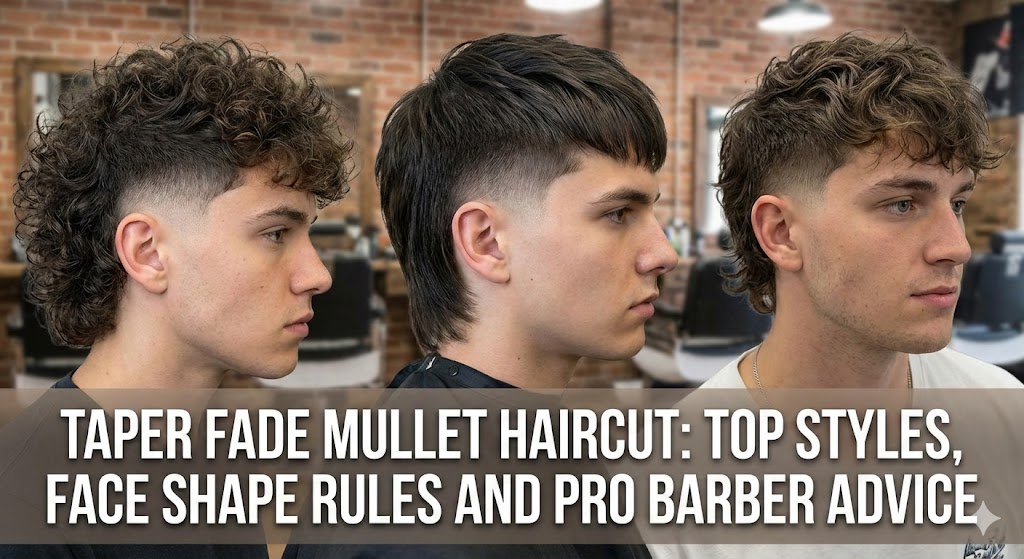
The taper fade mullet is one of the most powerful men’s haircuts right now. It combines a clean, faded shape on the sides with a longer, rebellious back that still looks modern and intentional. When it is cut and styled correctly, it works in barbershops, offices, and nightlife without looking messy.
This guide walks through everything you need: what the cut actually is, the main styles, which face shapes it suits, and the exact phrases you can use with your barber, so you get the result you want.
What Is a Taper Fade Mullet?
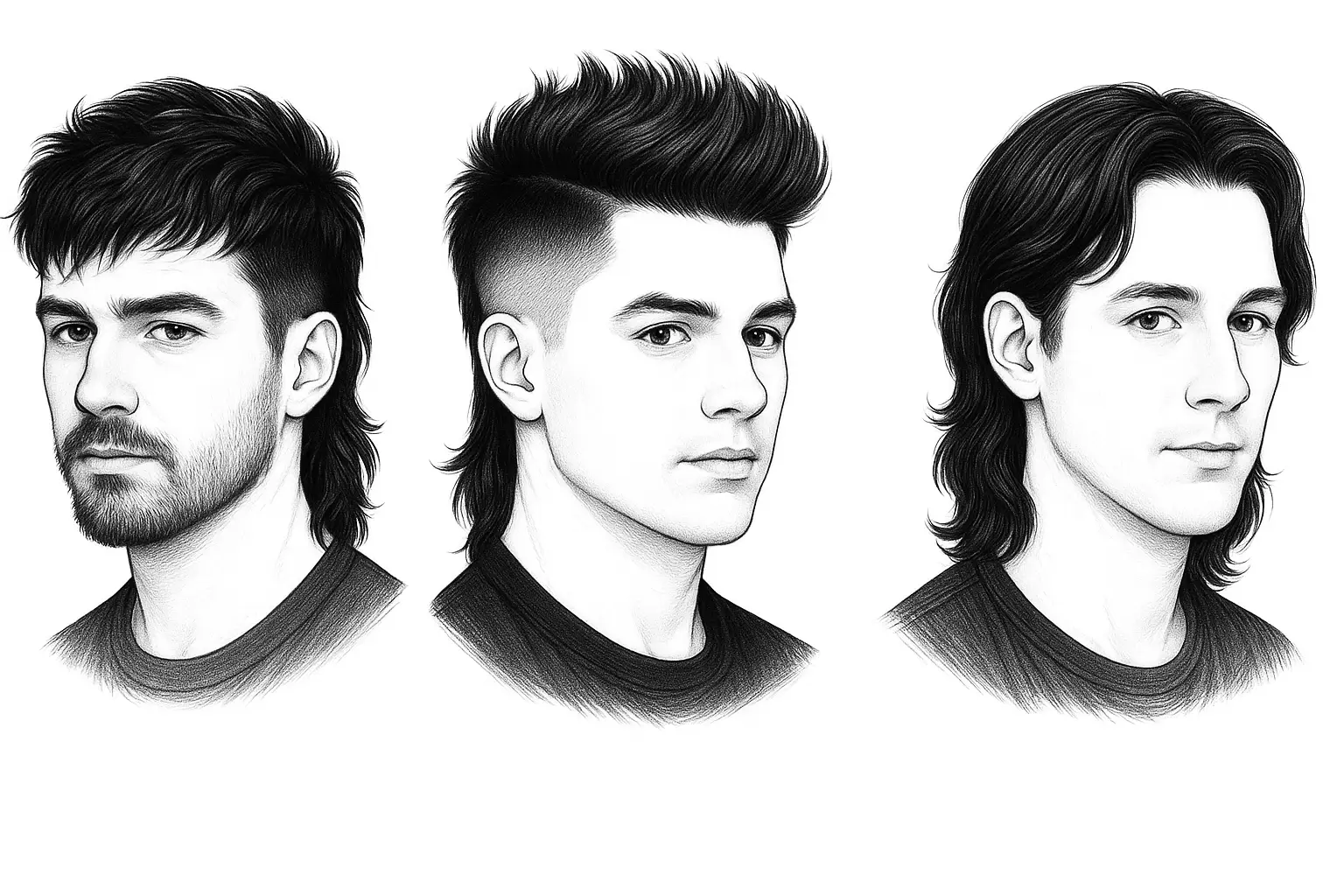
To understand the cut properly, break it into three parts.
- Taper: Hair gradually shortens as it moves down toward the ear and neckline. With a taper, the hair is not shaved all the way to skin, unless you ask for it.
- Fade: The transition from longer hair to shorter hair blends smoothly so there is no clear line. A taper fade is simply a clean, blended taper.
- Mullet: Hair is shorter at the front and sides and longer at the back, creating the “business in the front, party in the back” outline.
Put together, a taper fade mullet has:
- Tight, gradually faded sides
- Shape and volume on top
- Noticeable length at the back, from subtle to very bold
The cut sits between classic barbershop polish and rock inspired attitude. That balance is exactly why it is trending.
Why The Taper Fade Mullet Works So Well
A good taper fade mullet is popular because it:
- Keeps the sides clean and neat, which suits modern dress codes
- Leaves enough length and texture on top and at the back to stay interesting
- Can be adjusted for any hair type and almost every face shape
- Looks good with facial hair and piercings, or on a completely clean face
If the idea of a full, retro mullet feels too extreme, the taper fade version gives you a more controlled, upgraded version.
Anatomy Of the Taper Fade Mullet
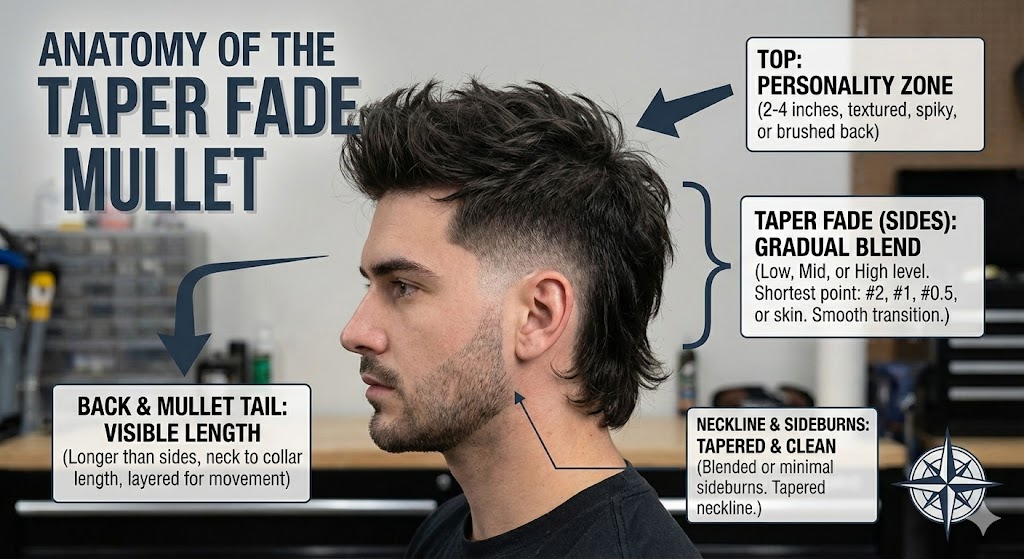
Before you pick a style, it helps to know the main zones your barber thinks about.
Top
This is where the personality of the cut lives.
- Usually 2 to 4 inches for most styles
- Can be textured and messy, brushed back, or slightly spiky
- Needs enough length to blend into the back
Sides and Taper Fade
- The fade starts at low, mid or high level depending on the style
- The shortest point can be a number 2, 1, 0.5 or skin
- The blend should be smooth so there is no harsh line around the temple
Back and Mullet Tail
- Back is longer than the sides and clearly visible from behind
- Length can sit from the nape of the neck to the top of the collar, or longer for bold looks
- Layers stop it looking heavy or blocky
Neckline and Sideburns
- A tapered neckline usually suits this cut best
- Sideburns can fade into a beard or be kept minimal for a cleaner look
When you understand these zones, it becomes easier to ask for specific changes instead of “just a mullet with a fade”.
Main Taper Fade Mullet Styles
Below are the core variations. You can mix elements from different ones once you know what you like.
High Taper Fade Mullet
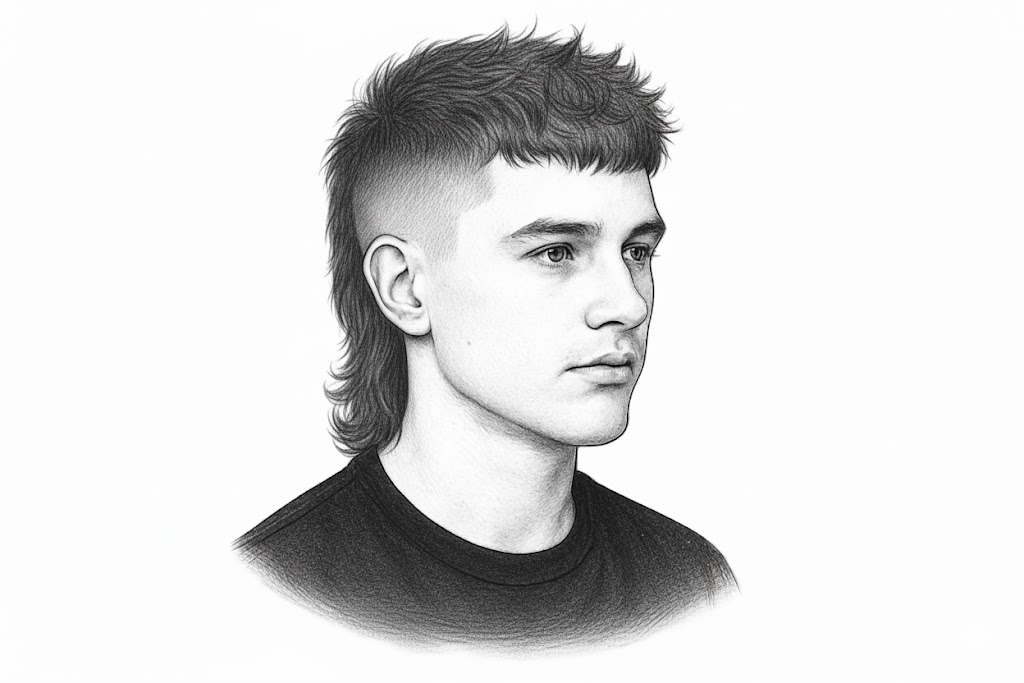
The fade starts high on the head, around the temple.
- Look: Very sharp and dramatic with strong contrast between sides and top.
- Best for: Thick hair, guys who like bold, statement cuts.
- Watch out: On round or long faces it can exaggerate shape if you add too much height on top.
Want more detail? Check out our High taper fade mullet guide.
Mid Taper Fade Mullet
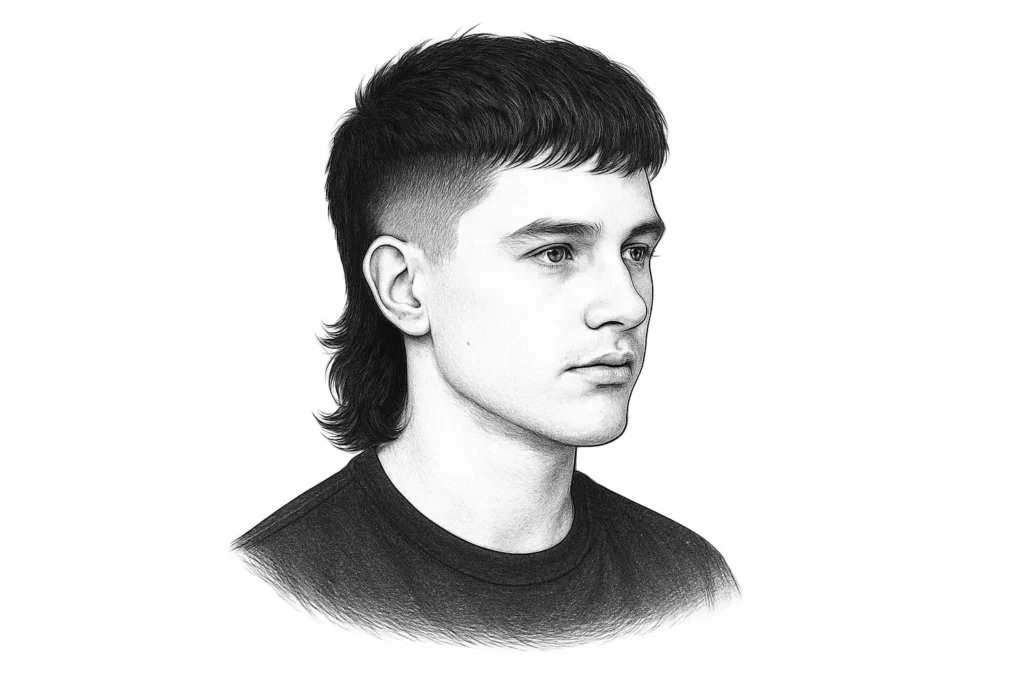
The fade begins around the mid point of the sides.
- Look: Balanced and versatile, easy to wear with casual or smart outfits.
- Best for: Almost every face shape.
- Why it works: Keeps enough side presence to frame the face while still feeling clean.
Low Taper Fade Mullet
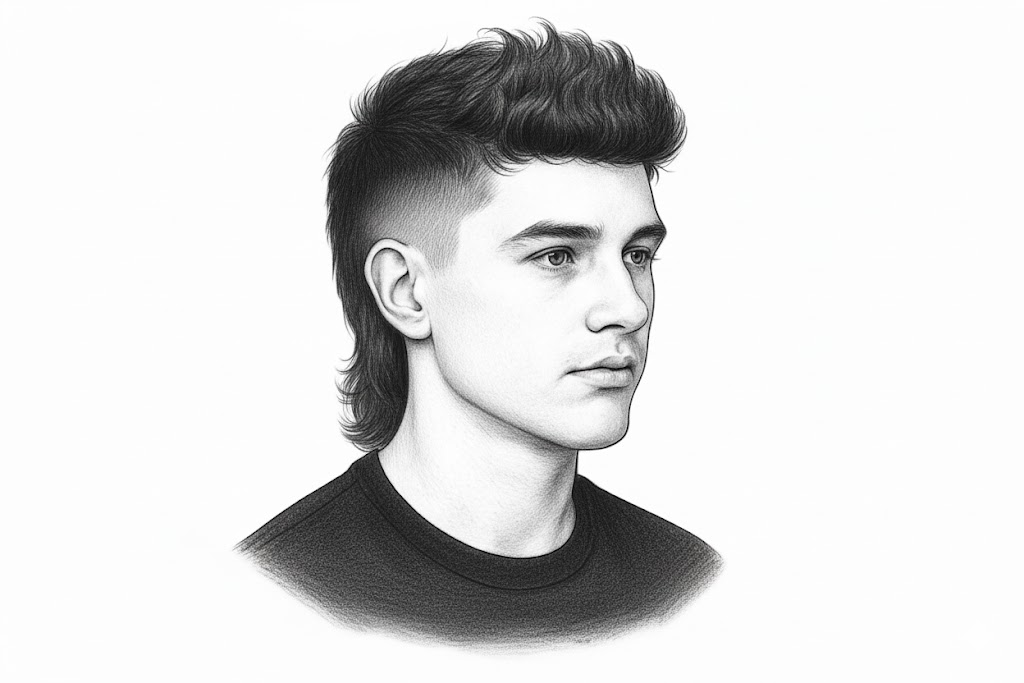
The taper sits low, close to the ears and neckline.
- Look: Soft, subtle, and slightly more “office friendly”.
- Best for: First time mullet wearers, or anyone who wants a less aggressive cut.
- Bonus: Grows out more gracefully between appointments.
Short Taper Fade Mullet
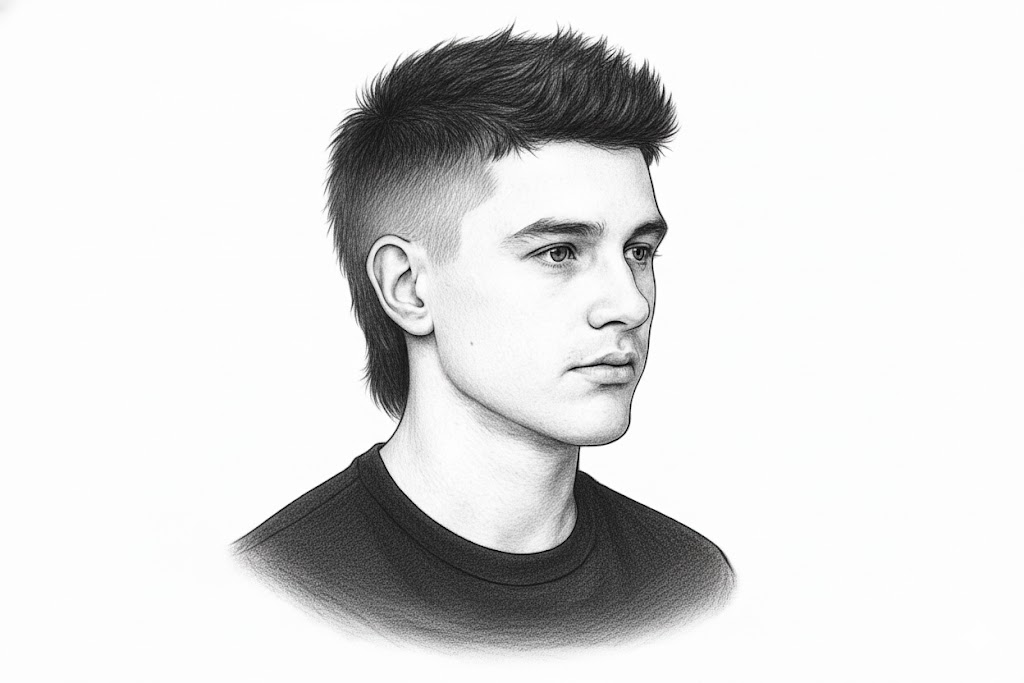
Top and back are kept shorter, usually under 3 inches.
- Look: Sporty and low maintenance.
- Best for: Active lifestyles and guys who do not want to style for long.
- Tip: Ask for extra texture so it does not sit flat.
Long Taper Fade Mullet
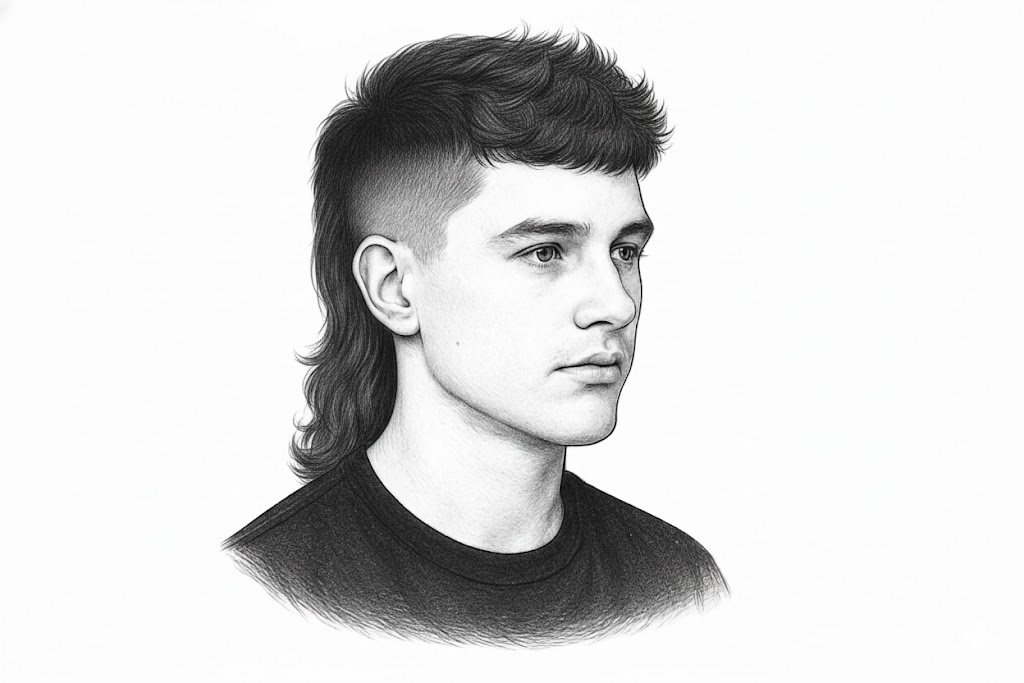
Back length drops to the top of the collar or below, with a more dramatic tail.
- Look: Very rock oriented and expressive.
- Best for: Wavy and curly hair, or anyone who likes visible movement.
- Tip: Layers are essential so the length does not become heavy and lifeless.
Curly Taper Fade Mullet
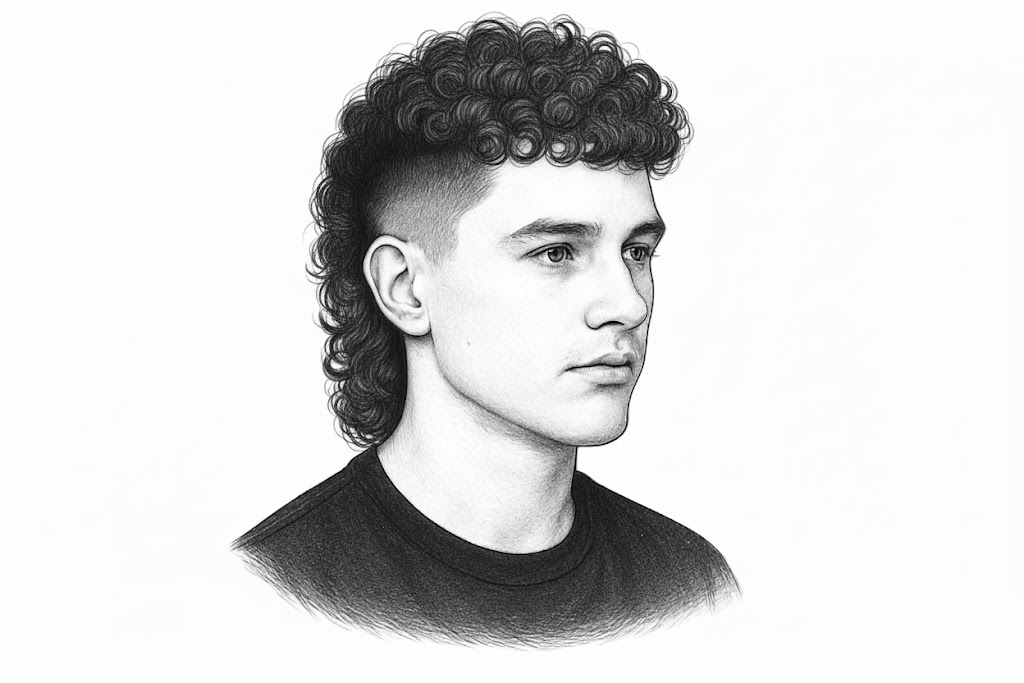
Natural curls or waves are used as the main feature.
- Look: Big, textured, and full of movement.
- Best for: Curly and wavy hair that tends to puff out on the sides.
- Key: Keep the fade fairly tight so the shape stays controlled and the curls focus on top and back.
Straight Hair Taper Fade Mullet
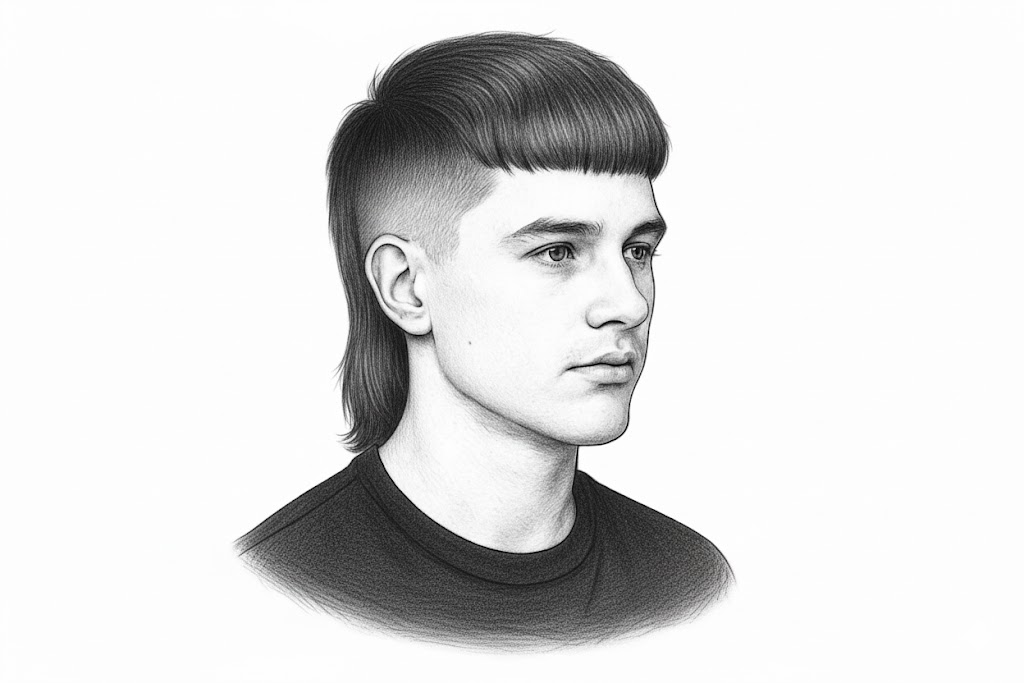
Hair lies straighter, so the cut relies on line and structure.
- Look: Clean outline with clear mullet shape.
- Best for: Fine to medium straight hair, especially when product is used to add lift.
- Tip: Ask for point cutting and texturizing so the top and back do not look like one solid block.
Face Shape Guide For Taper Fade Mullets
The same cut can look very different depending on your face shape. Use this section as a quick filter.
Oval Face
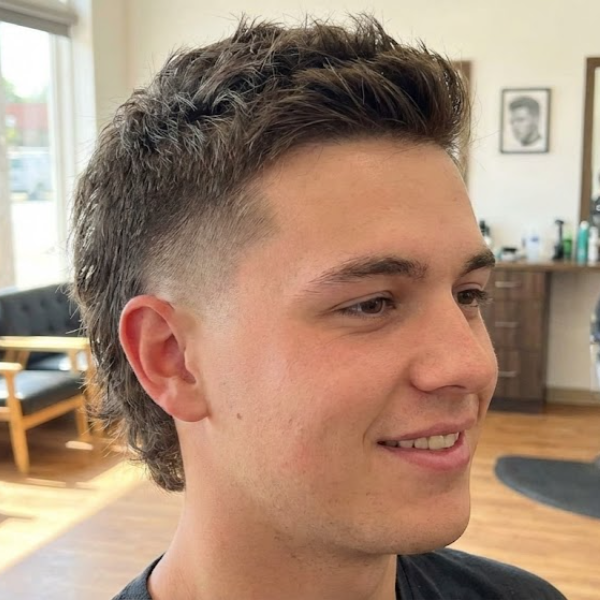
Characteristics: Slightly longer than wide, soft jaw, balanced proportions.
- You can wear almost any taper fade mullet.
- High, mid or low taper all work.
- You can experiment with bold tails or shorter, subtle versions.
Best approach: Use your personality to choose. Go sharper and higher for edgy style, or mid and low for a more relaxed look.
Round Face

Characteristics: Face length and width are similar, softer jaw and cheeks.
Goals: Add height and definition, reduce visible width at the cheeks.
- Choose a mid or high taper to slim the sides.
- Keep extra height on top with textured styling.
- Ask for a narrower mullet tail, not a very wide, heavy back.
Barber tip to say:
“I have a rounder face, so I want more height on top and tighter sides, with a mullet that is longer but not too wide.”
Square Face
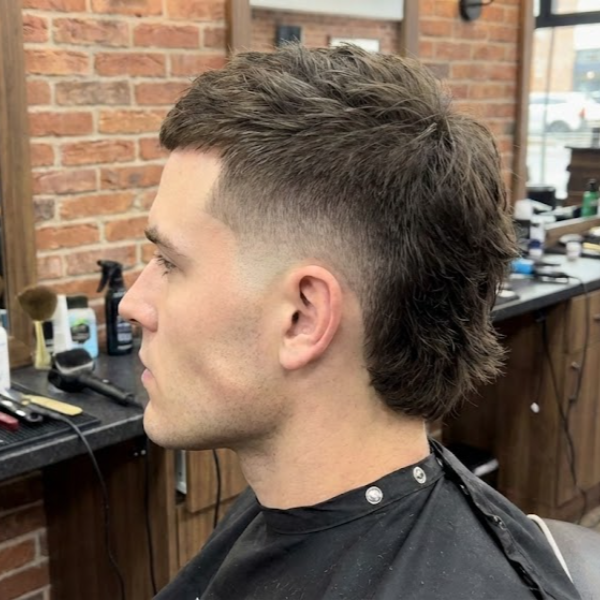
Characteristics: Strong jaw, broad forehead, sides of the face are quite straight.
Goals: Keep your strong features, but soften the overall frame.
- Go for a mid taper that is clean but not extremely high.
- Ask for texture on top rather than a solid, sharp block.
- Add layers in the back for movement so the cut does not look too rigid.
Styling note: Use your fingers to style, not a fine tooth comb. Slightly messy texture balances the natural structure in your face.
Oblong Or Rectangle Face
Characteristics: Face is longer than it is wide, with straight sides.
Goals: Avoid adding too much vertical length. Balance the proportions.
- Pick a low or softer mid taper so there is still some side presence.
- Keep moderate height on top, not a tall quiff or spikes.
- Choose a short to medium mullet tail, not extreme length.
Barber phrase:
“I do not want the cut to make my face look longer. Let’s keep some hair on the sides and avoid too much height on top.”
Heart And Diamond Faces
Characteristics:
- Heart: Wider forehead and cheekbones, narrower chin.
- Diamond: Narrow forehead and jaw, wider cheekbones.
Goals: Soften the top and create some support near the jaw and nape.
- Use a gentle mid taper, not ultra tight at the temples.
- Keep the top controlled, not very tall.
- Let the mullet tail carry some fullness behind the ears and neck.
This creates a more balanced silhouette and prevents the upper half of the face from stealing all the attention.
Hair Type And Density: How To Adjust The Cut
Thick Hair
- Asks for debulking and internal layers.
- A taper fade works very well to control side bulk.
- Request texturizing on top and in the tail so the shape feels light.
Fine Or Thinning Hair
- Avoid shaving sides too tight if the top is thin, or the contrast will exaggerate it.
- Choose low to mid tapers and keep a bit more length at the sides.
- Styling products should be lightweight. Heavy waxes separate the hair and show scalp.
Curly And Coily Hair
- The taper becomes your best friend for removing width while keeping volume on top and back.
- Ask for a fade that follows your natural curl pattern instead of a static line.
- Hydrating creams and curl enhancers will keep the tail looking intentional, not frizzy.
How To Ask Your Barber For A Taper Fade Mullet
Walking into the shop and saying “taper fade mullet” is not enough. Here is a simple step by step approach.
1. Bring The Right Photos
Show:
- One photo of the front
- One of the side that clearly shows the fade height
- One of the back if possible
Make sure all photos show the taper fade mullet, not a different fade or a classic mullet.
2. Explain Fade Height And Shortest Length
Use clipper numbers for clarity.
- “I want a mid taper fade that starts around the middle of the sides.”
- “Let the shortest point be a number 1, not skin.”
If you are open to skin fade, say:
- “I am ok with a skin fade at the very bottom, as long as the blend is smooth.”
3. Set Top And Tail Length
Be specific about how much length you want to keep.
- “Keep about 3 inches on top so I can style it textured and messy.”
- “For the mullet, I want it to reach the top of my collar, with layers so it moves.”
4. Talk About Neckline And Sideburns
- “I prefer a tapered neckline, not a hard line.”
- “Blend the sideburns into my beard.”
or - “Keep the sideburns short and clean since I am clean shaven.”
5. Ask For Styling Guidance
Before you leave the chair, say:
“Can you show me how to style this taper fade mullet at home and which products you recommend for my hair type”
Most barbers are happy to give a quick, tailored routine.
How To Style A Taper Fade Mullet At Home
You do not need a complex routine, just consistency.
Basic Daily Routine
- Wash lightly
- Use shampoo only when needed to avoid dryness.
- On other days, rinse with water and use conditioner.
- Towel dry to damp
- Do not rub aggressively. Squeeze water out to protect the cuticle.
- Apply product
- For natural texture: a matte paste, clay, or cream.
- For curls: a curl cream or light mousse.
- Blow dry if needed
- For volume, direct air from front to back while lifting the roots with your fingers.
- For smoother styles, use a brush to guide hair in the direction you want.
- Finish and detail
- Pinch small sections on top and at the tail to create definition.
- Use a tiny amount of product on fingertips to clean up flyaways around the temple and fringe.
Maintenance Schedule
A taper fade mullet looks best when the fade is crisp and the tail is shaped.
- Every 2 to 4 weeks:
- Refresh the fade, neckline and sideburns.
- Every 6 to 8 weeks:
- Re shape the top and mullet tail, adjusting length and layers.
If you like a very sharp fade, stay closer to the 2 week mark. For softer, “lived in” styles, 3 to 4 weeks can work.
Common Mistakes To Avoid
To keep the haircut looking intentional rather than accidental, avoid these traps.
- Not explaining the mullet length
- If you do not mention the back, some barbers will trim it too short and you lose the mullet identity.
- Going too short on top with a long tail
- This can make the cut look unbalanced. You need enough top length to connect to the back.
- Ignoring your face shape
- A high taper and tall quiff on a long face, or very wide tail on a round face, can work against your features.
- Over thinning fine hair
- Thinning shears on already fine hair remove volume and expose more scalp. Ask for minimal thinning.
- Using heavy, shiny products on modern styles
Very greasy pomades can make the cut look dated. Modern taper fade mullets usually work best with matte or low shine products.
Final Thoughts
The taper fade mullet is not just a trend. It is a flexible haircut family that can be tailored to different face shapes, hair types, and lifestyles.
If you:
- Understand the key parts of the cut
- Choose a variation that matches your face shape
- Communicate clearly with your barber about fade height, length, and styling
- Maintain the shape with regular cleanups
you will end up with a taper fade mullet that feels like a signature look, not a risky experiment.
Use this guide as your reference the next time you book a haircut, and you will walk into the barbershop knowing exactly what to ask for and why.
