
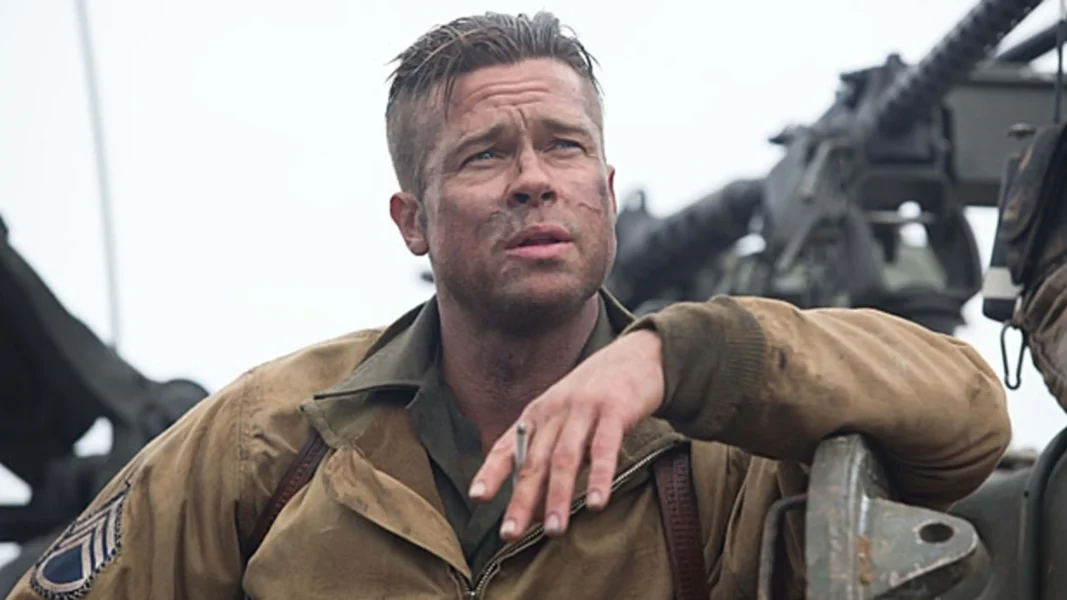
When Brad Pitt stepped onto the screen in Fury, his performance as Don “Wardaddy” Collier wasn’t just memorable for its intensity—it quietly launched one of the most enduring men’s haircut trends of the past decade.
The Fury haircut, now widely known as the Wardaddy undercut, sits in a rare sweet spot:
- rugged but controlled
- masculine without being flashy
- vintage in spirit, yet modern in execution
Unlike trend-driven styles that peak and disappear, this cut continues to rank in searches because it solves a real problem for men: How do you look sharp, authoritative, and timeless without looking overstyled?
This guide breaks down the Wardaddy haircut properly—not as a generic “slick back,” but as a historically influenced, professionally executed style. You’ll learn exactly what it is, why it works, and how to get it done right in the real world.
What Is Brad Pitt’s Fury Haircut?

The Brad Pitt’s Fury haircut is a disconnected undercut with a slicked-back top, but that simple label doesn’t tell the full story.
The Technical Breakdown
- Sides & back: clipped very tight, creating a clear visual separation from the top
- Top: medium length, long enough to be pushed straight back rather than lifted upward
- Parting: subtle side part, not exaggerated or razor-hard
- Overall shape: clean, disciplined, and intentionally restrained
What sets the Wardaddy undercut apart from many modern undercuts is what it doesn’t do. There’s no high skin fade, no extreme contrast for shock value, and no tall pompadour volume. The silhouette stays close to the head, projecting control rather than trendiness.
Not Just Another Slick Back
Many men confuse this haircut with:
- a modern pompadour
- a fade-heavy undercut
- or a glossy, nightclub-style slick back
The Fury haircut avoids all three. The top flows backward naturally, the sides stay functional and military-clean, and the finish is deliberate—not flashy.
Why It’s Often Called the “Wardaddy” Cut
The nickname comes from Pitt’s character himself. “Wardaddy” is a tank commander—authority, discipline, and experience define him. The haircut mirrors that persona:
- short sides = order and practicality
- longer top = maturity and command
- restrained styling = confidence without excess
That character-driven design is a big reason this haircut still feels relevant years later.
The Exact Barber Specifications
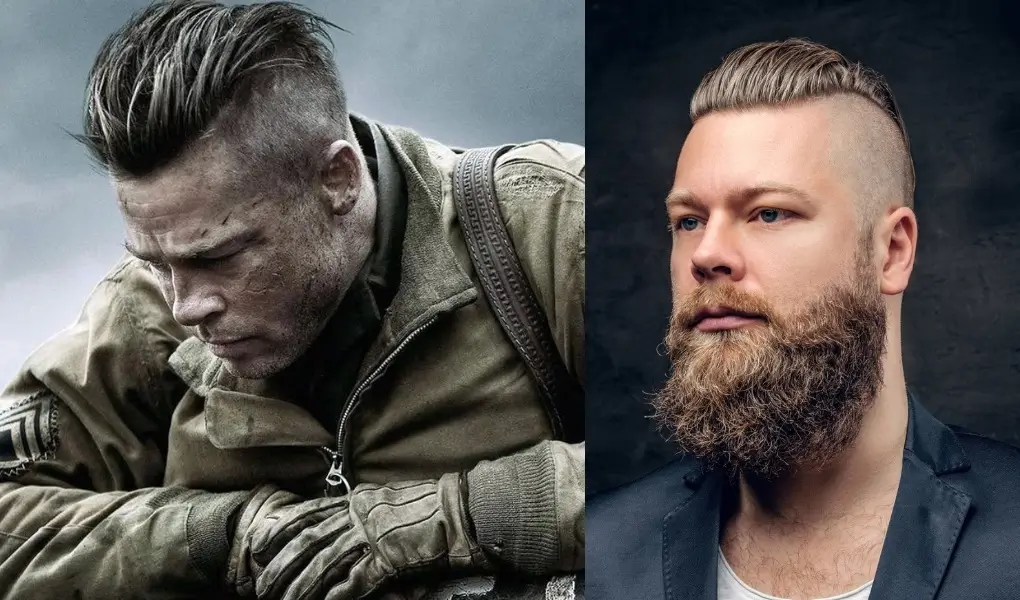
This is where most online guides fall apart. They describe the Wardaddy haircut visually but fail to translate it into clear barber language. The Fury haircut only works when the proportions and clipper work are precise.
Clipper Lengths & Overall Structure
- Sides: taken down very tight — between skin and a #1 guard
- Back: equally tight, kept low and clean rather than faded high
- Top: left noticeably longer than the sides, with enough length to push straight back without standing up
The defining feature here is the disconnection. The sides are not softly blended into the top like a taper fade. Instead, there’s a deliberate contrast that creates a strong, masculine outline without looking extreme.
Neckline & Finish
- Neckline: natural or softly tapered
- No boxed or squared finish at the nape
- Clean, military-inspired, but not harsh or barber-shop flashy
This subtle neckline detail is important. A boxed neckline immediately modernizes the cut too much and breaks the WWII-inspired aesthetic.
Why These Specs Matter
Cut the sides any longer and the style loses authority.
Cut the top too short and it becomes generic.
Blend everything together and it stops being the Wardaddy cut altogether.
This haircut succeeds because it’s controlled, not casual—every length choice reinforces that idea.
How It Was Styled on Set (Professional Technique)
The Fury haircut isn’t just about the cut—it’s about how it’s styled. On screen, Brad Pitt’s hair never looks stiff, greasy, or overly groomed, yet it never falls out of place either.
The On-Set Styling Method
Professional barbers working on the film followed a simple but disciplined routine:
- Product applied to towel-dried hair
This allows control without stiffness. - Hair combed back while blow-drying
The airflow sets direction rather than volume. - Light finishing product
A touch of wax or similar product was used only to tame flyaways and maintain structure.
Finish: Controlled, Not Glossy
One of the biggest misconceptions is that the Wardaddy haircut should look shiny. In reality:
- The finish is low to moderate sheen
- Texture remains visible
- Hair looks used, not polished
This restrained styling reflects the character’s environment—combat conditions, long days, and function over vanity.
The Hair Professionals Behind the Look
A rarely discussed but important detail: this haircut wasn’t improvised on set. It was designed and maintained by experienced film hair professionals.
- Luca Saccuman served as Brad Pitt’s personal hair stylist on Fury
- Alessandro Bertolazzi was the department head responsible for overall hair continuity
Why This Matters
Film hairstyling is fundamentally different from fashion or editorial grooming:
- Hair must hold shape across long shooting days
- It must remain consistent across scenes shot weeks apart
- It must support character and period accuracy
That’s why the Wardaddy haircut feels intentional. It wasn’t designed to trend—it was designed to tell a story. The fact that it later became a global men’s grooming reference point is a byproduct of that authenticity.


Brad Pitt’s Fury haircut inspiration
WWII Influence: Why the Cut Feels Authentic
What gives the Wardaddy undercut its lasting credibility isn’t just Brad Pitt’s screen presence—it’s the haircut’s historical grounding. The style aligns closely with how men actually groomed their hair during World War II, especially in military contexts.
Military Practicality First
During WWII, soldiers favored haircuts that were:
- Short on the sides and back for hygiene and helmet use
- Controlled on top, long enough to comb back but not so long it interfered with duty
This practical logic mirrors the Fury haircut’s structure. The tight sides reduce bulk and maintenance, while the longer top allows discipline without excess.
Pomade Culture of the 1930s–1940s
Men of the era commonly used pomades and grooming creams to keep hair in place. These products offered:
- Control without extreme stiffness
- A light, natural sheen rather than high gloss
This is why the Wardaddy haircut reads as authentic rather than theatrical. The styling looks lived-in—functional, not vain.
Cultural Reinforcement
Institutions like Imperial War Museums document how grooming and appearance were tied to discipline and morale during WWII. Neat, controlled hair wasn’t a fashion statement—it was part of military identity.
That historical context explains why the Fury haircut doesn’t feel like a modern undercut pretending to be vintage. It follows the same constraints and priorities men actually lived with during the period.
Who This Haircut Works Best For (Expert Fit Analysis)
The Wardaddy undercut is versatile, but it isn’t universal. Understanding whether it suits your hair and face shape is key to pulling it off successfully.
Hair Type Compatibility
Best suited for:
- Thick hair
- Straight to slightly wavy textures
These hair types hold structure naturally and respond well to combed-back styling.
More challenging (but not impossible) for:
- Very fine hair (may need extra product or length)
- Tightly coiled or curly hair (requires adaptation rather than imitation)
The haircut relies on visible structure. If the hair collapses or frizzes easily, the silhouette changes dramatically.
Face Shape Suitability
The Wardaddy haircut works especially well for:
- Oval faces – balanced proportions enhance the clean lines
- Square faces – sharpens the jawline and cheekbones
- Angular or rectangular faces – reinforces masculine structure
Men with rounder faces can still wear the style, but should avoid cutting the sides too tight, as extreme contrast may exaggerate roundness.
How to Ask Your Barber (Copy-Ready Script)
Even the best haircut inspiration fails if it’s communicated poorly. This is a barber-ready script that removes ambiguity and avoids common mistakes.
What to Say
“I want Brad Pitt’s haircut from Fury. Keep the sides and back very tight—between skin and a #1. Leave the top long enough to push straight back with a slight side part. I don’t want a high fade or a pompadour, and I want a natural neckline.”
Why This Works
- It references a specific film look, not a vague celebrity style
- It includes guard ranges, not subjective terms
- It clearly rejects high fades and excess volume
Pro Tip
Bring one or two reference photos from Fury, preferably:
- a side profile
- a slightly messy, on-screen moment
Photos anchor expectations and help the barber match proportions, not just the idea.
Modern Adaptations vs. Screen-Accurate Version
One reason the Wardaddy undercut has endured is its adaptability. The core structure stays the same, but the finish can be adjusted depending on lifestyle, workplace, and personal taste.
Screen-Accurate Wardaddy Cut
This version stays closest to what you see in Fury:
- Very tight sides and back with strong contrast
- Minimal texture on top, combed straight back
- Low-shine finish, slightly worn-in rather than styled
This is the most authentic interpretation, but it’s also the boldest. It projects authority and toughness, though it may feel intense in conservative office environments.
Modern, Wearable Interpretation
For everyday life, many men opt for a softened version:
- Sides still short, but not taken fully to skin
- Top styled with matte pomade or cream for light texture
- Less visible disconnection, while preserving the silhouette
This approach keeps the spirit of the Wardaddy haircut without making it feel costume-like.
Choosing the Right Version
Ask yourself:
- Do I want character accuracy or daily versatility?
- Will I style my hair every morning, or keep it low-maintenance?
- Does my workplace tolerate sharp undercuts?
Answering these questions helps determine how closely you should follow the original cut.
Common Mistakes to Avoid
The Wardaddy haircut is deceptively simple, which is why it’s often done wrong. Avoiding these mistakes is just as important as getting the right specs.
Mistake #1: Turning It Into a Pompadour
Excess height on top completely changes the look. The Fury haircut is pushed back, not up.
Mistake #2: Using a High Skin Fade
A high fade modernizes the cut too much and breaks the WWII aesthetic. The sides should stay low and functional, not flashy.
Mistake #3: Overusing Shine Products
Heavy gel or high-shine pomade makes the style look greasy rather than rugged. Control is the goal, not gloss.
Mistake #4: Cutting the Top Too Short
Without enough length on top, the haircut loses its defining contrast and becomes generic.
Avoid these pitfalls, and the Wardaddy undercut instantly looks more intentional and refined.
Why the Wardaddy Undercut Is Timeless
The Wardaddy haircut has outlasted countless men’s hairstyle trends because it’s built on principles, not hype.
It works because it:
- prioritizes structure over flash
- balances discipline with maturity
- adapts easily to modern grooming without losing identity
Rooted in historical practicality and executed with professional precision, Brad Pitt’s Fury haircut remains one of the strongest examples of a masculine, timeless style done right.
Frequently Asked Questions (FAQ)
What is Brad Pitt’s haircut called in Fury?
Brad Pitt’s haircut in Fury is commonly called the Wardaddy haircut or Wardaddy undercut. Technically, it’s a disconnected undercut with a slicked-back top, designed to reflect WWII-era military grooming rather than modern fashion trends.
Is the Wardaddy haircut a fade or an undercut?
It is an undercut, not a fade.
While modern versions sometimes add light blending, the original Fury haircut relies on a clear contrast between very short sides and a longer top. A high skin fade changes the character of the cut and moves it away from screen accuracy.
How long should the top be for the Fury haircut?
The top should be long enough to push straight back without standing up—generally medium length, not cropped. Cutting it too short turns the style generic and removes the defining Wardaddy silhouette.
What guard length should the sides be?
For a screen-accurate look, barbers typically use:
- Skin to #1 guard on the sides and back
The key is keeping the cut low and tight, not faded high.
What product should I use for the Wardaddy haircut?
Use light to medium-hold pomade or a matte styling cream.
Avoid heavy gels or ultra-high-shine products. The goal is control with a natural finish, not stiffness or gloss.
Does the Fury haircut work for thin hair?
It can, but it requires adjustment. Very fine hair may need:
- Slightly more length on top
- Lightweight product to add control without weighing hair down
The haircut works best on thick, straight to slightly wavy hair, but a skilled barber can adapt it.
Is the Wardaddy haircut good for professional or office settings?
Yes—when slightly modernized.
Keeping the sides short but not skin-tight and using a matte finish makes the haircut office-appropriate while retaining its masculine structure.
