
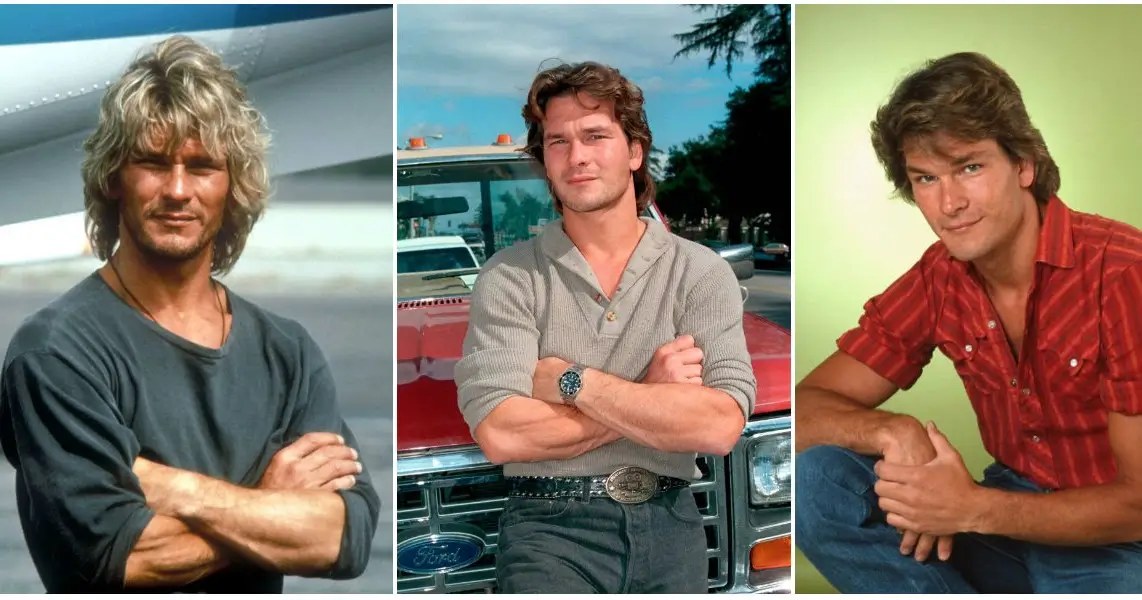
When we think of the most unforgettable movie moments from the ‘80s and ‘90s, it’s not just the dialogue or the dramatic slow-motion that sticks with us—it’s the hair. And no haircut captured that cinematic energy quite like the Patrick Swayze mullet. It wasn’t just a style; it was a statement. The kind of hair that danced during a fight scene, swayed in a moonlit ballroom, or flew wildly on the back of a surfboard.
Officially, the “Patrick Swayze Mullet” wasn’t just another member of the mullet family—it was its own species. Soft up top, wild in the back, and always somehow perfectly in motion, it defined a whole generation of cool. Whether he was saving bar patrons in Road House or stealing hearts in Dirty Dancing, Swayze’s mullet did half the storytelling for him.
In this deep dive, we’ll look at why the Swayze mullet became such a legend. We’ll start with the hair trends that allowed it to thrive, explore how it evolved in his film roles, break down the cut itself, and track its impact on masculinity and pop culture. By the end, you’ll see why this haircut still echoes through time like a perfectly executed spin-kick.
The Mullet in Context: 1980s & 1990s Hair Zeitgeist

In the neon glow of the ‘80s, hair was loud, proud, and not afraid to bend the rules. Big volume, bigger personalities—that was the vibe. The mullet fit right in. With its signature blend of short-on-top and long-in-back styling, it quickly became a symbol of rebellion and freedom. Rock stars, athletes, and action heroes all claimed it as their own.
But Patrick Swayze’s mullet wasn’t your average party-in-the-back look. While others leaned into excess or parody, his version balanced grace and grit. Think less hockey goon, more romantic vigilante. Some dubbed it the “Soulful Mullet” or even the “Action Mullet”—a style that carried the weight of drama while still being ready for a roundhouse kick.
Swayze didn’t start with the mullet, though. In earlier roles like The Outsiders (1983), his hair was cleaner, more controlled—still handsome, but not yet iconic. By the time Dirty Dancing and Road House hit screens, the transformation was complete. The mullet had matured. And so had he.
Swayze’s Mullet: Not Just a Haircut, a Vibe

What made the Patrick Swayze mullet so iconic? It wasn’t just the length or layers—it was the thoughtful balance between rugged edge and romantic flow. His mullet had structure, movement, and purpose. Let’s break it down.
The Top: Soft, Feathered, and Styled for Charm
Unlike the choppy tops you’d see on punk rockers, Swayze’s front and crown were smooth and sculpted. Often feathered or brushed back, the top gave his mullet a clean, put-together feel. This allowed him to pull off sensitive roles without looking disheveled. It was the “business” in business-in-the-front—controlled, calm, and ready for a close-up.
The Sides: Slicked Back or Lightly Tapered
The sides of Swayze’s mullet were always neat, blending into the rest of the haircut without sharp fades or harsh lines. Whether he was sweating through a fight or slow dancing under the stars, the sides stayed sharp but never overpowering. It gave the illusion of discipline—a man who was in control, even if just barely.
The Back: Wild, Natural, and Always in Motion
This is where the magic happened. The back of the Swayze mullet flowed down to his collarbone in some roles, bouncing freely in others. It had just enough wave to catch the light and enough weight to create drama with every head turn. This was the “party”—a flash of rebellion that peeked out behind his otherwise polished presence.
Texture and Movement: His Secret Weapon
Swayze’s natural hair texture played a huge role. With its soft wave and built-in volume, it gave his mullet life. Add in the choreography of Dirty Dancing or the adrenaline of Road House, and that hair didn’t just sit there—it moved like it had its own script. No gelled spikes or stiff sprays here—just the kind of freedom that made every toss of his head feel like a moment.
When paired with his expressive acting and physical roles, the haircut became more than just a style—it was a storytelling tool. And it worked from every angle.
How Swayze’s Mullet Became Its Own Character
Patrick Swayze didn’t just wear a mullet—it became part of the story. Across his most iconic roles, the haircut evolved with his characters, showing off their confidence, vulnerability, and edge. Whether he was breaking up bar fights or breaking hearts, that flowing hair always made an entrance.
Road House (1989) – The Bouncer Mullet
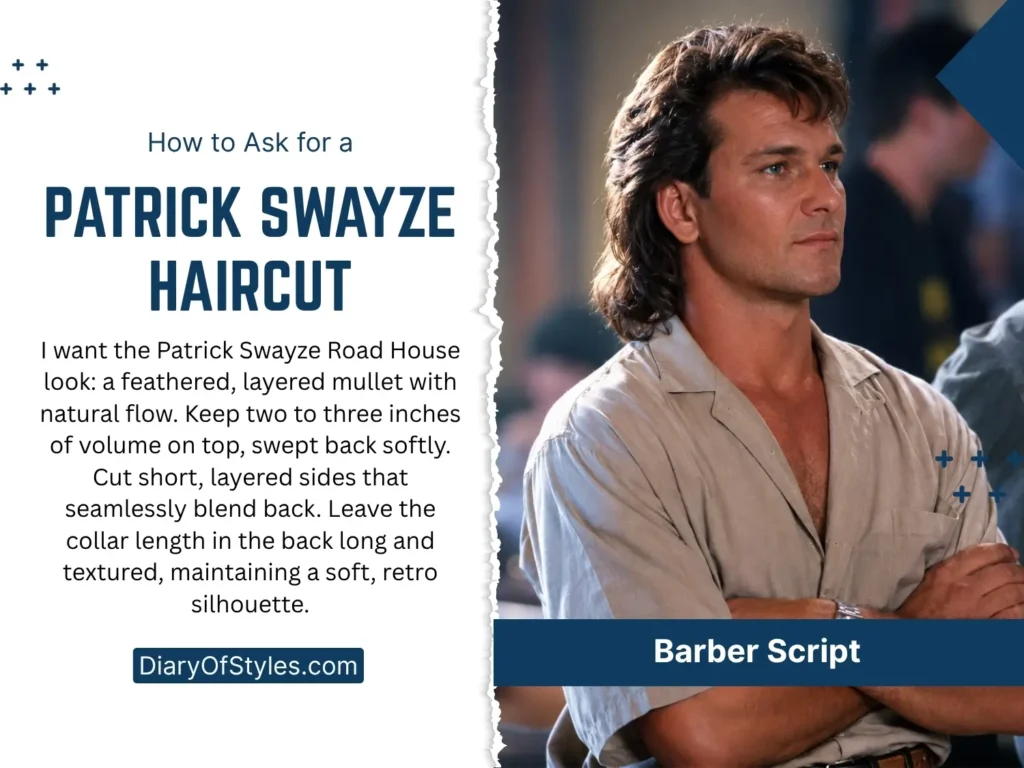
In Road House, Swayze plays Dalton—a philosophical bouncer who can throw a perfect roundhouse kick without breaking a sweat. His mullet here was rugged and untamed, the kind of hair that looked like it had been through a few fights itself. It framed his steely gaze while giving him just enough softness to make you believe he reads poetry between bar brawls. The way it moved when he fought? Pure action star drama.
Dirty Dancing (1987) – The Dance Mullet

Johnny Castle’s mullet was sleeker, more refined. It had volume and shape but didn’t scream rebellion. This was the haircut of a man who knew how to hold a woman close and command a dance floor. Every spin, lift, and dip let those waves catch the light—adding elegance to every moment. It wasn’t wild—it was romantic.
Point Break (1991) – The Zen Surfer Mullet

By the time Point Break rolled around, Swayze’s mullet had a sun-kissed, wind-blown glow. Playing Bodhi, a surfer and spiritual outlaw, his hair matched the ocean itself—free, flowing, and untamable. It looked like it belonged on the beach, catching salt and secrets from the wind. This version of the mullet told you everything about the character before he even opened his mouth.
Other Roles: Ghost, Next of Kin, and Beyond
Even in films where the mullet took a backseat—like Ghost, where it was softer and shorter—it still carried emotional weight. In Next of Kin, the look leaned more mountain-man tough, proving the style could shift with the setting. But no matter the role, that signature shape was there—reminding you that you were watching a Swayze original.
More Than a Haircut: What the Swayze Mullet Said About Masculinity
Patrick Swayze’s mullet wasn’t just about style—it told a story. It bridged the gap between toughness and tenderness, helping redefine what masculinity could look like on screen in the late ‘80s and early ‘90s.
Hair That Told You Who He Was
In every role, his mullet helped shape how we saw his characters. It gave Dalton (Road House) his edge but didn’t make him cold. It gave Johnny (Dirty Dancing) his flair but didn’t make him vain. The haircut had grit, but it also had heart. And that’s exactly what Swayze was known for—characters who could throw a punch and cry in the same scene.
A Softer Spin on a Loud Trend
Back then, most mullets were about pushing boundaries—louder, bigger, brasher. But Swayze’s version had a certain polish. It was intentional, styled but not stiff. It wasn’t about rebellion; it was about balance. He made the mullet less about shock value and more about quiet confidence.
Making the Mullet Cool Again
Rock stars and athletes had their version of the mullet. But Swayze gave it something different—emotional weight. For many fans, he made the look feel accessible, even aspirational. It wasn’t just a haircut you wore to stand out. It was a haircut that meant something—about freedom, emotion, and individuality.
Tough Guys With Layers
Swayze played tough men. But they weren’t one-note. His hair reflected that complexity. The clean lines showed discipline. The waves at the back showed freedom. The result? A look that mirrored his ability to mix strength with softness—something few action heroes pulled off at the time.
Why the Swayze Mullet Still Lives On
Decades later, Patrick Swayze’s mullet hasn’t faded into fashion obscurity. If anything, it’s become a shorthand for a certain kind of effortless cool—one part nostalgia, one part genuine admiration.
A Style That Outran Irony
Let’s be honest—most mullets of the ’80s didn’t age well. But Swayze’s? People still admire it. While some look back at the mullet with a wink and a smirk, his version avoids the joke. It’s remembered with real affection. It wasn’t loud for the sake of it. It had intention and character.
Today’s Mullets Owe Him One
You’ve probably noticed: the mullet is back. From red carpets to music videos, modern versions are popping up again—but sleeker, more styled, and often more Swayze than retro rocker. Think Timothée Chalamet’s soft-flowing waves or Jacob Elordi’s disheveled glam. That mix of edge and elegance? Swayze did it first.
A Haircut That Still Says Something
Even now, a photo of Swayze in Point Break or Road House instantly brings that energy back. The wind-swept locks, the intense stare, the hint of rebellion—it’s all still there. It’s why his image is still used in style inspo boards, Halloween costumes, and nostalgic film posters. His mullet isn’t just remembered—it’s revered.
Conclusion
Patrick Swayze’s mullet wasn’t just a haircut—it was a cinematic signature. It moved with meaning, held emotional weight, and captured the complex spirit of a man who could be both fighter and lover, tough and tender. In a sea of exaggerated styles, his mullet felt grounded, confident, and real. And that’s why it still matters—because it wasn’t just about hair. It was about identity, emotion, and that rare kind of cool that never goes out of style.
FAQ About the Patrick Swayze Mullet
What kind of mullet did Patrick Swayze have?
Patrick Swayze wore a soft, layered mullet with feathered volume on top and longer, natural waves in the back. It wasn’t too flashy—it balanced polish and freedom, fitting both his action roles and romantic leads.
Why was Patrick Swayze’s mullet so iconic?
His mullet worked because it matched his screen presence—strong but soulful. While other ‘80s mullets were bold or extreme, Swayze’s was stylish, emotional, and timeless. It moved beautifully on camera and became part of his character’s identity.
Did Swayze keep the mullet in real life?
Yes, Patrick Swayze often kept his mullet off-screen too, especially during his peak film years. It became part of his real-life image, not just a movie look.
Is the Patrick Swayze mullet coming back in style?
Absolutely. Modern takes on the mullet often echo Swayze’s version—softer, less exaggerated, and full of movement. Celebrities and stylists are revisiting that balance of retro and refined.
Which movie had Swayze’s best mullet?
Road House probably featured his most famous mullet—wild, windswept, and full of attitude. But Point Break gave it that surfer-chill vibe, and Dirty Dancing showed off its elegant side.
